The Future Is Underground: Vegas Loop Absorbs Las Vegas Monorail System
The future of urban mobility is no longer a distant horizon—it’s unfolding beneath our feet. In a bold reimagining of transit, Las Vegas is poised to absorb its iconic monorail system into the subterranean veins of the Vegas Loop, a subterranean marvel that promises to redefine how we traverse the city. This isn’t merely an upgrade; it’s a tectonic shift in perspective, one that burrows deep into the ethos of modern transportation while leaving the surface world untouched. As the monorail’s elevated tracks fade into memory, the Vegas Loop emerges as a silent revolution, whispering promises of efficiency, sustainability, and a new era of urban connectivity.
The Monorail’s Legacy: A Brief Ascension
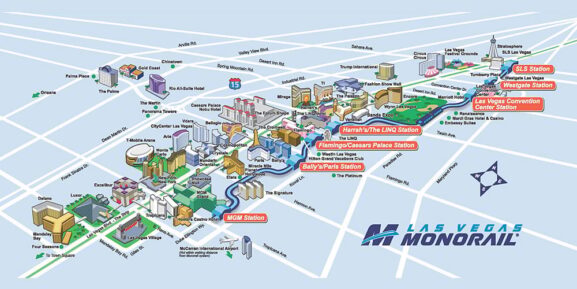
For decades, the Las Vegas monorail stood as a testament to innovation, its sleek, elevated tracks slicing through the desert skyline like a futuristic ribbon. Designed to whisk visitors between resorts and attractions, it became a symbol of the city’s relentless ambition—yet it was never without its detractors. Critics pointed to its limited reach, high operational costs, and the way it cleaved the city in two, creating a visual and logistical divide. The monorail was a marvel, but it was also a relic of an era when transit solutions were built above ground, where visibility equaled prestige. Now, as the Vegas Loop prepares to subsume its predecessor, it’s clear that the future belongs to what lies beneath.
Beneath the Neon: The Vegas Loop’s Underground Ambition
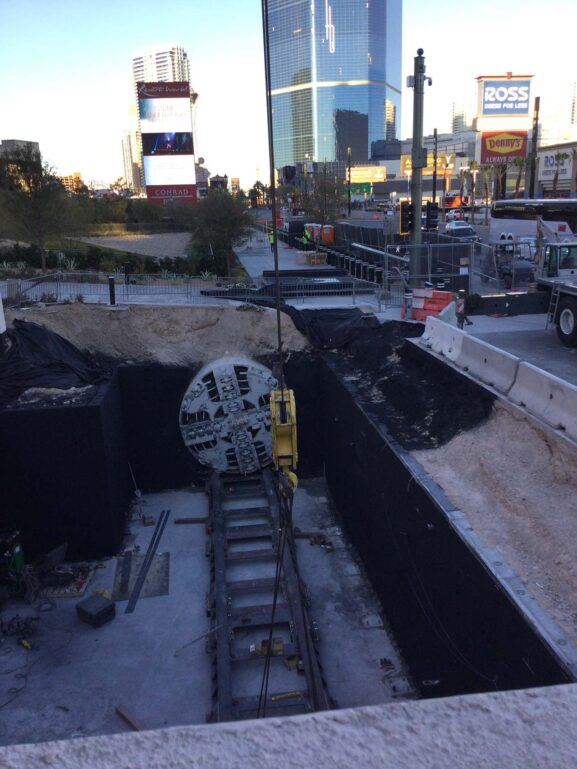
The Vegas Loop isn’t just another transit project; it’s a subterranean labyrinth designed to dissolve the boundaries between destination and journey. By repurposing the monorail’s infrastructure—its stations, its corridors—into a network of underground tunnels, the Loop transforms what was once a surface-level convenience into a seamless, subterranean artery. Imagine gliding through dimly lit tunnels, the hum of electric pods the only sound, as the city’s neon glow filters down through grates above. This is transit as an experience, where the act of travel becomes an escape from the cacophony of the Strip, a quiet revolution in motion.
The Loop’s design prioritizes speed and accessibility. With autonomous electric pods operating at near-silent efficiency, commuters and tourists alike will traverse the city in minutes, not hours. The absence of above-ground obstructions means no traffic lights, no pedestrian crossings—just uninterrupted motion. And because the system is modular, it can expand effortlessly, adapting to the city’s ever-shifting needs without the visual clutter of elevated tracks or the logistical nightmare of surface disruptions.
Sustainability in the Shadows: A Greener Transit Paradigm
Beneath the surface, the Vegas Loop doesn’t just move people—it moves toward a more sustainable future. By shifting transit underground, the city reclaims valuable real estate above ground, allowing for green spaces, pedestrian promenades, and even solar panel installations where the monorail once cast its shadow. The electric pods, powered by renewable energy sources, produce zero emissions, slashing the city’s carbon footprint while maintaining the high-capacity mobility that Las Vegas demands.
Moreover, the Loop’s underground nature reduces the urban heat island effect, a critical consideration in a city where temperatures routinely soar. By keeping the majority of transit activity shielded from the sun, the system mitigates the energy costs associated with cooling stations and vehicles. It’s a quiet but profound shift—a transit solution that doesn’t just serve the city but actively heals it.
The Human Experience: A Transit Revolution for the Senses
Yet the most compelling aspect of the Vegas Loop isn’t its engineering or its sustainability—it’s the way it reshapes the human experience of travel. The monorail was a spectacle, a gleaming structure that demanded attention. The Loop, by contrast, is an exercise in subtlety. It doesn’t shout; it glides. It doesn’t interrupt the skyline; it disappears into it. For locals and visitors alike, this means a return to the city’s essence—uninterrupted exploration, unobstructed views, and a transit experience that feels almost meditative.
Consider the psychological shift: no longer will commuters feel like spectators to the city’s frenetic energy. Instead, they’ll become part of its rhythm, moving through it with the quiet confidence of those who know the future is not just above them, but beneath their feet. The Vegas Loop doesn’t just promise faster travel; it promises a deeper connection to the city itself.
The Vegas Loop’s absorption of the monorail system is more than a technical achievement—it’s a philosophical statement. It challenges us to look beyond the obvious, to seek solutions that are as unobtrusive as they are transformative. As the first pods descend into the tunnels, Las Vegas will not just be moving people; it will be redefining what it means to belong to a city. The future isn’t just underground. It’s here, waiting in the dark.