The NHL Has a Kalshi Deal But Nevada Casinos Cannot Offer Prediction Markets
The landscape of sports-related speculation is undergoing a tectonic shift, one that pits federal financial innovation against entrenched state gaming monopolies. The National Hockey League’s recent accord with Kalshi—a federally regulated prediction market—grants the league a foothold in event contracts, yet directly across the gambling mecca, Nevada’s casino licensees remain legally barred from offering analogous products. This incongruity reveals a deepening schism between two regulatory universes, each with its own lexicon, gatekeepers, and tolerance for risk.
The Emergence of Novel Wagering Paradigms
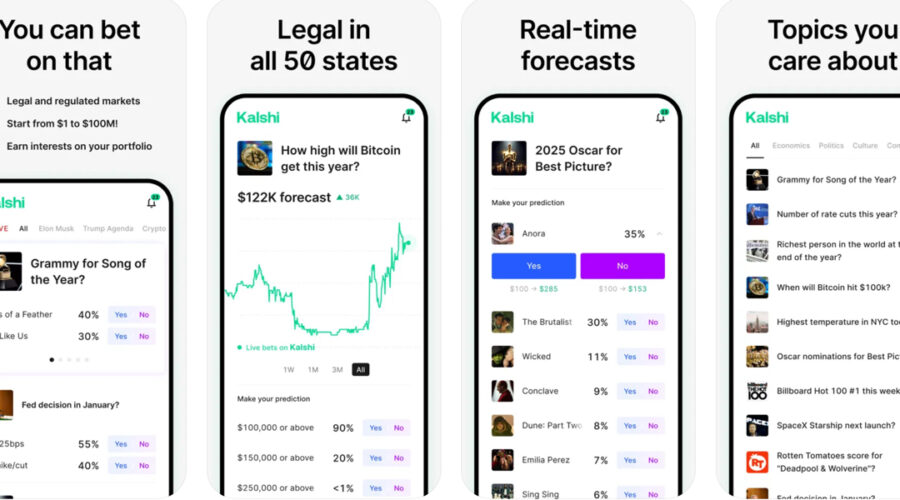
Traditional sports betting operates on a pari-mutuel or fixed-odds basis, where the house books action on a discrete outcome—say, a moneyline winner or an over/under total. Prediction markets, by contrast, function as event derivatives. Participants trade binary option contracts whose prices oscillate in real time, reflecting the crowd’s aggregated probability of a future occurrence. These instruments, cleared by the Commodity Futures Trading Commission, fall under the aegis of financial regulation rather than gaming statutes. The Kalshi platform, for instance, offers contracts on everything from macroeconomic indicators to pop culture milestones, treating contingent events as tradable assets rather than gambles. The nomenclature itself—bid, ask, spread, expiry—underscores a departure from the casino floor’s vernacular.
The NHL’s Strategic Entrée into Event Contracts
The NHL’s agreement with Kalshi signals more than a mere sponsorship; it represents a deliberate move into the data-rich territory of fan engagement monetization. By sanctioning official prediction contracts tied to team performance, playoff advancement, or player milestones, the league cultivates a sticky, second-screen experience that blurs the line between fandom and financial speculation. Unlike the ephemeral thrill of a point-spread bet, these contracts invite ongoing participation, where a holder can exit a position early or let it ride to expiration. The partnership also furnishes the NHL with a licensing fee stream independent of the league’s existing sportsbook deals, while granting Kalshi the imprimatur of major-league credibility—a valuable distinction in a market still grappling with perception as a niche oddity.
Nevada’s Regulatory Quagmire
Within Nevada’s borders, the Gaming Control Board and Nevada Gaming Commission enforce a rigid taxonomy of permissible wagers. State law defines gambling largely in terms of chance, consideration, and prize, and casino licensees must operate within a framework that has not accommodated event contracts. The state’s prohibition stems partly from a desire to protect public confidence in traditional gaming and partly from an institutional wariness toward instruments that resemble securities more than bets. A Nevada sportsbook cannot list a contract on “Rangers to make the Stanley Cup Final” that trades like a futures option, because such a product does not fit neatly into the statutory definitions of a race book, sports pool, or slot machine. The regulatory lacuna effectively cordons off this emerging vertical from an industry that otherwise dominates American gaming revenue.
The Schism Between Betting and Financial Derivatives
The core tension is jurisdictional. The CFTC has granted Kalshi a designated contract market license, allowing it to list event contracts under the Commodity Exchange Act, provided they do not involve unlawful activity like gaming. Yet Nevada’s prohibition underscores a philosophical divide: what federal regulators view as a legitimate price-discovery mechanism, state regulators view as a backdoor expansion of gambling. The result is a patchwork where a Nevada resident can legally trade a Kalshi contract on a mobile device but cannot walk into a Strip casino to execute the same trade. This discontinuity raises questions about sovereign authority, the definition of an “event of economic consequence,” and whether sport-based prediction markets will ultimately be forced into a uniform legal framework—or remain a creature of regulatory arbitrage.
Implications for the Future of Sports Wagering
The NHL-Kalshi alignment may catalyze a broader realignment. Leagues that traditionally extracted value from integrity fees and data licensing might now pursue direct commercial relationships with prediction market operators, bypassing the casino ecosystem entirely. If the Nevada legislature and gaming authorities prove unwilling to adapt, the state could watch a lucrative segment of speculative activity migrate to federally regulated exchanges and mobile platforms domiciled elsewhere. Moreover, the competitive moat enjoyed by Las Vegas sportsbooks—built on decades of branding and capital investment—could erode as a new generation of speculators gravitates toward the dynamic, exchange-based model. The question is whether Nevada’s regulatory apparatus will evolve to embrace event contracts or remain ossified, ceding market share to a parallel universe where sport and finance converge under the watch of Washington, not Carson City.
The collision between the NHL’s trailblazing partnership and Nevada’s restrictive doctrine is more than a parochial dispute—it encapsulates a broader redefinition of wagering in the twenty-first century. As prediction markets mature and attract institutional interest, the pressure on state-level gaming regimes to reconcile their statutes with an increasingly commoditized sports landscape will only intensify. For now, the puck is in two different rinks, skating under two different sets of rules.