Why Nevada Residents Can See Kalshi Logos But Cannot Legally Bet on Them
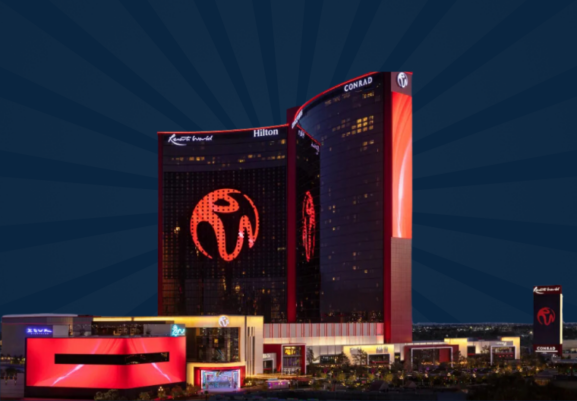
In the glaring neon wash of the Las Vegas Strip and the dust-blown highways of Reno, the eye of a Nevada resident is trained to parse a ceaseless torrent of logos. Among the familiar crests of legacy sportsbooks, a newer marque has begun to stake its visual claim: Kalshi. These advertisements, shimmering on digital billboards or embedded within social feeds geotagged to the desert, broadcast a promise of financial engagement with the future. Yet, the same resident who absorbs this branding finds themselves interdicted at the digital threshold. They can gaze upon the insignia, but they cannot legally transact on the platform’s core offering. This dichotomy is not a glitch in the matrix; it is a masterclass in the collision between federal financial innovation and Nevada’s adamantine gaming protections.
The Ubiquity of Branding in the Silver State
Visual saturation precedes legal access. Kalshi’s marketing apparatus operates on a national frequency, a blanket of visibility that does not gracefully degrade at the Nevada border. A resident encounters these promissory symbols during nationally televised sports broadcasts, in programmatic ad slots, and across the algorithmic churn of digital media. The advertisements often frame the platform’s utility in anodyne terms—hedging, forecasting, engaging with the news cycle—studiously avoiding the wagering parlance that triggers immediate regulatory scrutiny. This ambient presence creates a distinct cognitive dissonance. The logo becomes a cipher, suggesting a realm of economic agency that remains just beyond the jurisdiction’s reach.
Nevada’s Fortress of Gaming Regulation
Nevada’s approach to legalized betting is a paragon of stringency, a regulatory bulwark constructed over decades. The state does not simply permit gambling; it licenses a fiduciary relationship between the operator and the patron under the omnipotent gaze of the Nevada Gaming Control Board. Entry into this market demands an apostilled licensing process, exhaustive investigations into every stakeholder’s probity, and the maintenance of a physical nexus within the state. Kalshi operates as a federally designated contract market under the auspices of the Commodity Futures Trading Commission. This federal charter does not satisfy the sovereign licensing prerequisites of the state. Nevada reserves the right to demand a granular vetting that no mere federal recognition can supplant, ensuring that every permitted wager is backed by the state’s own liquidity and integrity standards.
Prediction Markets Versus Pari-Mutuel Wagering
The semantic trench between “event contract” and “sports wager” is deep and fiercely defended. Kalshi’s product architecture allows users to buy shares in the outcome of binary events—often political or economic, but occasionally brushing against sports. In the regulatory taxonomy of Nevada, the distinction collapses. If an outcome hinges on an athletic contest, it is a wager, regardless of the derivative wrapping. Nevada Revised Statutes define a sports pool broadly, swallowing any system that presents a prize contingent on a sporting result. Kalshi’s event contracts, even when stripped of the bookmaker’s vigorish and designed as peer-to-peer liquidity pools, are transmuted by legal definition into unlicensed betting. The state’s calculus ignores the financial engineering; it sees only the underlying probability and declares it a regulated activity.
Geofencing: The Invisible Wall
Enforcement of this prohibition relies on a digital partition. Kalshi, like all lawful operators seeking to avert the ire of state attorneys general, deploys an exigent geocompliance architecture. IP triangulation and device-location services draw a hard border around Nevada’s geography. The moment a user’s connection is resolved to a Nevada-based ISP or a GPS grid within the state, the transactional interface locks, transforming an invitation into a forbiddance. This invisible wall is absolute, yet it does not retroactively erase the memory of the advertisement that lured the user there. The resident is left confronting an error message, a stark testament to the schism between national marketing campaigns and the atomized reality of state-level prohibition. This friction generates a unique reader expectation—articles that decode why their phone shows one thing but their wallet cannot follow, blending legal esoterica with practical consumer advice.
The tableau of a Kalshi logo illuminating a Nevada street while its service remains juridically opaque to the citizen walking beneath it is a distinctly modern paradox. It is the embodiment of a jurisdictional tangle where federal permission to innovate collides with a state’s unyielding monopoly on the moral hazard of luck. Until the platforms secure a state-issued license or Nevada’s legislature reimagines the boundaries of a wager, the silhouette of the logo will remain a spectral invitation, visible everywhere but corporeally intangible where the dice have always rolled.