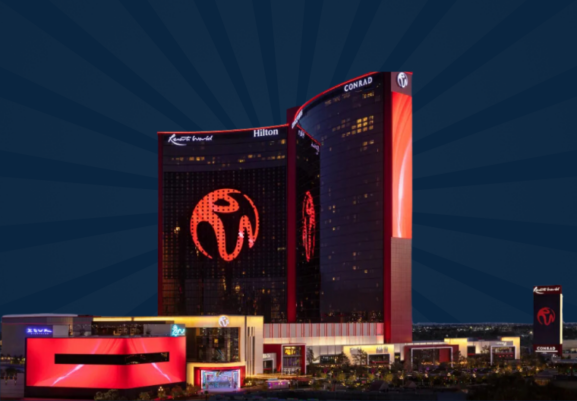
The Kalshi Contradiction: Legal to Advertise But Illegal to Use in Nevada
In the bustling agora of financial innovation, a peculiar paradox has emerged. Prediction markets, once relegated to academic curiosities, now find themselves at the crossroads of federal imprimatur and state-level prohibition. Kalshi, a regulated exchange offering event contracts, operates under the watchful eye of the Commodity Futures Trading Commission. Yet, within the borders of Nevada, a state synonymous with risk-taking, its very use is forbidden. This juxtaposition creates a regulatory chimera—legal to tout in nationwide campaigns but illicit the moment a resident attempts to participate.
The Regulatory Patchwork
American financial oversight resembles a fragmented mosaic. The CFTC classifies certain event contracts as derivatives, akin to futures, subject to its rigorous framework. Simultaneously, individual states wield formidable power over gambling activities within their jurisdictions. Nevada’s gaming control apparatus is particularly vigilant, having constructed an intricate edifice of statutes designed to protect its licensed casino ecosystem. When a platform like Kalshi facilitates wagering on elections, economic indicators, or even weather outcomes, it triggers a dissonance between federal authorization and state criminal codes.
The Nature of Event Contracts
Event contracts represent a bilateral agreement where payout hinges on a verifiable outcome. Unlike traditional sports betting, these instruments often straddle the line between hedging and speculation. A farmer might use a weather contract to mitigate crop risk, while a political junkie might prognosticate on congressional races. This duality confounds easy categorization. The CFTC views them through the lens of price discovery and risk transfer. Nevada’s Gaming Control Board, however, perceives a binary option that mirrors a wager—no underlying asset, no delivery, just a cash settlement based on a contingent event.
Advertising vs. Usability
National advertising campaigns operate in a realm of commercial speech, largely shielded by the First Amendment. Kalshi’s advertisements, appearing across digital billboards and streaming platforms, convey legitimacy and accessibility. They invite participation without geographic caveat. But the act of clicking “trade” from an IP address geolocated in Las Vegas or Reno suddenly transforms an advertised opportunity into a misdemeanor. The platform must erect geofences, a digital iron curtain, blocking Nevada residents. The contradiction is stark: the message crosses the border effortlessly; the service cannot.
The Nevada Prohibition
Nevada’s resistance stems from a deeply entrenched gaming monopoly. The state sanctions wagering only through licensed entities that contribute to its tax base and adhere to strict oversight. Event contracts, by their very design, bypass the traditional casino infrastructure. They represent a form of unlicensed wagering, regardless of federal designation. The state’s legislative history reveals a prophylactic approach: any activity resembling gambling, unless explicitly carved out, faces exclusion. Exemptions exist for regulated securities and commodities, but Nevada’s test often examines whether the instrument has bona fide investment purpose beyond pure speculation. Kalshi’s offerings, particularly political contracts, fail that test in the eyes of state regulators.
Implications for Market Participants
This fissure creates a palpable tension for traders. A Nevada-based investor, sophisticated in derivatives, finds herself locked out of a federally regulated marketplace. She can trade complex options on equities but cannot buy a contract on inflation data. The inconsistency erodes the principle of market access. Moreover, it invites a broader existential question: can state law nullify federally sanctioned financial innovation? The Commerce Clause suggests not, yet the dormant commerce clause jurisprudence leaves room for states to protect public morals. Until a definitive court battle resolves this internecine conflict, the contradiction will persist, fragmenting liquidity and befuddling participants.
Navigating the Maelstrom
The Kalshi contradiction epitomizes the growing pains of financial modernity. Regulators race to keep pace with instruments that defy legacy definitions. For the inquiring mind, this episode offers a front-row seat to the collision between innovation and incumbency. It serves as a cautionary tale about jurisdictional overlap and the enduring power of state-level gatekeepers. As prediction markets inch toward mainstream acceptance, the Nevada paradox reminds us that legal tender does not always translate to legal access. The future of forecasting remains, for now, partially cordoned off by an invisible line in the desert sand.