How 17% Snowpack Will Impact Nevada Agriculture and Tourism This Summer
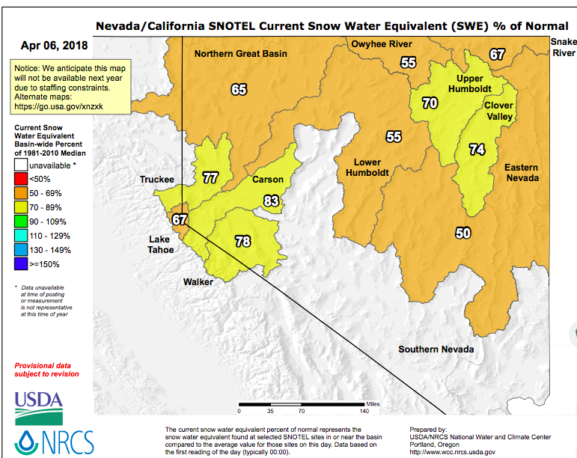
The Sierra Nevada’s snowpack, once a towering reservoir of winter’s bounty, now languishes at a mere 17% of its historical average. For Nevada, a state where the mountains and valleys conspire to shape both livelihood and leisure, this deficit is more than a statistic—it is a harbinger of transformation. As the sun ascends its summer arc, the consequences of this diminished snowpack will ripple through the state’s agricultural heartlands and tourist enclaves, reshaping economies and ecosystems alike. The cracks in the foundation of Nevada’s seasonal rhythms are widening, and the cracks reveal deeper fissures in the state’s relationship with water, climate, and time.
The Thirsty Fields: Agriculture on the Brink of Parched Reality
Nevada’s agricultural sector, a tapestry of alfalfa fields, vineyards, and livestock operations, relies heavily on snowmelt-fed irrigation systems. With snowpack at a fraction of its former self, farmers face a precarious calculus: ration water or risk crop failure. Alfalfa, the state’s most water-intensive crop, may see reduced yields, forcing growers to fallow fields or invest in costly water-saving technologies. Vineyards, particularly in the northern reaches near Reno and Carson Valley, could experience stunted grapevines and diminished fruit quality, altering the terroir that has long defined Nevada’s burgeoning wine industry.
The ripple effects extend beyond the farm gate. Livestock producers, already grappling with rising feed costs, may confront dwindling pasture availability, compelling them to cull herds or import feed from distant regions. The economic strain on rural communities—where agriculture is not just an industry but a way of life—will intensify, threatening the social fabric that has held these towns together for generations. As water rights become a flashpoint, the age-old tensions between urban and rural users may erupt into full-blown conflict, testing the resilience of Nevada’s water governance.
Tourism’s Fragile Foundation: When Snow Melts into Memory
For Nevada, tourism is the lifeblood of its economy, and the state’s allure is inextricably tied to its mountainous landscapes. Ski resorts, once blanketed in powder, now confront a shortened season and artificial snowmaking at a premium. The iconic Lake Tahoe, a jewel straddling the Nevada-California border, may see lower water levels, exposing shorelines and diminishing the clarity that draws millions of visitors annually. Hiking trails, once cushioned by snow, could become treacherous, while wildflower displays—those ephemeral bursts of color—may fade into scarcity.
The impact on outdoor recreation extends to fishing, where dwindling stream flows threaten trout populations, and to camping, where parched forests heighten wildfire risks. Even the state’s famed hot springs, natural oases in the desert, may see reduced flow rates, altering the sensory experience that has long captivated visitors. As Nevada’s tourism-dependent towns—from Minden to Mesquite—brace for leaner seasons, the question lingers: Can the state pivot toward sustainable attractions, or will it cling to the fading promise of its snowy winters?
The Unseen Currents: Climate, Culture, and the Long Shadow of Change
Beneath the surface of these immediate challenges lies a deeper reckoning. Nevada’s snowpack is not merely a resource; it is a cultural touchstone, a seasonal metronome that has dictated human activity for centuries. The Paiute and Shoshone peoples, among others, have long understood the rhythms of the land, but the accelerating pace of climate change is rewriting those rhythms beyond recognition. The 17% snowpack is not an isolated anomaly but a symptom of a larger planetary fever—a fever that demands adaptation, innovation, and, perhaps, a reevaluation of what Nevada’s future can and should look like.
The state’s response will require more than temporary fixes. It will demand a fusion of traditional wisdom and cutting-edge technology: drought-resistant crops, precision irrigation, and perhaps even geoengineering solutions. Yet, even these measures may prove insufficient without a broader cultural shift—one that acknowledges the finite nature of Nevada’s water and the need to steward it with foresight and humility. The summer ahead will test not just the state’s infrastructure but its collective imagination.
As Nevada stands on the precipice of this arid new era, the choices made today will echo through the decades. The snowpack’s decline is not just a challenge to be managed; it is an invitation to reimagine what it means to thrive in a changing world. The state’s future will be written not in the snow that once fell but in the resilience it chooses to cultivate.