Nevada Water Managers Scramble as April 1 Snowpack Hits Critical 17% Low
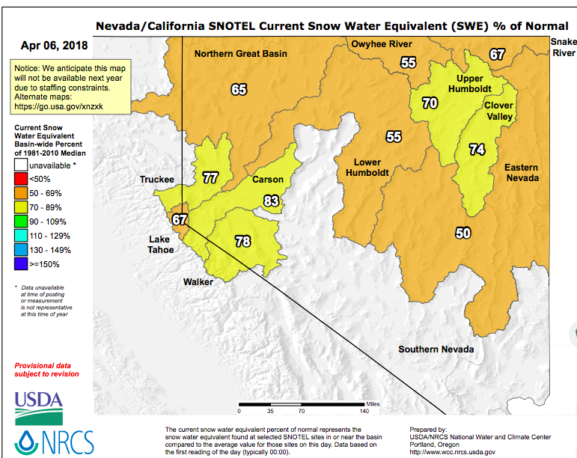
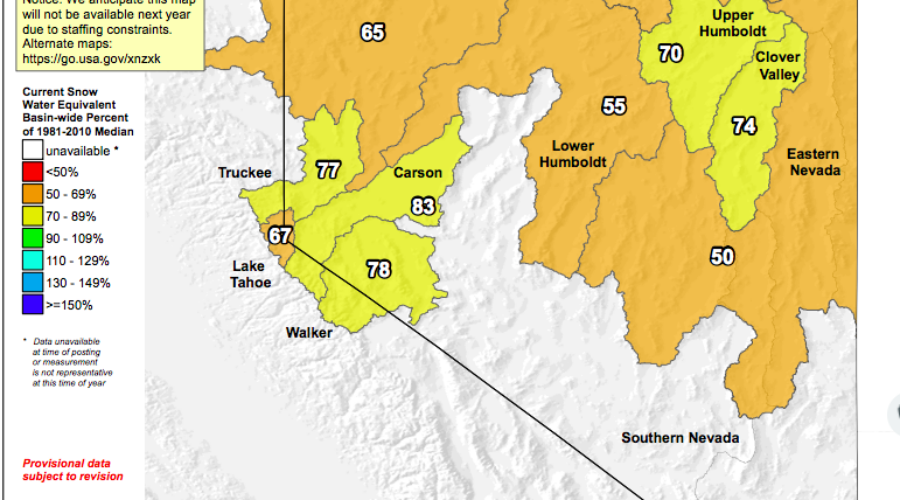
The April 1 snowpack measurement—a bellwether for Western water supplies—has plunged to a disquieting 17% of normal across Nevada’s high country. Water managers, who once relied on predictable winter accumulation to replenish reservoirs and sustain ecosystems, now confront a precarious reality where snowmelt arrives earlier, evaporates faster, and leaves behind parched valleys and diminished aquifers. This isn’t merely a statistical anomaly; it’s a harbinger of cascading consequences that ripple through agriculture, urban centers, and fragile desert habitats. As Nevada’s water deficit deepens, communities brace for rationing, farmers weigh costly pivots to less thirsty crops, and conservationists sound alarms over dwindling riparian zones. The crisis underscores a broader reckoning: in an era of climate volatility, the old playbook for water management is obsolete.
The Vanishing Snowpack: A Silent Crisis Unfolding in the Sierra Nevada
Nevada’s snowpack, a seasonal reservoir frozen in time atop the Sierra Nevada and Ruby Mountains, serves as nature’s savings account for the state’s water needs. By April 1, hydrologists traditionally expect peak accumulation—thick blankets of snow that slowly melt through spring and summer, replenishing rivers and recharging groundwater. This year, however, the ledger is starkly unbalanced. At just 17% of normal, the snowpack resembles a skeletal remnant of its former self, its crystalline structure yielding to premature thaw under relentless March warmth. The implications are immediate: streamflows are projected to hit historic lows, while the timing of peak runoff has shifted weeks earlier, disrupting the delicate synchrony between snowmelt and irrigation demands. In basins like the Truckee and Carson, where water rights are fiercely contested, the scramble to allocate dwindling resources has already begun, pitting senior users against junior claimants in a high-stakes game of hydrological musical chairs.
Urban Water Security: Cities on the Brink of Rationing
For Nevada’s urban centers, the snowpack deficit translates into a looming specter of water scarcity. Las Vegas, a city that has long prided itself on conservation through aggressive recycling and turf removal, now faces a new frontier: mandatory cuts. The Southern Nevada Water Authority has signaled that even its vaunted conservation measures may not suffice if the Colorado River—Nevada’s lifeline—continues its downward trajectory. Meanwhile, Reno and Sparks, dependent on the Truckee River’s erratic flows, are dusting off drought contingency plans that include tiered water pricing, public awareness campaigns, and potential restrictions on outdoor watering. The psychological toll is palpable; residents accustomed to lush landscapes and year-round golf courses are being asked to reimagine their relationship with water, trading convenience for survival. The question isn’t whether rationing will come, but how severe it will be—and how long it will last.
Agricultural Adaptation: Farmers Pivot Amidst Uncertainty
Nevada’s agricultural sector, a $5 billion industry that feeds both the state and beyond, is caught in the crosshairs of this hydrological upheaval. Alfalfa fields, which consume vast quantities of water, are being fallowed or converted to less thirsty crops like barley or quinoa. Dairy operations, already squeezed by rising feed costs, now grapple with dwindling irrigation supplies for forage production. Vineyards in the northern valleys, where microclimates once guaranteed reliable harvests, are experimenting with drought-resistant rootstocks and deficit irrigation techniques to eke out yields. The shift is not just economic but existential; without adaptive strategies, entire rural communities risk economic stagnation. Some farmers are turning to groundwater pumping, a stopgap that risks depleting aquifers already under stress from decades of overuse. The irony is bitter: in a state where water is the most precious commodity, those who produce food are being forced to gamble on an increasingly unreliable climate.
Ecosystem Collapse: The Quiet Death of Nevada’s Rivers
Beneath the surface of the water crisis lies an ecological catastrophe unfolding in slow motion. Nevada’s rivers and wetlands, already fragmented by dams and diversions, are now starved of the seasonal pulses that once sustained biodiversity. The Truckee River, which once teemed with Lahontan cutthroat trout and supported vast riparian forests, now resembles a skeletal channel in places, its banks eroded and its flows reduced to a trickle. Wetlands along the Humboldt River, critical stopover points for migratory birds, are drying up, threatening species like the greater sandhill crane and the western snowy plover. The loss isn’t just aesthetic; it’s functional. These ecosystems act as natural filters, recharge aquifers, and mitigate flood risks—services that become exponentially more valuable in a warming world. Yet, as water managers prioritize human needs, the fate of Nevada’s non-human inhabitants hangs in the balance, a stark reminder that water scarcity is not just a human problem.
Policy and Innovation: Can Technology Outpace Nature’s Decline?
In response to the crisis, Nevada is turning to a mix of policy levers and technological innovation. The state legislature is considering bills that would incentivize water recycling, expand groundwater recharge programs, and penalize excessive outdoor water use. Meanwhile, researchers are exploring cloud-seeding experiments to coax additional precipitation from winter storms, though the efficacy of such interventions remains debated. Desalination plants, once dismissed as too energy-intensive, are being reevaluated as a potential solution for coastal communities, though their high costs and environmental footprint pose significant challenges. The most promising developments may lie in precision agriculture, where soil moisture sensors and AI-driven irrigation systems optimize water use with surgical precision. Yet, even these advancements cannot conjure water from a depleted sky. The hard truth is that Nevada’s water future will be shaped as much by policy choices as by the whims of a changing climate.
The April 1 snowpack measurement is more than a data point—it’s a wake-up call. Nevada stands at a crossroads, where the choices made today will determine whether the state emerges as a model of resilience or a cautionary tale of shortsightedness. The path forward demands not just technical solutions, but a fundamental rethinking of how water is valued, allocated, and conserved. For a state built on the promise of abundance, the reckoning is long overdue. The question is no longer whether Nevada will adapt, but how quickly—and at what cost.