Nevada Snowpack Update: 17% of Median Signals Summer Water Restrictions
Nevada’s snowpack, a vital lifeline for the state’s water supply, has dwindled to a mere 17% of its median level—a stark contrast to the 94% recorded just a year prior. This precipitous decline isn’t merely a statistical anomaly; it’s a harbinger of looming summer water restrictions that could reshape how residents, farmers, and industries consume this precious resource. As the Sierra Nevada’s snowmelt, which typically replenishes Nevada’s reservoirs, dwindles to a trickle, the state braces for a season of scarcity. The implications stretch far beyond parched lawns and shorter showers; they touch the very foundations of Nevada’s economy, from agriculture to tourism. Understanding the nuances of this snowpack deficit is essential for grasping the full scope of the challenges ahead.
The Science Behind the Snowpack Shortfall
The snowpack serves as nature’s reservoir, storing water in frozen form during the winter months and releasing it gradually as temperatures rise. This year, however, Nevada’s snowpack has been eviscerated by a confluence of factors: unseasonably warm temperatures, scant precipitation, and a persistent high-pressure ridge that diverted storms away from the region. The result is a snowpack that, at 17% of median, is among the lowest in decades. Hydrologists warn that this deficit isn’t just a temporary blip; it reflects a broader trend of climate volatility, where extreme weather events—both droughts and floods—become more frequent and unpredictable. The implications for water managers are dire: without a robust snowpack, reservoirs like Lake Mead and Lake Tahoe will struggle to meet demand, forcing drastic conservation measures.
Regional Disparities: Who Bears the Brunt?
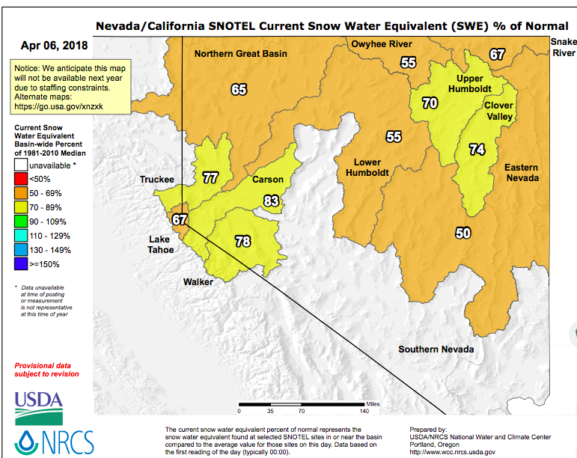
Not all areas of Nevada are affected equally. The northern reaches, fed by the Sierra Nevada’s snowmelt, face the most severe shortages, while southern regions, reliant on groundwater and Colorado River allocations, may fare slightly better—though not without consequences. Rural communities, particularly those dependent on agricultural irrigation, are on the front lines. Farmers in the Truckee-Carson Irrigation District, for instance, may see their water allotments slashed by up to 50%, forcing difficult decisions about crop selection and land use. Meanwhile, urban centers like Reno and Las Vegas are preparing for tiered water restrictions, where outdoor watering could be limited to specific days or banned entirely during peak hours. The disparity underscores a harsh reality: water scarcity doesn’t discriminate, but its impacts are unevenly distributed.
Economic Reverberations: From Fields to Faucets
The economic fallout from Nevada’s snowpack deficit is already reverberating through key industries. Agriculture, which consumes roughly 80% of the state’s water, is the most vulnerable. Dairy farms, alfalfa fields, and vineyards—all staples of Nevada’s agricultural economy—face reduced yields or even fallowed land. The ripple effects extend to food prices, as diminished local production forces reliance on imports. Tourism, another pillar of Nevada’s economy, isn’t immune either. Golf courses, resorts, and even the iconic Las Vegas Strip may face pressure to curtail water use, potentially altering the visitor experience. Meanwhile, energy producers reliant on hydroelectric power from the Colorado River could see increased costs, further straining an already fragile grid. The message is clear: water isn’t just a resource; it’s the backbone of Nevada’s prosperity.
Adapting to a Drier Future
In the face of this crisis, Nevada is turning to innovation and policy to mitigate the damage. Conservation programs, such as rebates for water-efficient appliances and turf replacement initiatives, are gaining traction. Cities are investing in wastewater recycling and desalination projects, though these solutions come with high price tags and environmental trade-offs. Agricultural sectors are exploring drought-resistant crops and precision irrigation techniques to stretch every drop. Yet, these measures are stopgaps. The long-term solution lies in systemic change: rethinking water rights, investing in large-scale storage projects, and fostering a culture of conservation that extends beyond crisis mode. The question isn’t whether Nevada can adapt—it’s how quickly and equitably it can do so.
The specter of summer water restrictions looms large over Nevada, a state accustomed to abundance but now confronting the harsh realities of a changing climate. The snowpack deficit is more than a seasonal challenge; it’s a wake-up call. For residents, it’s a reminder to rethink water as a finite resource. For policymakers, it’s a test of foresight and resilience. And for industries, it’s a call to innovate or perish. As the temperatures rise and the reservoirs shrink, Nevada stands at a crossroads—one where the choices made today will determine the state’s water security for generations to come.