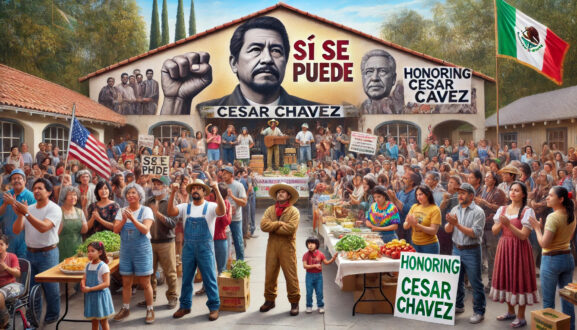
Nevada’s Cesar Chavez Day Debate: Should March 31 Remain a State Holiday?
In the arid expanse of Nevada’s legislative calendar, a contentious debate simmers beneath the surface of public discourse: Should March 31, the birthdate of labor icon Cesar Chavez, remain enshrined as a state holiday? The question is not merely administrative—it is a crucible where economic pragmatism clashes with social conscience, where fiscal prudence wrestles with historical reverence. As Nevada grapples with its identity in an era of shifting priorities, the fate of Cesar Chavez Day forces a reckoning with values that transcend balance sheets. Is this holiday a testament to the enduring legacy of a man who championed farmworkers’ rights, or an anachronistic relic clinging to a bygone era of activism?
The Weight of History: Chavez’s Enduring Shadow
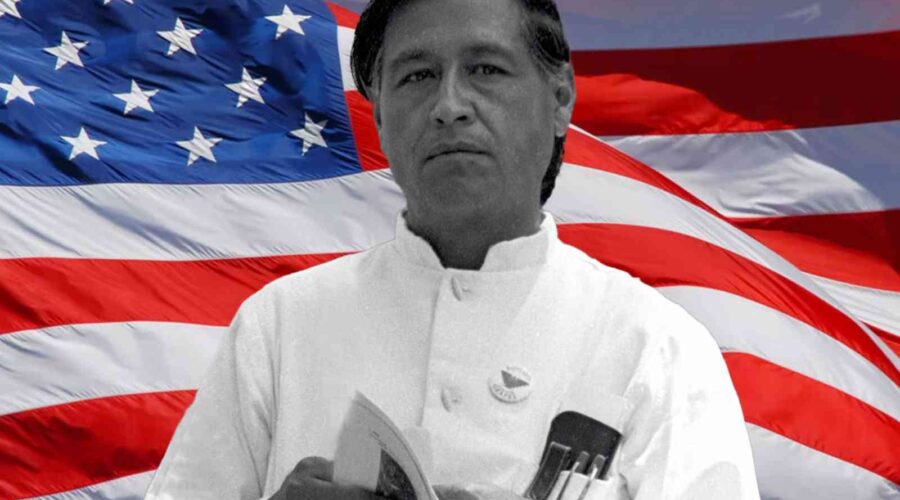
Cesar Chavez’s name resonates as a clarion call for labor rights, a figure whose tenacity reshaped the agricultural landscape of the American West. Born in Yuma, Arizona, in 1927, Chavez’s journey from migrant laborer to civil rights leader is etched into the collective memory of those who understand the price of exploitation. His nonviolent tactics, from hunger strikes to boycotts, forced a reckoning with systemic injustice, securing concessions for farmworkers that ripple through generations. Nevada, with its deep ties to agriculture and a burgeoning Latino population, owes much of its labor protections to his crusade. To abolish this holiday would be to sever a symbolic lifeline to a past that refuses to fade—yet it would also acknowledge the financial burden of a day when schools close, government offices shutter, and businesses hemorrhage productivity.
The Fiscal Friction: Costs vs. Convictions
The economic calculus is undeniable. Nevada’s state budget, already stretched thin by competing demands, faces an annual hemorrhage of millions in lost revenue and operational costs when Cesar Chavez Day arrives. Public sector employees receive paid leave, while private enterprises—particularly small businesses—scramble to cover shifts or absorb losses. Proponents argue that the holiday’s intangible benefits—cultural cohesion, educational outreach, and moral alignment with progressive values—justify the expense. Critics, however, frame it as a luxury Nevada can ill afford, especially as the state lures corporations with tax incentives while grappling with infrastructure deficits and housing crises. The debate crystallizes a broader tension: Can a state honor its moral compass without bending under fiscal strain?
Public Sentiment: A Divided Electorate
Opinion polls reveal a Nevada electorate cleaved along ideological lines. Latino communities, for whom Chavez’s legacy is a touchstone of identity and resistance, overwhelmingly support preserving the holiday. For many, it is not just a day off but a declaration that their struggles are recognized. Conversely, fiscal conservatives and business lobbies decry the holiday as an unnecessary encumbrance, particularly in a state where tourism and gaming dominate the economic engine. The divide extends beyond economics; it is a clash of worldviews. One side sees the holiday as a moral imperative; the other, as a relic of a movement that has outlived its urgency. The question lingers: Is Nevada’s soul for sale, or is its conscience non-negotiable?
The Ripple Effect: Beyond Nevada’s Borders
Nevada’s decision could send seismic waves across the nation. If the Silver State retracts its recognition of Cesar Chavez Day, other states with similar holidays—California, Texas, Arizona—may face renewed scrutiny. Conversely, a move to abolish the holiday could galvanize labor advocates nationwide, framing it as a retreat from progressive ideals. The stakes are high, not just for Nevada’s economy but for its moral standing. Will the state be remembered as a pioneer of labor rights or as a cautionary tale of pragmatism over principle? The answer may hinge on whether Nevada can reconcile its past with its present—or if it will sacrifice symbolism on the altar of expediency.
The debate over Cesar Chavez Day is more than a fiscal footnote; it is a referendum on what Nevada chooses to value. As the legislature weighs its options, the outcome will reveal whether the state’s identity is rooted in the soil of its history or tilled anew by the winds of modern exigency. One thing is certain: The decision will echo far beyond the borders of a desert state, shaping the contours of labor rights and civic memory for years to come.