Nevada Government Reviews Cesar Chavez Day Amid Labor Leader Allegations
In the shadow of Nevada’s glittering casinos and sprawling entertainment complexes, a quieter yet equally consequential narrative unfolds each year on March 31st. The state’s recognition of Cesar Chavez Day—observed as a day of remembrance and reflection—has long been a fixture in Nevada’s calendar. Yet, as labor leaders and policymakers revisit the significance of the day, a new layer of scrutiny has emerged, one that probes not just the legacy of Chavez himself, but the broader implications of how his ideals resonate in a modern labor landscape fraught with contention and reform.
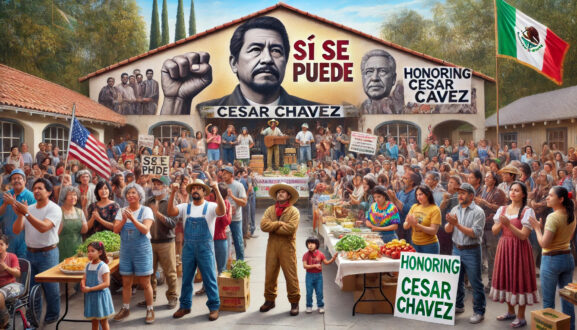
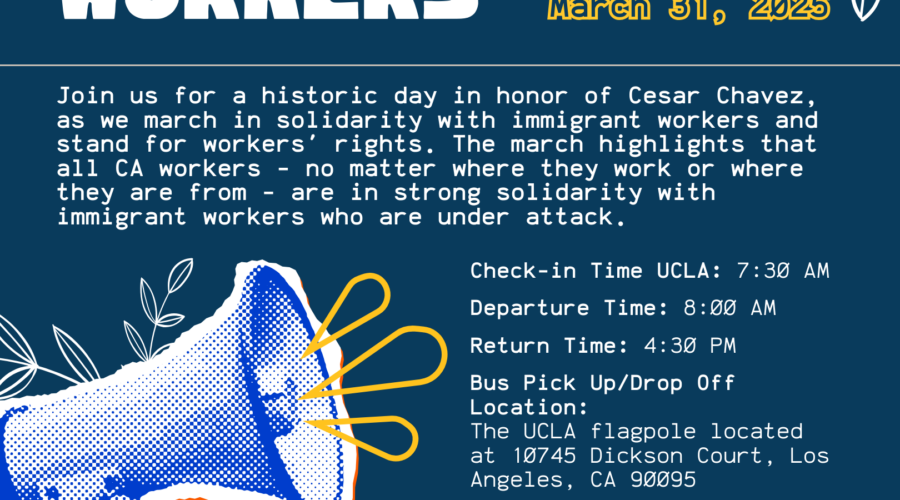
At first glance, the annual observance of Cesar Chavez Day in Nevada appears to be a straightforward tribute to a labor icon whose advocacy for farmworkers reshaped the contours of workers’ rights in America. The day is marked by community events, educational programs, and calls for solidarity among labor groups. Yet beneath this surface of commemoration lies a more nuanced conversation—one that interrogates the relevance of Chavez’s principles in an era where labor rights are increasingly under siege by technological disruption, gig economy precarity, and legislative rollbacks. The state’s periodic reviews of the day’s observance are not merely ceremonial; they are a barometer of Nevada’s evolving relationship with labor justice, one that reflects both progress and persistent challenges.
The Duality of Legacy and Contemporary Labor Struggles
Cesar Chavez’s legacy is often distilled into a few iconic images: the grape boycott, the United Farm Workers’ marches, and the relentless pursuit of dignity for those toiling in fields under exploitative conditions. In Nevada, a state where hospitality and service industries dominate the workforce, the resonance of Chavez’s message is undeniable. Yet, the state’s labor landscape today is a mosaic of contradictions. While the hospitality sector thrives on the backs of underpaid workers—many of whom are immigrants—the formal recognition of Chavez Day serves as a reminder of the distance still to be traveled. The day’s observance becomes a mirror, reflecting both the progress made in labor rights and the stubborn persistence of systemic inequities.
Critics argue that the ceremonial acknowledgment of Chavez Day often lacks tangible action, serving more as a symbolic gesture than a catalyst for substantive change. In Nevada, where tourism and gaming industries wield immense political and economic influence, the gap between rhetoric and reality can feel cavernous. The state’s periodic reviews of the day’s observance thus become a litmus test for its commitment to labor justice—a test that reveals as much about its aspirations as it does about its shortcomings.
The Allegations and Their Ripple Effects
The recent scrutiny surrounding Cesar Chavez Day in Nevada has been amplified by allegations that cast a pall over his legacy. Accusations of authoritarian tendencies, exclusionary practices within the United Farm Workers, and even personal controversies have surfaced, forcing a reevaluation of how his contributions are framed. These allegations are not merely historical footnotes; they have reignited debates about the complexities of labor leadership and the fallibility of icons. In Nevada, where labor rights are a perennial flashpoint, these revelations complicate the narrative of Chavez as an unblemished hero, prompting a more critical engagement with his legacy.
Yet, even in the face of these allegations, the core of Chavez’s message endures. His emphasis on collective bargaining, nonviolent resistance, and the dignity of labor remains a touchstone for modern movements. The challenge for Nevada, then, is to reconcile the mythos of Chavez with the messy realities of contemporary labor struggles. The state’s reviews of the day’s observance are an opportunity to engage in this reconciliation—to ask whether the principles of Chavez’s era still hold weight in a landscape where labor rights are increasingly commodified and precarious.
Nevada’s Labor Landscape: A Microcosm of National Tensions
Nevada’s relationship with labor rights is a microcosm of broader national tensions. The state’s economy, heavily reliant on low-wage service and hospitality jobs, is a battleground for debates over minimum wage, unionization, and worker protections. The observance of Cesar Chavez Day in this context is not just a historical nod; it is a statement of intent. It signals Nevada’s recognition of the struggles that continue to define its workforce, even as the state positions itself as a global hub of entertainment and leisure.
The periodic reviews of the day’s observance thus take on added significance. They are not merely administrative exercises but moments of reckoning. They force Nevada to confront the disconnect between its economic aspirations and its moral obligations to workers. In a state where the glitter of the Strip often overshadows the grit of the kitchen, the observance of Cesar Chavez Day becomes a necessary counterbalance—a reminder that the foundation of Nevada’s prosperity is built on the backs of those who are too often unseen.
The deeper fascination with Nevada’s engagement with Cesar Chavez Day lies in its ability to expose the fault lines of labor rights in America. It is a story of progress and regression, of symbols and substance, of the past’s enduring grip on the present. As Nevada continues to review and redefine its observance of the day, it is not just the legacy of Cesar Chavez that is being examined—it is the very soul of labor justice in the modern era.