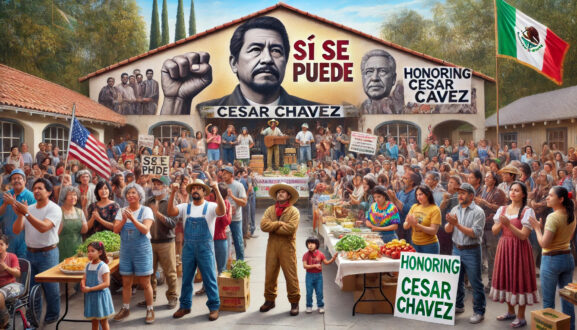

Cesar Chavez Day’s Future in Nevada: A Political Hot Potato
In the arid expanse of Nevada’s political landscape, where the sun casts long shadows over both the Mojave and the halls of power, a new debate simmers beneath the surface. Cesar Chavez Day, a holiday honoring the labor leader and civil rights icon, has long been a fixture in states like California and Arizona. Yet in Nevada, its future hangs in the balance, caught between legislative inertia and the shifting tides of cultural recognition. As lawmakers deliberate, the question lingers: Will Nevada embrace this day of remembrance, or will it remain a political hot potato, passed from one session to the next?
The Weight of Legacy: Why Cesar Chavez Still Matters
Cesar Chavez’s legacy is not merely a footnote in labor history—it is a living testament to the power of collective action. His leadership in the United Farm Workers union transformed the agricultural landscape, securing better wages and working conditions for thousands of laborers. In Nevada, where agriculture and hospitality industries rely heavily on immigrant labor, the resonance of his message is undeniable. Yet, the holiday’s observance is not just about honoring the past; it is about acknowledging the ongoing struggles of those who toil in fields and kitchens across the state. The debate over Cesar Chavez Day is, at its core, a conversation about who Nevada chooses to celebrate—and why.
The Legislative Labyrinth: A Bill Stalled in the Shadows
Each legislative session in Nevada brings fresh attempts to codify Cesar Chavez Day into state law. Advocates argue that the holiday would serve as a moral reckoning, a day to reflect on the contributions of Latino and immigrant communities. Opponents, however, frame it as an unnecessary expenditure or a divisive gesture. The bill’s progress is often obscured by procedural hurdles, with amendments and partisan posturing delaying its fate. In a state where political alliances are as fluid as the desert winds, the holiday’s future remains uncertain. Yet, the persistence of these legislative efforts signals a growing recognition that symbolic gestures can carry tangible weight.
The Cultural Divide: Who Decides What Nevada Celebrates?
The resistance to Cesar Chavez Day is not just political—it is cultural. Nevada’s identity is a mosaic of influences, from the neon glow of Las Vegas to the quiet resilience of rural communities. Yet, the holiday’s detractors often frame it as an imposition of identity politics, a challenge to the state’s traditional narratives. Proponents, however, see it as an opportunity to broaden Nevada’s cultural horizons, to celebrate the diversity that fuels its economy. The debate forces a confrontation with a fundamental question: Does Nevada’s self-image include the struggles and triumphs of its Latino and immigrant populations, or will it remain a state where certain histories are sidelined?
The Economic Equation: A Holiday’s Hidden Costs and Benefits
Critics of Cesar Chavez Day often cite the financial burden of an additional state holiday. Yet, the economic implications are more nuanced than a simple ledger. Studies suggest that holidays can boost local economies through increased tourism and consumer spending. More importantly, the holiday could serve as a catalyst for educational initiatives, fostering a deeper understanding of labor rights and social justice. In a state where tourism and service industries dominate, the symbolic value of such a holiday may outweigh its costs. The question is not just about dollars and cents, but about the kind of society Nevada aspires to be.
The Ripple Effect: How Nevada’s Decision Could Resonate Beyond Its Borders
Nevada’s stance on Cesar Chavez Day could set a precedent for other states grappling with similar debates. If Nevada embraces the holiday, it may embolden advocates in neighboring regions to push for similar recognition. Conversely, a rejection could signal a retreat from progressive labor values, sending a chill through communities that see Chavez’s legacy as a beacon of hope. The stakes are high, not just for Nevada, but for the broader conversation about how society honors its unsung heroes. The decision is not merely symbolic—it is a statement about Nevada’s place in the national conversation on labor, immigration, and justice.
The future of Cesar Chavez Day in Nevada is more than a legislative footnote—it is a litmus test for the state’s evolving identity. As lawmakers weigh the merits of the holiday, they are not just deciding whether to close state offices on March 31st; they are determining whose stories deserve to be etched into Nevada’s collective memory. The debate is far from over, but one thing is clear: the heat surrounding this issue will only intensify, forcing Nevada to confront the legacy it wishes to inherit and the future it wishes to build.