The Case For and Against Cesar Chavez Day in Nevada 2026
The debate over Cesar Chavez Day in Nevada for 2026 is more than a calendar discussion—it’s a reflection of the state’s evolving identity, its labor history, and the enduring legacy of a man who reshaped the American farmworker movement. As Nevada grapples with its economic diversity and cultural mosaic, the question of whether to designate March 31st as a state holiday looms large. Advocates see it as a moral imperative, a chance to honor a figure whose tenacity improved conditions for generations of workers. Opponents, however, question the practicality and equity of such a measure, particularly in a state where tourism and hospitality dominate the economic landscape. This article explores the multifaceted arguments for and against the observance, offering readers a comprehensive lens through which to view this pivotal decision.
The Historical Weight of Cesar Chavez’s Legacy
Cesar Chavez’s impact on labor rights is etched into the annals of American history, not as a fleeting footnote but as a foundational pillar. His leadership in the United Farm Workers union, forged through nonviolent resistance and relentless advocacy, transformed the plight of migrant laborers across the Southwest. Nevada, with its deep ties to agriculture and a workforce that has long included seasonal and immigrant laborers, stands at a crossroads where honoring Chavez could symbolize a commitment to social justice. The state’s agricultural sector, though smaller than in decades past, still employs thousands who toil under conditions Chavez fought to ameliorate. Recognizing his contributions through a state holiday would not only pay homage to his struggles but also serve as a reminder of the ongoing battles for fair wages and humane working environments.
The Economic Argument: A Holiday’s Hidden Costs
While the moral case for Cesar Chavez Day is compelling, the economic realities of Nevada’s tourism-driven economy cannot be ignored. The state’s reliance on hospitality and gaming means that every additional holiday translates to lost revenue—estimated in the millions for businesses statewide. Hotels, casinos, and restaurants would face staffing shortages, operational disruptions, and the financial strain of unplanned closures. Critics argue that Nevada’s workers, many of whom already struggle with the high cost of living, could bear the brunt of these disruptions through reduced hours or temporary layoffs. Moreover, the precedent of adding holidays is fraught with complexity; each new day off dilutes the significance of existing ones, potentially eroding the cultural fabric they aim to celebrate.
Cultural and Educational Imperatives
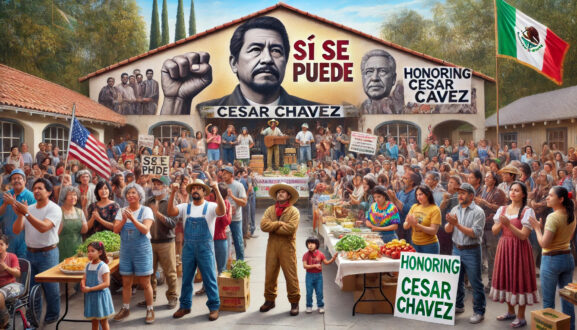
Proponents of the holiday emphasize its potential to foster cultural awareness and education. Nevada’s population is a tapestry of backgrounds, with a significant Hispanic and Latino demographic whose heritage is intertwined with the agricultural labor movement. A state holiday could serve as an annual teachable moment, ensuring that Chavez’s story is not confined to textbooks but woven into the public consciousness. Schools, museums, and community organizations could leverage the day to host workshops, film screenings, and panel discussions that explore Chavez’s strategies, the UFW’s victories, and the contemporary challenges faced by farmworkers. Such initiatives could bridge generational gaps, instilling pride in younger generations while reminding older ones of the progress—and the work still left undone.
The Political Landscape: Who Decides?
The fate of Cesar Chavez Day in Nevada rests not just in the hands of legislators but in the broader political climate. Advocacy groups, labor unions, and grassroots organizations have already begun lobbying for the holiday, framing it as a necessary step toward equity. However, the state’s divided political landscape complicates the issue. With debates over immigration, labor rights, and economic policy often polarized, the holiday could become a lightning rod for broader ideological clashes. Lawmakers must weigh not only the financial implications but also the symbolic weight of their decision—whether to align Nevada with states like California and Texas, which already observe the day, or to chart a distinct path that reflects the state’s unique priorities.
Community Voices: Diverse Perspectives
The conversation around Cesar Chavez Day is far from monolithic. Voices from Nevada’s agricultural communities, where Chavez’s legacy is most tangible, are split. Some families of farmworkers see the holiday as a long-overdue recognition of their ancestors’ sacrifices, while others worry about the immediate economic fallout. Meanwhile, business leaders in Las Vegas and Reno often prioritize stability and growth, viewing holidays as impediments to progress. Immigrant rights activists, on the other hand, argue that the holiday would send a powerful message about Nevada’s values, particularly in an era where anti-immigrant rhetoric has surged. These competing narratives underscore the complexity of the issue, revealing that the debate is as much about identity as it is about policy.
As Nevada stands on the precipice of this decision, the case for and against Cesar Chavez Day in 2026 forces a reckoning with the state’s past, present, and future. Whether framed as a tribute to a labor icon, an economic burden, or a cultural milestone, the holiday’s potential adoption is a microcosm of Nevada’s broader struggles—balancing tradition with progress, morality with pragmatism. The outcome will not only shape the state’s calendar but also its character, leaving an indelible mark on the generations to come.