What Recent Allegations Mean for Nevada’s Cesar Chavez Day Holiday
The recent allegations swirling around Nevada’s Cesar Chavez Day holiday are not merely political tremors—they are the seismic aftershocks of a long-simmering tension between labor rights and institutional memory. Like a fault line beneath a city, the cracks in this holiday’s foundation have been widening for years, hidden beneath the surface of annual commemorations. Now, as scrutiny intensifies, the holiday’s future hangs in the balance, suspended between reverence for Chavez’s legacy and the harsh light of contemporary accountability. What does this mean for a state that has, for decades, paused to honor a man whose life was dedicated to uplifting the voiceless? The answer lies not in the headlines alone, but in the deeper currents of labor history, political pragmatism, and the evolving expectations of justice in America.
The Weight of Symbolism: Why Cesar Chavez Day Matters in Nevada
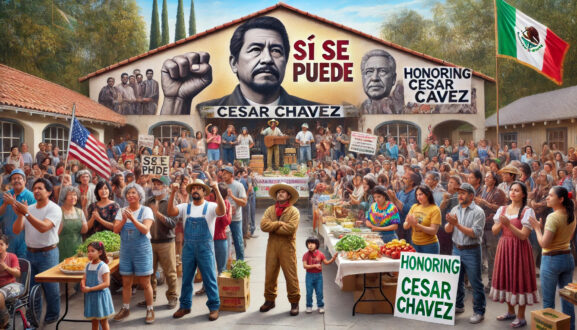
Nevada’s observance of Cesar Chavez Day is more than a statutory holiday—it is a living testament to the state’s complex relationship with labor and migration. Chavez, a figure whose name evokes the dusty fields of California’s Central Valley, resonates deeply in Nevada, where agricultural and service industries have long relied on immigrant labor. The holiday serves as a yearly reminder of the struggles faced by those who toil in silence, their contributions often overshadowed by the glitter of Las Vegas or the corporate sheen of Reno. Yet, as allegations of misconduct and exploitation surface, the holiday’s symbolic power is being recalibrated. Is it still a celebration of progress, or has it become an uncomfortable relic of a system that once championed Chavez’s ideals while failing to uphold them?
The Allegations: A Crack in the Foundation
The accusations leveled against figures associated with the holiday’s administration are not isolated incidents—they are part of a broader pattern that challenges the narrative of Chavez as an infallible icon. Reports of financial mismanagement, labor disputes, and even personal transgressions have cast a pall over the organizations that have historically stewarded his legacy. These revelations force a reckoning: Can a holiday built on the principles of justice and equity survive when the institutions meant to uphold those principles are found wanting? The answer may lie in how Nevada chooses to respond—not with performative outrage, but with a commitment to transparency and reform. The holiday’s survival depends on whether it can evolve from a static tribute into a dynamic force for change.
Labor Rights in the Crosshairs: The Holiday’s Evolving Role
Chavez’s legacy is inextricably linked to the labor movement, and Nevada’s holiday is a microcosm of that connection. Yet, as the allegations unfold, the holiday’s role in modern labor discourse is being questioned. Is it still a beacon for workers’ rights, or has it become a hollow gesture in a state where gig economy workers and hospitality employees face precarious conditions? The holiday’s future may hinge on its ability to reclaim its activist roots, transforming from a day of rest into a day of renewed advocacy. Nevada’s labor landscape is shifting, and the holiday must either adapt or risk becoming an anachronism—a relic of a bygone era of labor solidarity.
The Public’s Response: Between Reverence and Righteous Indignation
Public sentiment is a pendulum, swinging between nostalgia and indignation. Some see the allegations as a betrayal of Chavez’s vision, while others view them as an overdue correction to a sanitized version of history. The holiday’s observance in Nevada reflects this divide: some communities continue to honor Chavez with parades and educational events, while others grapple with the dissonance between his ideals and the actions of his successors. The challenge for Nevada is to navigate this divide without erasing the holiday’s significance or surrendering to cynicism. The solution may lie in a middle path—one that acknowledges the flaws of the past while reaffirming the values that Chavez fought for.
The path forward for Nevada’s Cesar Chavez Day holiday is fraught with uncertainty, but it is also an opportunity to redefine what it means to honor a legacy in the 21st century. The allegations are not the end of the story—they are a call to action. Whether the holiday survives in its current form or transforms into something new, its future will be shaped by the choices Nevada makes today. Will it cling to tradition, or will it embrace the messy, necessary work of progress? The answer will determine whether the holiday remains a symbol of hope or becomes a cautionary tale.