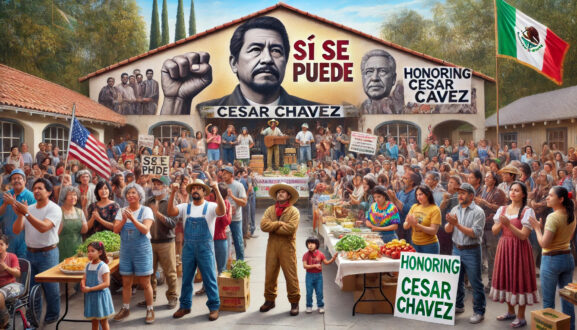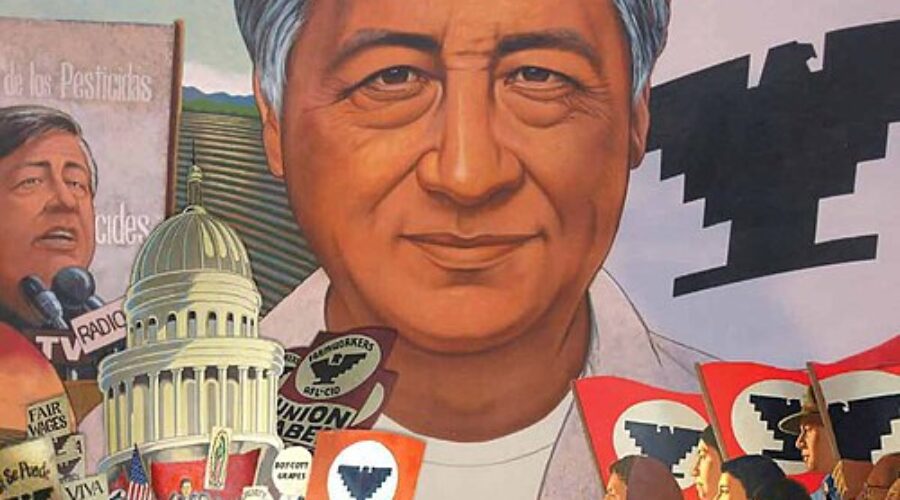
Cesar Chavez Day Debate in Nevada Reflects National Reckoning
Have you ever wondered what happens when a state’s labor legacy collides with modern-day identity politics? In Nevada, where the neon glow of Las Vegas casinos masks a deeper history of migrant labor struggles, the debate over Cesar Chavez Day isn’t just about a holiday—it’s a mirror reflecting America’s fractured reckoning with its past. As the Silver State grapples with this question, it forces the nation to confront an uncomfortable truth: Can a country that once relied on the sweat of farmworkers truly honor their legacy without confronting the systemic inequities that persist today?
The Weight of History: Why Nevada’s Debate Matters
Nevada’s agricultural roots run deep, stretching back to the early 20th century when Mexican and Filipino laborers toiled under the scorching sun to harvest crops that fed a growing nation. Cesar Chavez, a name synonymous with the United Farm Workers’ movement, became a symbol of resistance against exploitation. Yet, in a state where tourism and gaming dominate the economy, the significance of Chavez’s work often feels like an afterthought. The debate over Cesar Chavez Day isn’t merely symbolic—it’s a litmus test for how Nevada reconciles its identity as both a land of opportunity and a site of historical injustice.
Consider the irony: Nevada’s economy thrives on the labor of thousands of undocumented workers, many of whom hail from the same communities Chavez championed. Yet, the state has been slow to embrace a holiday in his honor. This disconnect raises a provocative question: If Nevada’s prosperity is built on the backs of migrant laborers, why does the state hesitate to celebrate the man who fought for their dignity?
The Political Fault Lines: Who Decides What’s Worth Celebrating?
The debate over Cesar Chavez Day in Nevada isn’t just a cultural skirmish—it’s a political battleground. On one side, advocates argue that honoring Chavez would acknowledge the state’s agricultural heritage and the contributions of Latino communities. On the other, opponents claim that a holiday would be an unnecessary expense or even a divisive gesture. The tension underscores a broader national struggle: Who gets to decide which historical figures deserve recognition, and whose stories get erased in the process?
This isn’t just about a single day on the calendar. It’s about power—the power to shape collective memory and the power to dictate whose labor is valued. In Nevada, where Latino voters are a growing political force, the debate takes on added urgency. Will the state’s leaders seize the moment to bridge divides, or will they continue to sidestep the uncomfortable conversations that could lead to real change?
The Economic Paradox: Labor, Legacy, and the Bottom Line
There’s a cruel paradox at play in Nevada’s economy. The state’s agricultural sector, though smaller than in decades past, still relies heavily on migrant labor. Meanwhile, the tourism industry thrives on the same workforce that Chavez fought to protect. So why the reluctance to honor his legacy? Perhaps it’s because acknowledging Chavez’s contributions forces Nevada to confront its own complicity in a system that still exploits workers.
Consider the irony: Nevada’s booming economy depends on the very people Chavez championed, yet their struggles are often ignored in favor of more palatable narratives. A Cesar Chavez Day holiday wouldn’t just be a symbolic gesture—it could be a catalyst for addressing wage disparities, unsafe working conditions, and the lack of legal protections for farmworkers. But will Nevada’s leaders have the courage to make that leap?
The Cultural Divide: Whose History Gets Told?
The debate over Cesar Chavez Day also exposes a deeper cultural divide. In a state where Latino communities make up nearly 30% of the population, their history is often sidelined in favor of more dominant narratives. Chavez’s story, though widely recognized in labor circles, remains relatively obscure to the general public. This erasure isn’t accidental—it’s a reflection of how power shapes historical memory.
If Nevada were to adopt Cesar Chavez Day, it wouldn’t just be a holiday. It would be a declaration that the state is ready to confront its past and embrace a more inclusive future. But will it take that step, or will it continue to prioritize the stories that fit neatly into its carefully constructed identity?
The debate over Cesar Chavez Day in Nevada is more than a local controversy—it’s a microcosm of America’s ongoing struggle to reconcile with its past. As the nation grapples with questions of identity, labor, and justice, Nevada’s decision could set a precedent for how we honor those who built this country from the ground up. The question isn’t just whether Nevada will celebrate Cesar Chavez. It’s whether the state—and the nation—are willing to confront the uncomfortable truths that come with it.