What Does 17% Snowpack Mean for Lake Tahoe This Summer?
As the sun begins its slow ascent over the Sierra Nevada, casting a golden glow upon the crystalline waters of Lake Tahoe, the region braces for a summer unlike any other. With snowpack levels lingering at a mere 17% of historical averages, the alpine landscape is whispering secrets of resilience—and urgency. This isn’t just a statistic; it’s a narrative of adaptation, a story of how one of the most iconic bodies of water in the world must navigate the whims of a changing climate. The question isn’t merely about survival, but about transformation: What does this stark deficit mean for the lake’s future, its ecosystems, and the communities that depend on its bounty?
The Lake’s Thirst: A Parched Reflection of the Mountains
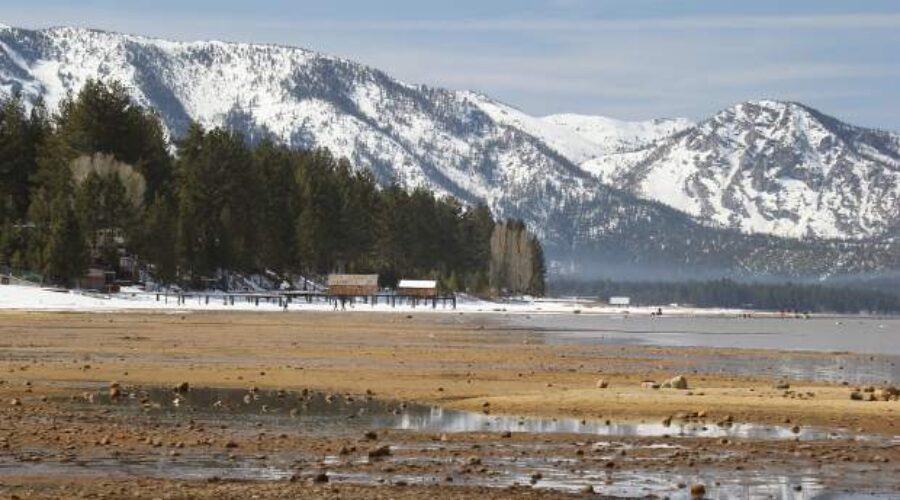
Lake Tahoe, a jewel cradled between Nevada and California, is a hydrological marvel—a natural reservoir that has, for millennia, relied on the Sierra’s snowpack as its lifeblood. Each winter, the mountains don a blanket of white, storing water in frozen form to be released gradually as temperatures rise. This year, that blanket is threadbare. At 17% snowpack, the lake’s traditional rhythm has been disrupted, leaving it to confront a summer of diminished inflows. The consequences are immediate: receding shorelines expose geological scars, while the once-vibrant clarity of the water may face new challenges from sediment and nutrient fluctuations. The lake, in its quiet majesty, becomes a mirror—reflecting not just the sky above, but the fragility of the systems that sustain it.
Ecosystems in Flux: The Unseen Battles Beneath the Surface
Beneath the lake’s sapphire expanse, a delicate ballet of life unfolds. The Tahoe sucker, a native fish species, thrives in the cold, oxygen-rich waters that snowmelt once guaranteed. With reduced inflows, these waters may warm, altering the delicate balance that has defined the lake’s biodiversity for generations. Meanwhile, invasive species like the Asian clam, already a persistent thorn in the region’s ecological side, could proliferate in the absence of cold, rushing currents. The lake’s clarity, a point of pride for Tahoe’s stewards, may also wane as algal blooms find fertile ground in stagnant conditions. This is not a tale of doom, but of adaptation—a reminder that nature, though resilient, is not impervious to the shifts imposed by a warming world.
The Human Equation: Communities on the Edge of Change
For the towns that encircle Lake Tahoe—each with its own rhythm of tourism, recreation, and local industry—the 17% snowpack is more than a hydrological anomaly; it’s an economic tremor. Summer tourism, the lifeblood of the region, may see an influx of visitors seeking respite from scorching inland heat, but the lake’s diminished capacity could strain infrastructure and resources. Water restrictions, already a reality in some areas, may tighten further, forcing businesses and residents to rethink their relationship with this precious resource. Yet, necessity breeds innovation. From drought-resistant landscaping to water recycling initiatives, the communities around Tahoe are proving that resilience is not just a buzzword but a way of life. The lake, in turn, becomes a classroom—a living laboratory where human ingenuity and natural forces collide.
A Summer of Contrasts: Beauty in the Face of Scarcity
There is a peculiar allure to Tahoe this summer, one that lies in its contrasts. The shoreline, usually a bustling promenade of sunbathers and paddleboarders, may stretch further than usual, revealing hidden coves and forgotten relics of the lake’s geological past. The air, though warm, carries the crisp tang of pine and the faintest hint of ozone—a reminder that even in scarcity, nature’s beauty endures. This is a summer to witness the lake not as it was, but as it is becoming: a dynamic, evolving entity that challenges our perceptions of permanence. The 17% snowpack is not a death knell, but a clarion call—one that invites us to see Tahoe not as a static postcard, but as a living, breathing system in transition.
The story of Lake Tahoe this summer is one of contrasts, resilience, and quiet defiance. It is a narrative written in the language of melting snow and rising temperatures, of receding waters and adapting communities. As the sun sets over the Sierra, casting long shadows across the lake’s surface, one thing becomes clear: Tahoe’s future is not predetermined. It is a canvas, and the choices we make today will determine the hues with which its story is painted tomorrow. The lake, after all, has always been more than water and rock—it is a testament to the enduring dance between nature and humanity.