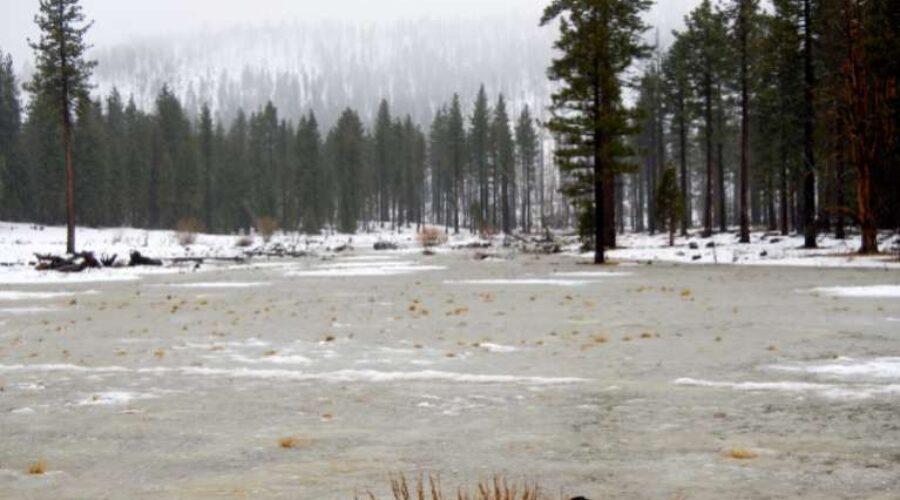
Lake Tahoe Property Values Drop Amid 17% Snowpack Water Concerns
The shimmering expanse of Lake Tahoe has long been a bastion of exclusivity, where million-dollar properties cling to the shoreline like barnacles to a ship’s hull. Yet beneath the veneer of opulence, a silent shift is underway—one that threatens to recalibrate the very foundations of the region’s real estate market. As the snowpack, that crystalline lifeblood of the Sierra Nevada, dwindles to a mere 17% of its historic average, property values are not merely wavering; they are receding like the tide from a receding shore. This isn’t just a fluctuation in the market’s pulse—it’s a seismic tremor, hinting at a future where the lake’s allure may no longer guarantee its former grandeur.
The Paradox of Perception: When Prestige Meets Precipitation
Lake Tahoe has always been a paradox—a place where the air is crisp, the views are breathtaking, and the prices are suffocating. For decades, buyers have flocked to its shores, lured by the promise of pristine waters and alpine serenity, often turning a blind eye to the region’s vulnerabilities. Yet now, the very elements that once defined its allure are under siege. The snowpack, that frozen reservoir feeding the lake’s fabled clarity and the region’s water supply, has dwindled to a fraction of its former self. This isn’t just an environmental footnote; it’s a harbinger of change, one that forces prospective buyers to confront a question they’ve long avoided: What happens when the lake’s magic is no longer sustainable?
The market’s response has been swift and unyielding. Properties that once commanded stratospheric prices are now languishing, their value eroded by the creeping realization that the Tahoe of old may not return. Buyers, once dazzled by the prospect of owning a piece of paradise, are now hesitating—paralyzed by the specter of drought, wildfires, and the slow unraveling of the region’s ecological balance. The irony is palpable: the same forces that once made Tahoe a haven are now eroding its desirability.
The Domino Effect: From Snowpack to Market Sentiment
The decline in snowpack isn’t an isolated phenomenon; it’s a domino that sets off a chain reaction, toppling assumptions about the region’s future. Water scarcity, once a distant concern, is now a tangible threat. The lake’s famous clarity, a result of its deep, cold waters and minimal runoff, is at risk as warmer temperatures and reduced snowmelt disrupt the delicate balance. For property owners, this translates to higher costs—whether through increased water bills, stricter regulations, or the need for costly infrastructure upgrades to mitigate drought conditions.
Investors, who once saw Tahoe as a safe bet, are now recalibrating their expectations. The days of reckless spending are giving way to a more discerning approach, where due diligence extends beyond square footage and views to include water rights, climate resilience, and long-term sustainability. The market is no longer just about location, location, location—it’s about adaptation, foresight, and the willingness to weather the storm, quite literally.
The Human Element: When Dreams Collide with Reality
Behind every property listing is a story—a family’s dream of a lakeside retreat, a retiree’s vision of tranquility, or an investor’s gamble on appreciation. These narratives are now colliding with an uncomfortable truth: the Tahoe they fell in love with may not be the Tahoe they’ll inherit. The emotional weight of this realization is palpable. For those who’ve already staked their claim, the question isn’t just about financial loss; it’s about the erosion of a lifestyle they cherished.
Meanwhile, those on the cusp of buying are grappling with a new calculus. Is the allure of Tahoe worth the risk? Can they justify the expense in a world where the lake’s future is increasingly uncertain? The answers are as varied as the buyers themselves, but one thing is clear: the market is no longer a monolith. It’s a mosaic of shifting priorities, where environmental consciousness and financial pragmatism are reshaping the landscape—both literally and figuratively.
The Path Forward: Navigating Uncharted Waters
The decline in property values isn’t a death knell for Lake Tahoe; it’s a wake-up call. The region stands at a crossroads, where the choices made today will determine its fate tomorrow. Will it cling to the past, a relic of a bygone era, or will it embrace innovation—through water conservation, renewable energy, and sustainable development? The market’s response will be a litmus test of its resilience.
For sellers, the message is clear: adapt or perish. Properties that once sold in days may now linger for months, their value contingent on their ability to meet the demands of a changing world. For buyers, the opportunity is equally stark: to invest not just in a home, but in a vision—one that prioritizes harmony with the environment over sheer opulence. And for the region itself, the challenge is to redefine its identity, not as a playground for the wealthy, but as a steward of its natural heritage.
The snowpack may be shrinking, but the possibilities are not. The question is whether Lake Tahoe will rise to meet the moment—or be left behind by it.