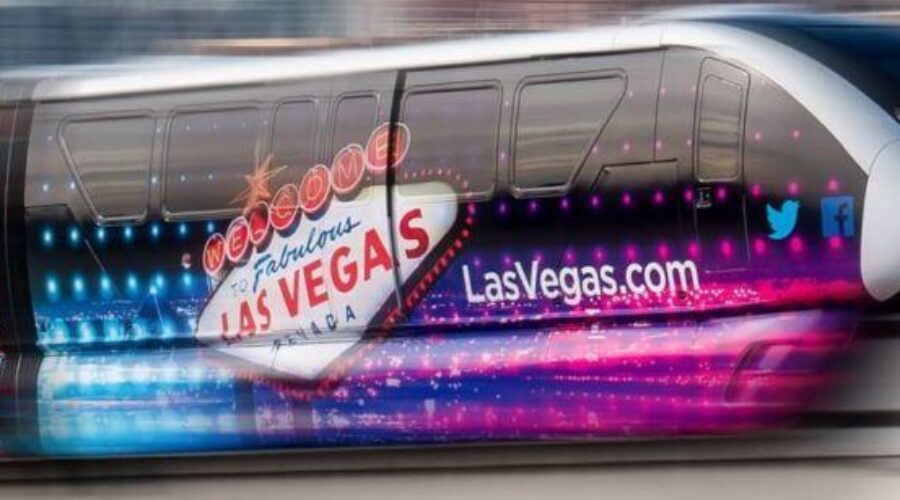
Should Nevada Keep the Monorail or Let The Loop Replace It?
The Las Vegas Strip has long been a marvel of engineering and ambition, where neon dreams collide with steel and glass. Yet, beneath the dazzle of its skyline, a quieter debate simmers: Should Nevada preserve the aging monorail, a relic of mid-century optimism, or embrace The Loop, a hyperloop-inspired transit system poised to redefine urban mobility? This isn’t merely a question of infrastructure—it’s a reckoning with legacy, innovation, and the very soul of a city that thrives on reinvention.
The Monorail: A Relic of Aspiration or a Functional Anachronism?
The Las Vegas Monorail, inaugurated in 2004, was once hailed as a visionary solution to the Strip’s traffic woes. Its sleek, elevated tracks promised swift transit between major resorts, reducing reliance on taxis and shuttles. Yet, two decades later, its limitations are glaring. Operating at a fraction of its projected ridership, the monorail struggles with high costs, limited hours, and a route that fails to extend beyond the Strip’s core. It’s a system caught in a time warp, a technological fossil in a city that moves at the speed of light.
Critics argue that the monorail’s rigid structure—bound by fixed routes and high operational expenses—has rendered it obsolete. The pandemic further exposed its fragility, as ridership plummeted and financial strains mounted. Is it worth salvaging, or has it become a financial albatross, siphoning resources that could fuel more dynamic transit solutions?
The Loop: A Glimpse into the Future or a Pipe Dream?
Enter The Loop, a proposed high-speed transit system designed to whisk passengers between resorts at near-supersonic speeds. Developed by Elon Musk’s The Boring Company, this subterranean network of tunnels and autonomous electric vehicles promises to slash travel times to mere minutes. Proponents tout its potential to revolutionize Las Vegas’ transit landscape, offering unparalleled efficiency and scalability.
Yet, The Loop is not without its skeptics. Questions linger about its feasibility—will the tunnels withstand the Strip’s seismic activity? Can it truly handle peak-hour demand without becoming a congested labyrinth? And perhaps most critically, will it remain a novelty, a playground for tech enthusiasts, rather than a practical transit backbone?
The Economic Divide: Costs, Benefits, and the Bottom Line
At the heart of this debate lies economics. The monorail’s maintenance costs are a drain on public funds, while The Loop’s upfront investment is staggering. Proponents of The Loop argue that its long-term savings—lower operational costs, higher efficiency—will justify the expense. Detractors counter that the monorail, despite its flaws, is a known entity, a system that, with upgrades, could still serve a purpose.
The Strip’s economic engine thrives on spectacle, and transit is no exception. A state-of-the-art system like The Loop could become a tourist attraction in itself, drawing visitors eager to experience the future. Conversely, the monorail’s charm lies in its retro-futurism—a quirky nod to an era when monorails were the pinnacle of modernity.
Public Sentiment: Whose Transit, Whose Future?
Public opinion is a fractured mosaic. Residents and frequent visitors may prioritize speed and convenience, while locals who rely on transit for daily commutes might favor a system that extends beyond the Strip’s glittering core. The monorail, despite its flaws, is a familiar presence; The Loop, with its untested technology, is a gamble.
This divide isn’t just about transit—it’s about identity. Las Vegas has always been a city of bold choices, where risk and reward dance in a high-stakes tango. The monorail represents caution; The Loop, audacity. Which path aligns with the city’s ethos?
The Verdict: A City at a Crossroads
Nevada stands at a precipice. The monorail, for all its shortcomings, is a tangible asset—a system that, with investment, could be revitalized. The Loop, meanwhile, offers a tantalizing glimpse into the future, but its success hinges on overcoming formidable hurdles.
The choice isn’t binary. Perhaps a hybrid model—upgrading the monorail while piloting The Loop—could bridge the gap between past and future. Or maybe Nevada will bet everything on innovation, trusting that The Loop’s promise outweighs the risks.
One thing is certain: the decision will shape Las Vegas’ transit narrative for decades. Will it cling to the past, or leap into the unknown? The answer may well define the city’s next chapter.