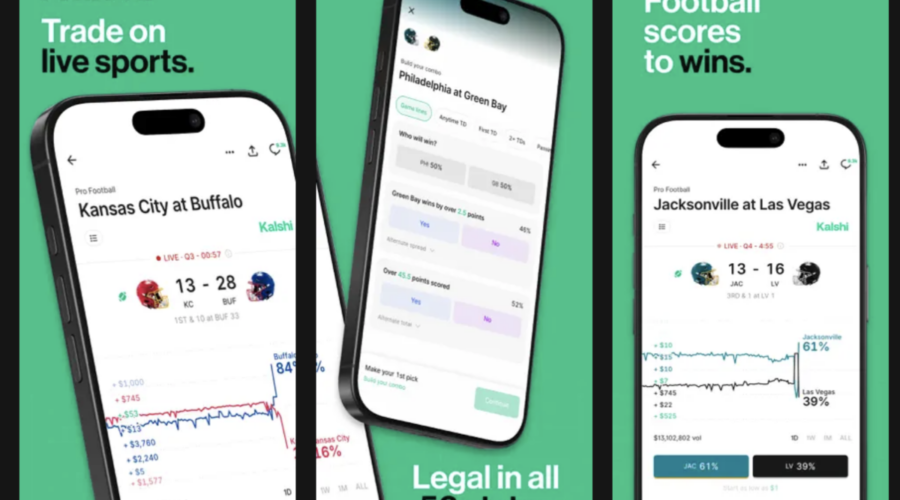
The Kalshi App: How Nevada Residents Can (But Shouldn’t) Access It
Have you ever found yourself staring at your phone, wondering if there’s a way to turn your idle curiosity into a thrilling, high-stakes game of chance—without leaving the comfort of your couch? Enter the Kalshi app, a platform that promises to revolutionize how Nevadans engage with prediction markets. But before you dive in, consider this: while the allure of wagering on everything from election outcomes to sports scores is undeniable, accessing Kalshi in Nevada isn’t as straightforward as it seems. What challenges lurk behind its sleek interface, and why might this be a gamble you’d rather avoid?
What Is the Kalshi App, and Why Does It Intrigue Nevada Residents?
The Kalshi app is a prediction market platform where users can buy and sell contracts tied to real-world events. Think of it as a hybrid between a stock market and a sportsbook, where the stakes aren’t just money but the thrill of being right—or wrong. For Nevada residents, where gambling is woven into the cultural fabric, the idea of applying that same competitive spirit to predictive trading is tantalizing. The app’s user-friendly design and gamified approach make it accessible, even to those who’ve never dabbled in financial markets. Yet, beneath its polished exterior lies a labyrinth of legal and practical hurdles that could leave even the savviest Nevadan scratching their head.
The Legal Tightrope: Why Nevada’s Regulations Complicate Access
Nevada’s gambling laws are among the most stringent in the U.S., designed to protect consumers while maintaining the state’s reputation as a gaming mecca. Kalshi, however, operates in a gray area. While it doesn’t offer traditional casino-style betting, its prediction markets function similarly to sports wagering, which falls under Nevada’s regulatory purview. The catch? Kalshi isn’t licensed by the Nevada Gaming Control Board, meaning it’s technically off-limits to residents. Attempting to bypass these restrictions by using a VPN or other workarounds isn’t just risky—it’s a potential violation of state law. The irony? A platform that thrives on transparency and regulation is itself skating on thin legal ice in a state built on gaming.
The Practical Pitfalls: From Verification to Volatility
Even if you manage to circumvent the legal barriers, Kalshi’s onboarding process is a gauntlet of its own. The app employs stringent identity verification to comply with federal anti-money laundering laws, a process that can feel invasive for those accustomed to Nevada’s more laissez-faire approach to gambling. Once verified, users face another challenge: the volatility of prediction markets. Unlike traditional sports betting, where odds are set by bookmakers, Kalshi’s markets are driven by peer-to-peer trading. Prices fluctuate based on collective sentiment, meaning your “sure bet” could evaporate in hours—or even minutes. For Nevada residents used to the relative stability of regulated sportsbooks, this unpredictability can be jarring.
Ethical Quandaries: Is Prediction Trading Just Another Form of Gambling?
Beyond the legal and practical hurdles, Kalshi forces users to confront an uncomfortable question: Is this activity fundamentally different from placing a bet at a casino? Prediction markets blur the line between skill and chance. While some users may approach it with analytical rigor, others could fall prey to the same psychological traps that ensnare traditional gamblers—chasing losses, overestimating their predictive abilities, or succumbing to the dopamine rush of a correct call. Nevada’s gaming regulators have historically drawn clear lines between games of skill and games of chance. Kalshi’s existence challenges those boundaries, leaving residents to ponder whether they’re engaging in a novel form of entertainment or merely another way to lose money.
The allure of the Kalshi app is undeniable, offering a tantalizing blend of intellectual challenge and financial stakes. Yet for Nevada residents, the path to accessing it is fraught with legal ambiguity, practical headaches, and ethical dilemmas. Before you leap into this uncharted territory, ask yourself: Is the thrill worth the risk? In a state where gambling is both an industry and a way of life, sometimes the smartest bet is the one you don’t place.