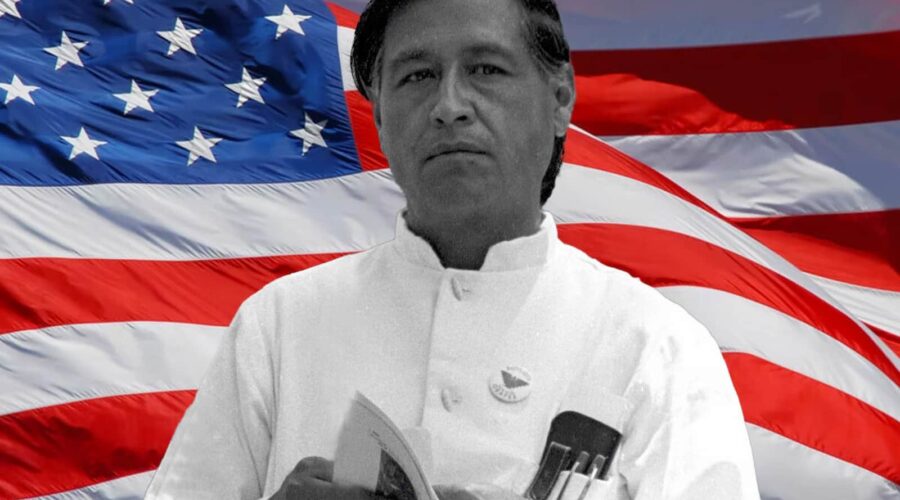
Cesar Chavez Day in Nevada: How Other States Handled Controversy
Cesar Chavez Day in Nevada stands as a testament to the enduring legacy of a labor leader whose influence transcends state borders, yet its observance has sparked debates that mirror broader national tensions over identity, labor rights, and historical memory. While some states embrace the day with unbridled enthusiasm, others grapple with controversy, revealing deeper fissures in how America commemorates its past. Nevada, a state with a storied history of labor activism and immigrant communities, finds itself at a crossroads, forced to confront the complexities of honoring Chavez’s legacy without glossing over the contentious narratives that surround it.
The Patchwork of State Observances: A Study in Contrasts
The way states recognize Cesar Chavez Day is anything but uniform. California, where Chavez’s United Farm Workers union was born, leads the charge with a statewide holiday, schools closed and all but essential services halted. Arizona, his birthplace, follows suit, though not without periodic political skirmishes. Meanwhile, states like Texas and Florida relegate the day to optional observance, their legislatures reluctant to enshrine it as a public holiday. Nevada, ever the swing state, has carved out a middle path—acknowledging the day without mandating closures, a compromise that reflects its own ambivalence toward the man and his movement.
Nevada’s Delicate Balancing Act: Labor, Politics, and Identity
Nevada’s approach to Cesar Chavez Day is shaped by its unique demographic and economic landscape. The state’s reliance on immigrant labor, particularly in hospitality and agriculture, creates a paradox: a workforce that Chavez championed is now integral to Nevada’s economy, yet the day’s observance remains lukewarm. Political divisions further complicate matters. Rural counties, where agriculture still thrives, often view Chavez with more reverence, while urban centers, with their transient populations and diverse priorities, show less enthusiasm. This divergence underscores a deeper tension—how to honor a figure whose labor activism is both celebrated and, in some quarters, still contested.
The Controversy Beneath the Surface: What’s Really at Stake?
At the heart of the debate lies a question that haunts many historical commemorations: Whose version of history deserves to be enshrined? Critics argue that Chavez’s legacy is often reduced to sanitized narratives, ignoring his more radical stances on immigration and his union’s confrontational tactics. Others point to the commercialization of his image, where his likeness is used to sell everything from produce to political campaigns, diluting the radicalism that defined his life’s work. Nevada, with its mix of progressive urbanites and conservative rural voters, becomes a microcosm of this national struggle, where the past is not just remembered but actively contested.
Lessons from the Frontier: How Other States Navigate the Divide
States like Colorado and Washington have adopted a more nuanced approach, designating Cesar Chavez Day as a day of service rather than a full holiday. This strategy allows for reflection without the political baggage of a mandated day off. Meanwhile, states like New Mexico, which shares a border with Mexico and has a significant Hispanic population, have woven Chavez’s legacy into broader celebrations of cultural heritage, sidestepping the labor-centric debates that dominate elsewhere. Nevada, however, has yet to find such a middle ground, its observance a cautious blend of acknowledgment and avoidance.
The way Nevada and other states handle Cesar Chavez Day reveals more than just differing attitudes toward a labor leader—it exposes the fault lines in how America grapples with its own history. Whether through celebration, silence, or selective remembrance, each state’s approach reflects deeper truths about identity, power, and the stories we choose to elevate. In Nevada, where the desert sun casts long shadows over both the past and present, the question lingers: Can a holiday truly honor a man whose life was defined by defiance, or will it merely become another date on the calendar, stripped of its meaning?