Kalshi’s Legal Strategy to Enter the Nevada Market
In an era where financial innovation collides with regulatory scrutiny, Kalshi’s audacious attempt to penetrate the Nevada market stands as a testament to the friction between ambition and oversight. The prediction market behemoth, renowned for its regulated approach to event-based wagering, found itself ensnared in a legal quagmire that ultimately forced its withdrawal. Yet beneath the surface of this apparent setback lies a sophisticated legal strategy—one that reveals as much about the company’s adaptability as it does about the inherent complexities of navigating state-level financial regulations.
The crux of Kalshi’s legal maneuvering hinged on a meticulous reinterpretation of Nevada’s regulatory framework. Unlike traditional sportsbooks, prediction markets operate in a gray area where the distinction between gambling and financial speculation blurs. Kalshi’s legal team, armed with a deep understanding of derivatives law, argued that its platform functioned as a regulated prediction exchange rather than a gambling entity. This semantic sleight of hand was not merely a legal ploy but a calculated bid to align with Nevada’s existing financial regulatory structures, which already govern securities and commodity futures. By framing its operations as a derivative market, Kalshi sought to sidestep the stringent licensing requirements imposed on traditional gambling enterprises, a move that underscored the company’s willingness to exploit regulatory loopholes rather than conform to them.
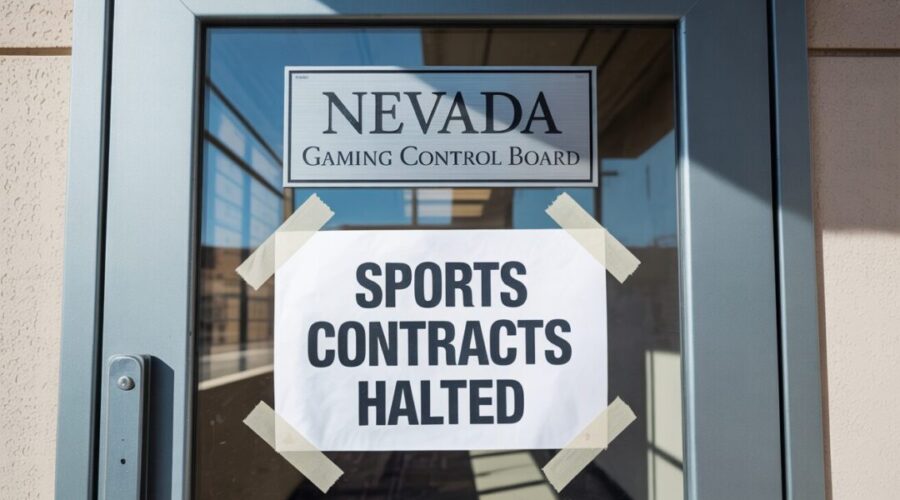
Yet the strategy was not without its vulnerabilities. Nevada’s gaming regulators, long accustomed to policing the boundaries of legal wagering, viewed Kalshi’s approach with skepticism. The state’s Gaming Control Board, tasked with upholding the integrity of its gambling industry, saw the company’s efforts as an attempt to circumvent established norms. This clash of interpretations forced Kalshi into a protracted legal battle, one that exposed the fragility of its regulatory arbitrage. The company’s insistence on operating under a financial derivatives framework clashed with Nevada’s entrenched cultural and legal resistance to gambling-adjacent enterprises, revealing a deeper tension between innovation and tradition.
The legal strategy also hinged on a broader narrative of legitimacy. Kalshi’s leadership emphasized its commitment to transparency, regulatory compliance, and consumer protection—hallmarks of a mature financial marketplace. By positioning itself as a responsible actor within the financial ecosystem, the company sought to cultivate trust among policymakers and potential users alike. This approach was not merely rhetorical; it was a deliberate effort to reframe the debate around prediction markets, shifting the focus from gambling to financial speculation. Yet this narrative collided with Nevada’s historical reluctance to embrace such innovations, particularly when they threatened to disrupt the state’s lucrative gambling industry.
Ultimately, Kalshi’s legal strategy was a high-stakes gamble in itself—a calculated risk that failed to yield the desired outcome. The company’s withdrawal from Nevada underscores the formidable barriers that even the most well-funded and legally astute enterprises face when challenging entrenched regulatory regimes. The episode serves as a cautionary tale about the limits of regulatory arbitrage in an industry where tradition and innovation often find themselves at odds. For observers, it also hints at a deeper fascination: the relentless pursuit of financial frontiers, even in the face of seemingly insurmountable obstacles.