The Loop Expansion: Will It Reach the Las Vegas Airport?
The Loop Expansion: Will It Reach the Las Vegas Airport?
Imagine stepping off a plane in the desert metropolis of Las Vegas, your luggage in tow, and instead of battling traffic or waiting for a shuttle, you’re whisked away in under ten minutes to your destination. The Loop Expansion, a visionary transit system, promises to redefine urban mobility—but will its tentacles stretch far enough to cradle the bustling heart of Harry Reid International Airport? This isn’t just about convenience; it’s about reshaping how we perceive transit itself.
The Loop’s Ascent: A Paradigm Shift in Urban Transit
The Loop isn’t merely an extension of existing infrastructure—it’s a radical departure. Conceived as a high-speed, autonomous transit network, it operates on a network of underground and above-ground tunnels, ferrying passengers in sleek, electric pods at speeds that defy conventional transit norms. Unlike traditional subways or buses, The Loop eliminates stops, reducing travel time to a fraction of what commuters endure today. Its modular design allows for scalability, meaning cities can expand its reach incrementally, adapting to demand without the bureaucratic inertia that stifles progress.
Yet, its most compelling promise lies in its potential to bridge the chasm between transit hubs and urban cores. For Las Vegas, a city where tourism and logistics collide in a symphony of chaos, this could be transformative. The airport, a sprawling nexus of arrivals and departures, is a natural candidate for integration—if the vision holds.
Las Vegas Airport: The Missing Link in the Loop’s Grand Design
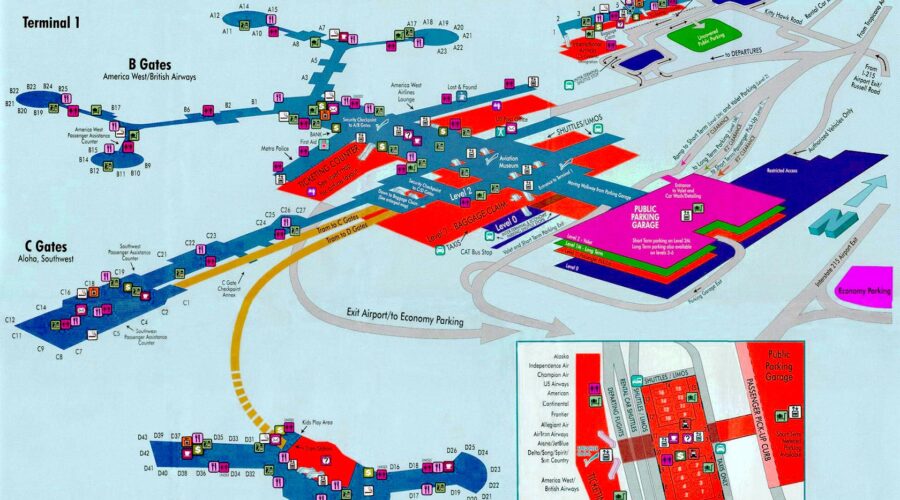
The Harry Reid International Airport is a behemoth of movement, handling over 40 million passengers annually. Yet, its accessibility remains a pain point. The current transit options—buses, taxis, rideshares—are mired in unpredictability. The Loop’s proposition is tantalizing: a seamless, frictionless connection from terminal to destination, whether it’s the Strip, downtown, or beyond. But here’s the crux: the airport’s location, nestled southwest of the city, presents a logistical puzzle. The Loop’s existing routes skirt its perimeter, leaving passengers to rely on last-mile solutions that dilute the system’s efficiency.
Could an extension to the airport be the catalyst for a transit revolution in Las Vegas? The answer hinges on feasibility. The Loop’s autonomous pods, capable of navigating complex urban landscapes, could theoretically burrow beneath the airport’s tarmac or weave through its sprawling infrastructure. Yet, the cost—both financial and environmental—demands scrutiny. Would the benefits outweigh the disruption? For a city that thrives on spectacle, the answer might lie in the spectacle of progress itself.
Economic and Social Ripples: Beyond the Pods
The implications of such an expansion extend far beyond speed. An airport-connected Loop could redefine real estate dynamics, making peripheral areas more attractive to developers and businesses. Imagine a world where the airport is no longer an island of isolation but a gateway to the city’s pulse. Tourism could flourish further, with visitors opting for transit over rental cars, reducing congestion and emissions. The social fabric, too, would shift—residents and travelers alike would gain a newfound sense of connectivity, eroding the barriers that divide the city’s glittering core from its functional edges.
Yet, challenges loom. Public skepticism, regulatory hurdles, and the sheer audacity of the project could stall its momentum. The Loop’s success in Las Vegas hinges on more than engineering—it requires a cultural leap, a willingness to embrace a future where transit is not just a necessity but an experience.
The Future Unwritten: What Lies Ahead
The question isn’t whether The Loop can reach the airport—it’s whether Las Vegas is ready to demand it. The city’s history is one of reinvention, of defying limits. If the expansion materializes, it won’t just be a transit line; it will be a statement. A declaration that even in a city built on chance and spectacle, the future can be engineered with precision and purpose.
For now, the pods glide silently through their tunnels, a whisper of what’s to come. The airport waits, a silent sentinel at the edge of possibility. The question lingers: Will the Loop’s expansion reach it? The answer may well define the next chapter of Las Vegas—not as a city of excess, but as a city of movement.