
Lake Tahoe Snowpack 17%: Long-Term Climate Models
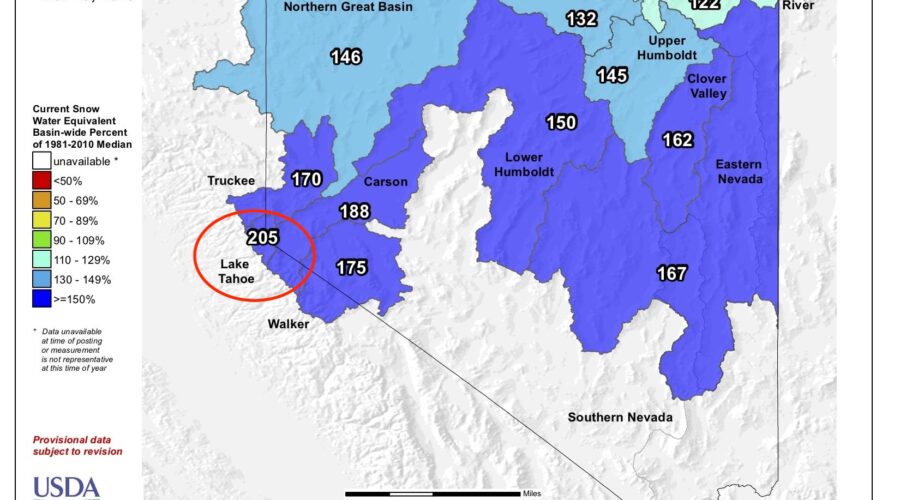
The Lake Tahoe snowpack, a barometer of regional hydrology and climatic trends, has dipped to 17% of its historical average—a stark contrast to the near-record highs of previous years. This precipitous decline isn’t merely a seasonal anomaly but a harbinger of broader environmental shifts. As climate models evolve, the implications for water security, ecosystem stability, and recreational economies grow increasingly complex. Understanding these dynamics requires dissecting the interplay between short-term weather patterns and long-term climatological projections, where the snowpack serves as both a metric and a metaphor for a changing world.
The Hydrological Paradox: Snowpack as a Climate Canary
The snowpack’s current state is a paradox—simultaneously a victim of warming trends and a critical buffer against drought. Historically, the Sierra Nevada’s snowpack has acted as a natural reservoir, storing winter precipitation in frozen form to release it gradually during spring and summer. Yet, with temperatures inching upward, the snowpack’s resilience wanes. The 17% figure isn’t just a number; it’s a symptom of a hydrological system struggling to adapt. Snow metamorphosis—where flakes compact into dense layers—is accelerating, reducing the snowpack’s ability to retain moisture. Meanwhile, rain-on-snow events, once rare, are becoming more frequent, triggering premature runoff and diminishing the snowpack’s seasonal storage capacity.
Climate Models: The Crystal Ball of Snowpack Futures
Long-term climate models offer a glimpse into the snowpack’s potential trajectory, but their predictions are as varied as the methodologies behind them. General Circulation Models (GCMs) project a 20–50% reduction in Sierra Nevada snowpack by the century’s end under high-emission scenarios. These models, however, often underestimate the nonlinear feedback loops at play. For instance, the albedo effect—where darker, snow-free surfaces absorb more solar radiation—exacerbates melt rates, creating a self-reinforcing cycle of decline. Regional climate models, such as those downscaled for the Lake Tahoe Basin, suggest that even under moderate warming, the snowpack could shrink by 30% by 2050, with the most dramatic losses occurring at lower elevations. These projections underscore the urgency of adaptive water management strategies, from expanded reservoir capacities to groundwater recharge initiatives.
Ecosystem Ramifications: Beyond the White Blanket
The snowpack’s decline reverberates through the ecosystem, reshaping habitats and altering species interactions. For the Lake Tahoe Basin’s flora, the loss of a persistent snowpack disrupts germination cycles, favoring drought-tolerant species while pushing others toward local extinction. Amphibians like the Sierra Nevada yellow-legged frog, dependent on snowmelt-fed wetlands, face heightened predation risks as habitats shrink. Meanwhile, the region’s iconic conifers—once insulated by deep snow—suffer from frost drought, where frozen soils prevent water uptake despite ample precipitation. These ecological shifts aren’t isolated; they cascade through the food web, from soil microbes to apex predators like black bears, which rely on snowpack-stabilized berry crops. The snowpack, in essence, is the region’s ecological keystone, and its erosion threatens the stability of an entire biotic community.
Recreational and Economic Reverberations
For a region where winter tourism underpins nearly $2 billion annually, the snowpack’s decline is an existential concern. Ski resorts, already investing in snowmaking infrastructure, face a paradox: the need to expand operations to offset natural snow scarcity while grappling with the energy-intensive costs of artificial snow production. The recreational snowmobile industry, too, is at a crossroads, as thinner snowpacks shorten operating seasons and increase environmental degradation. Beyond tourism, the snowpack’s retreat threatens the region’s real estate market, where waterfront properties—once insulated by the snowpack’s regulatory role in lake levels—now face heightened volatility. These economic tremors extend to local governments, which rely on transient occupancy taxes tied to winter visitation. The question isn’t whether the snowpack will rebound, but how communities will adapt to a future where winter, as we know it, is increasingly ephemeral.
Policy and Innovation: Charting a Path Forward
Addressing the snowpack’s decline demands a multifaceted response, blending policy innovation with technological ingenuity. California’s Sustainable Groundwater Management Act (SGMA) offers a framework for mitigating water scarcity, but its implementation remains uneven. Innovations like atmospheric river capture—where storm systems are intercepted to recharge aquifers—are gaining traction, though their scalability is still unproven. Meanwhile, Indigenous water management practices, such as the Washoe Tribe’s traditional water stewardship, provide a model for sustainable coexistence with hydrological cycles. At the federal level, investments in climate-resilient infrastructure, from floodplain restoration to drought-resistant landscaping, could buffer the region against future shocks. Yet, the most critical step may be reimagining the snowpack not as a static resource, but as a dynamic system requiring proactive, adaptive governance.
The Lake Tahoe snowpack’s 17% benchmark is more than a statistical footnote; it’s a clarion call for a region—and a planet—grappling with the accelerating pace of climate change. As long-term models refine their predictions, the urgency of action becomes undeniable. The snowpack’s fate is inextricably linked to our own, a reminder that the white blanket covering the Sierra Nevada is not merely a winter wonderland, but a fragile, fading emblem of nature’s equilibrium. The choices we make today will determine whether future generations inherit a landscape where snow still whispers of permanence, or one where its absence echoes the silence of a warming world.