How bad is Nevada’s water crisis? Snowpack at 17% of median
Beneath the cerulean expanse of Nevada’s skies, where the sun bakes the earth into a mosaic of cracked clay and sagebrush, a silent arithmetic unfolds. The state’s snowpack—a once-reliable reservoir of winter’s largesse—now languishes at a mere 17% of its median, a figure so stark it reads less like a statistic and more like a geological sigh. This is not merely a drought; it is a slow unraveling of the West’s hydrological tapestry, where every inch of snow that fails to accumulate is a thread pulled from the loom of an already parched landscape. The implications stretch beyond water bills and lawn restrictions; they whisper of a future where Nevada’s identity—its glittering cities, its agricultural veins, its very pulse—may need to be rewritten in the language of scarcity.
The Vanishing Crown of the Sierra Nevada
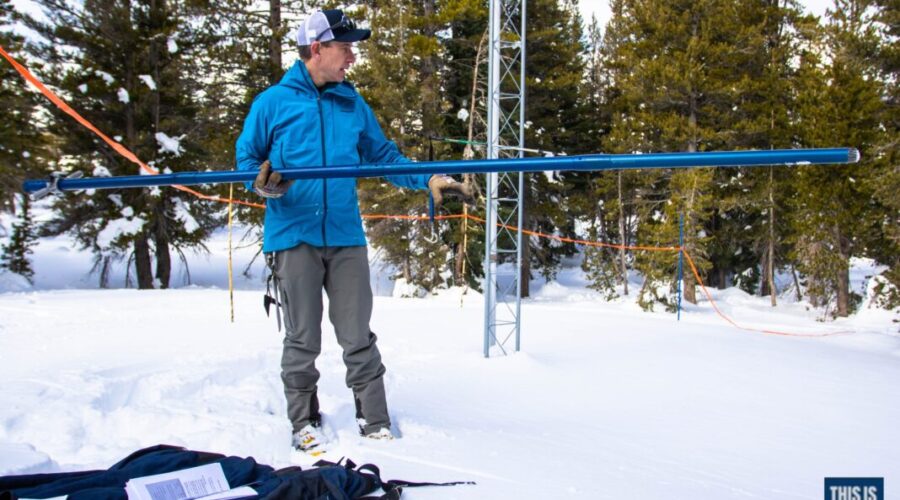
Imagine the Sierra Nevada as a monarch whose crown, once heavy with jewels of ice, now hangs perilously light. The snowpack, that storied accumulation of winter storms, has long been Nevada’s silent sovereign, melting in spring to fill reservoirs and sustain ecosystems. But in this season of want, the crown weighs little more than a wisp of frost. The 17% figure is not just a number; it is a harbinger. It signals that the high-altitude savings account of water, built over centuries, has been overdrawn. Without this frozen bounty, the Truckee, Carson, and Walker Rivers—lifelines for Reno, Carson City, and rural communities alike—shrink to a trickle, their once-vibrant currents reduced to a skeletal network of muddy veins. The land, deprived of its seasonal rejuvenation, grows brittle, its resilience tested like parchment left too long in the sun.
The Mirage of Resilience
Nevada has long prided itself on its ability to thrive in adversity, a state where the desert’s harshness is met with innovation and grit. Yet this drought is not a passing mirage but a permanent shift in the terrain. The state’s reliance on the Colorado River—a lifeline shared with six other states—has already strained under the weight of overuse and dwindling flows. Now, with the Sierra’s snowpack faltering, Nevada faces a double jeopardy: less water from its own mountains and less from its federally allocated share. The result is a precarious balancing act, where conservation measures feel like bandages on a hemorrhage. Golf courses, once symbols of excess, are now scrutinized; lawns are replaced with desert-adapted flora; and farmers, the backbone of rural economies, watch as their fields crack under the sun’s relentless gaze. The mirage of resilience is fading, revealing the stark reality of a landscape pushed to its limits.
The Ghosts of Aquifers Past
Beneath Nevada’s surface, a hidden world of aquifers has sustained life for millennia. These subterranean reservoirs, fed by ancient rains and snowmelt, have been tapped with increasing desperation as surface water dwindles. But aquifers are not infinite. They are more like savings accounts with no teller to replenish them. In some parts of Nevada, groundwater levels have plummeted by hundreds of feet, leaving behind a legacy of sinking earth and saltwater intrusion. The land itself is sinking, a phenomenon known as subsidence, where the weight of over-extraction collapses the porous rock like a deflated balloon. This is not just a crisis of water quantity but of geological integrity, where the very ground beneath Nevada’s feet is slowly surrendering to the demands placed upon it.
A Future Written in Drought
The path forward is fraught with hard choices. Desalination plants, once unthinkable in a landlocked state, are now under consideration. Water recycling, a practice still in its infancy, may become as common as recycling plastic. And yet, these solutions are costly, energy-intensive, and slow to implement. The clock is ticking. Nevada’s water crisis is not a distant threat but a present-tense reality, one that demands a reckoning with how the state grows, consumes, and sustains itself. The glittering casinos of Las Vegas, the sprawling subdivisions of Henderson, the vineyards of Pahrump—all are part of a grand experiment in survival. The question is no longer whether Nevada will adapt, but how quickly it can shed the illusions of abundance and embrace the discipline of scarcity.
The snowpack’s decline is more than a warning; it is a mirror held up to the state’s soul. In its frozen crystals, we see reflected the consequences of a century of unchecked growth, of water policies that assumed plenty in a land of little. The West has always been a place of reinvention, where necessity births ingenuity. But reinvention requires humility—a recognition that the land’s limits are not negotiable. Nevada stands at the precipice of a new era, one where water is not a given but a privilege, where every drop saved is a testament to resilience. The question is whether the state will answer the call before the last snowflake melts into memory.