The Vegas Loop’s Monorail Takeover Is Genius or Disastrous?
The Vegas Loop’s Monorail Takeover: Is It Genius or Disastrous?
As neon lights flicker against the desert sky and the hum of slot machines never ceases, Las Vegas reinvents itself yet again. The latest gambit? A bold bid to acquire the Las Vegas Monorail—a move that promises to reshape the city’s transportation landscape. But is this a stroke of strategic brilliance or a high-stakes gamble with unforeseen consequences? The answer may hinge on whether you see the glass as half-full—or half-empty in the middle of a heatwave.
A Bold Vision: Seamless Transit or Overambitious Pipe Dream?
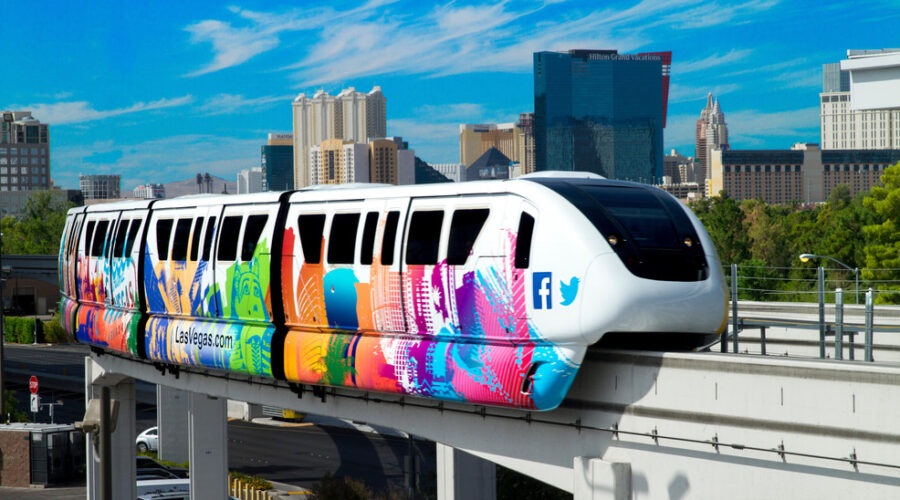
The proposal to integrate the monorail into the city’s broader transit network isn’t just about convenience; it’s about redefining urban mobility in a city where time is currency and gridlock is a four-letter word. Imagine gliding above the Strip’s cacophony in a sleek, air-conditioned pod, bypassing the inferno of traffic below. The monorail’s elevated tracks could offer a reprieve from the chaos, a silent rebellion against the tyranny of stoplights.
Yet, critics warn of a Sisyphean task: retrofitting an aging system into a modern transit artery. The monorail, once hailed as a futuristic marvel, now faces scrutiny over its aging infrastructure and limited coverage. Can a relic of the 1990s truly anchor a 21st-century transit revolution? The challenge isn’t just technical—it’s existential. Will the monorail become a lifeline or a stranded relic, a monument to misplaced nostalgia?
The Economic Gamble: Tourism Boost or Fiscal Quagmire?
Proponents argue that a monorail takeover could turbocharge tourism, slashing transit times between resorts and convention centers. Picture a visitor stepping off a plane at Harry Reid International Airport, boarding a monorail, and arriving at their Strip hotel in under 20 minutes—no rideshare, no traffic, no existential dread. The monorail could become the city’s most efficient ambassador, a rolling billboard for Vegas’s relentless efficiency.
But economics is a merciless arbiter. The upfront costs—infrastructure upgrades, operational overhauls, and potential subsidies—could dwarf the projected benefits. Skeptics point to past transit boondoggles, where taxpayer dollars vanished into the desert sands like a mirage. Will the monorail’s revival spark an economic renaissance or saddle the city with another fiscal albatross? The stakes couldn’t be higher in a post-pandemic world where every dollar must justify its existence.
Public Perception: A Love Letter or a Divorce in the Making?
Las Vegas thrives on perception. The monorail’s image has long been a Rorschach test—some see sleek modernity, others a clunky relic. A takeover could reframe its narrative, but only if executed with surgical precision. The public’s trust is a fragile thing; one misstep could turn enthusiasm into outright hostility. Will the monorail become a symbol of progress or a cautionary tale of civic hubris?
Moreover, the monorail’s success hinges on more than just engineering—it demands cultural buy-in. Residents and visitors alike must embrace it as a viable alternative to cars and rideshares. Convincing a city addicted to convenience won’t be easy. The monorail must shed its reputation as a niche novelty and become a necessity, a habit as ingrained as blackjack or buffets.
The Domino Effect: Ripples Across the City’s Veins
A monorail takeover wouldn’t exist in a vacuum. It could trigger a domino effect, reshaping everything from real estate values to traffic patterns. Developers might pivot toward monorail-adjacent properties, betting on increased foot traffic. Conversely, areas bypassed by the system could face neglect, widening the city’s socioeconomic divides. The monorail’s shadow could stretch far beyond its tracks, altering the city’s DNA in ways both intended and unintended.
Then there’s the question of competition. The monorail isn’t the only game in town. Ride-hailing apps, autonomous shuttles, and even hyperloop fantasies loom on the horizon. Can the monorail carve out a sustainable niche, or will it be outpaced by faster, cheaper, or more flexible alternatives? The race is on—and the monorail’s future may hinge on its ability to outmaneuver, not just outlast, its rivals.
The Vegas Loop’s monorail takeover is a high-wire act, a gamble where the pot of gold and the abyss of failure are separated by a mere thread. Whether it’s genius or disastrous may not be clear for years. But one thing is certain: in a city that thrives on reinvention, this move is pure Vegas—bold, brash, and impossible to ignore.