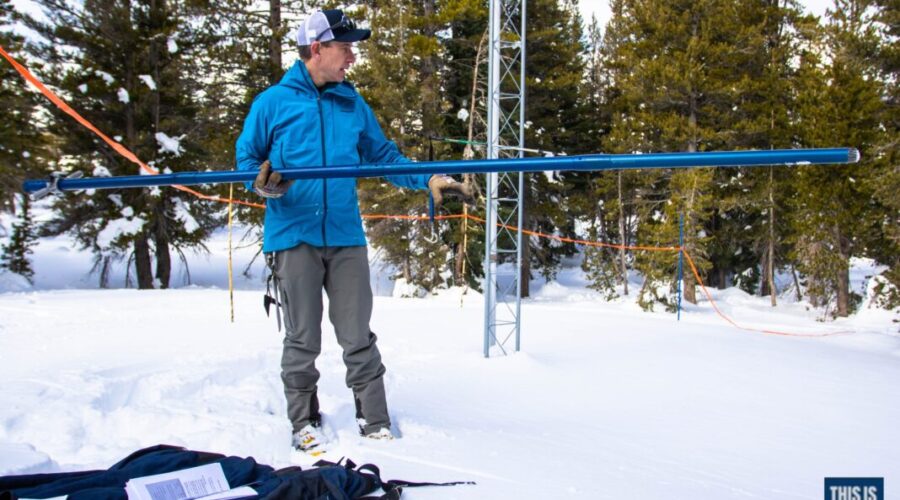
How Nevada’s 17% Snowpack Is Sparking Water Innovation
The parched valleys of Nevada, where the sun’s relentless gaze has long dictated the rhythm of life, are witnessing an unexpected transformation. With snowpack levels plummeting to a mere 17% of historical averages, the state stands at the precipice of a water crisis—yet this scarcity is not a harbinger of doom, but a crucible for innovation. The arid landscape, once a passive recipient of nature’s whims, is now the stage for a quiet revolution. Engineers, farmers, and policymakers are reimagining water management with a blend of audacity and pragmatism, turning desperation into ingenuity. This is not merely a tale of survival; it is a narrative of reinvention, where every drop becomes a catalyst for change.
The Paradox of Scarcity: When Less Becomes More
Nevada’s dwindling snowpack is more than a statistical anomaly—it is a wake-up call etched into the very terrain. The Sierra Nevada, once a reliable reservoir of frozen bounty, now yields a fraction of its former self. Yet, from this deficit emerges a paradox: scarcity breeds creativity. Farmers, long accustomed to the bountiful runoff of melting snow, are now adopting precision irrigation systems that deliver water with the delicacy of a surgeon’s scalpel. Drip lines weave through fields like capillary networks, ensuring that every plant receives exactly what it needs, no more, no less. This shift from abundance to efficiency is not born of choice, but of necessity—a forced evolution that redefines the relationship between human ambition and natural limitation.
The urban landscape is no less transformed. Cities, where water once flowed with reckless abandon, now enforce stringent conservation measures. Yet these restrictions are not mere decrees of austerity; they are the scaffolding of a new ethos. Las Vegas, a metropolis built on the edge of a desert, has become a laboratory for water recycling. Its wastewater treatment plants, once overlooked, now hum with activity as they purify and repurpose every gallon. The city’s fountains, once symbols of opulence, have been reimagined as dynamic displays of sustainability, their jets powered by reclaimed water. In this redefinition of luxury, Nevada is not just conserving—it is redefining what it means to thrive.
The Alchemy of Recharge: Turning Runoff into Resilience
Beneath Nevada’s sunbaked surface lies another frontier of innovation: groundwater recharge. The state’s aquifers, depleted by decades of over-extraction, are being replenished through a meticulous dance of engineering and hydrology. Stormwater, once a fleeting nuisance, is now captured and funneled into spreading basins, where it percolates slowly into the earth. These basins, scattered across the desert like oases of intent, are not merely pits but portals—a way to bank water for the future. The process is slow, almost meditative, a counterpoint to the frenetic pace of modern life. Yet it is this slowness that ensures longevity, a hedge against the volatility of climate.
Even the snow itself is not spared from this alchemy. In the high country, where the last remnants of winter cling to the peaks, researchers are experimenting with cloud seeding—a controversial yet increasingly refined technique to coax additional precipitation from the sky. The science is complex, involving silver iodide and atmospheric conditions, but the goal is simple: to wring every possible drop from the heavens. It is a gamble, a dance with the unpredictable, but one that Nevada is willing to take in its quest for resilience.
The Human Equation: Collaboration in the Crucible of Crisis
Innovation, however, is not the work of machines alone. It is the product of human collaboration, a tapestry woven from the threads of diverse expertise. Tribal nations, whose ancestral lands cradle Nevada’s waterways, are at the forefront of this movement. Their traditional knowledge, honed over centuries of living in harmony with the land, is being integrated with modern science to create holistic water management strategies. These partnerships are not without tension—historical grievances and competing interests often simmer beneath the surface—but they are a testament to the power of shared purpose. When the stakes are high, old divisions give way to new alliances.
The private sector, too, is stepping into the fray. Tech companies, drawn by the allure of solving one of the world’s most pressing challenges, are developing AI-driven platforms to predict water availability with unprecedented accuracy. These tools, which crunch vast datasets to forecast droughts and optimize distribution, are the digital counterparts to Nevada’s physical innovations. They represent a fusion of Silicon Valley’s ingenuity with the state’s raw necessity—a marriage of code and conservation.
A New Horizon: The Promise of Adaptation
Nevada’s water crisis is not a story of impending collapse, but of transformation in progress. The state’s 17% snowpack is not a death knell; it is a clarion call. It has forced a reckoning with the fragility of resources and the resilience of human ingenuity. The innovations emerging from this crucible—precision agriculture, wastewater recycling, groundwater recharge, and collaborative governance—are not mere stopgaps. They are the blueprints for a future where scarcity does not mean surrender, but reinvention.
As the sun sets over the Nevada desert, casting long shadows across the land, one thing is clear: the state is not waiting for the snow to return. It is building a new relationship with water—one that is sustainable, equitable, and bold. The journey is far from over, but the first steps have been taken. And in those steps lies the promise of a different kind of abundance: not the reckless plenty of the past, but the measured, deliberate prosperity of a society that has learned to thrive within its limits.