The Monorail’s Demise? Vegas Loop Integration Raises Concerns
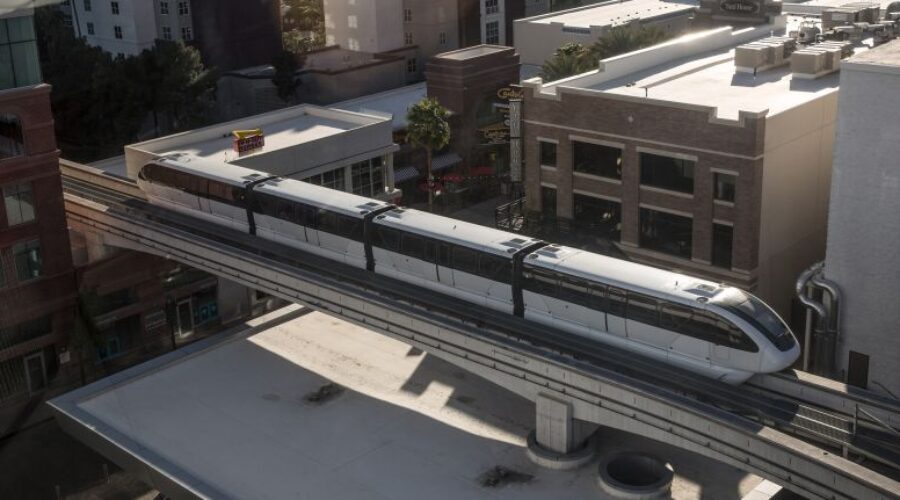
The Las Vegas monorail, once a gleaming symbol of the city’s futuristic ambitions, now finds itself at a precarious crossroads. As whispers of its financial insolvency grow louder, a seismic shift in the city’s transit landscape looms on the horizon. The proposed integration of the Vegas Loop—a high-speed, underground hyperloop system—threatens to render the monorail obsolete, leaving stakeholders and commuters alike to grapple with the implications of progress. This evolution is not merely a logistical overhaul but a reckoning with the very identity of Las Vegas as a hub of innovation and accessibility.
The Monorail’s Financial Fragility: A Symptom of Broader Challenges
The monorail’s recent bankruptcy filing is not an isolated incident but a symptom of deeper systemic issues. Rising operational costs, dwindling ridership, and the economic fallout from the pandemic have exposed its vulnerabilities. Unlike traditional transit systems, the monorail’s elevated structure and limited route flexibility make it ill-equipped to adapt to shifting urban demands. Its reliance on tourism—a sector now more volatile than ever—has left it stranded in a financial quagmire. The question lingers: was the monorail a visionary leap or a misguided gamble in a city that thrives on reinvention?
The Vegas Loop: A Disruptive Force or a Savior?
The Vegas Loop, with its promise of near-instantaneous travel between key destinations, represents a radical departure from conventional transit. Its underground hyperloop design eliminates the visual clutter of elevated tracks while offering unparalleled speed and efficiency. Yet, this technological marvel is not without its detractors. Critics argue that its high-speed corridors could exacerbate noise pollution and disrupt existing infrastructure, while others question its long-term viability in a city where foot traffic often trumps vehicular efficiency. The monorail’s fate now hinges on whether the Loop can deliver on its lofty promises—or if it will merely replace one set of problems with another.
Urban Mobility in Flux: The Human Cost of Transit Evolution
Behind the technical and financial debates lies a human story. The monorail, despite its flaws, served as a lifeline for workers, tourists, and locals navigating the sprawling Las Vegas Strip. Its demise could displace thousands who rely on its predictable schedule and accessibility. Meanwhile, the Vegas Loop’s automated, high-speed model raises concerns about job displacement and the erosion of community-centric transit. Will the city’s most vulnerable populations be left behind in the rush toward futuristic efficiency? The answer may define Las Vegas’ reputation as a city that prioritizes people over profit.
Sustainability and the Environmental Paradox
At first glance, the Vegas Loop’s energy-efficient design and reduced carbon footprint seem like a step forward. Yet, the environmental trade-offs are complex. The monorail’s elevated tracks, while visually intrusive, required minimal ground disruption during construction. The Loop, by contrast, demands extensive tunneling and underground excavation, potentially altering the city’s delicate geological balance. Moreover, the energy demands of hyperloop technology—even if optimized—could strain an already overtaxed power grid. In the quest for sustainability, Las Vegas must weigh the ecological impact of its transit choices carefully.
The Aesthetic and Cultural Impact: Losing a Landmark
Beyond its functional role, the monorail is a cultural artifact—a relic of an era when Las Vegas dared to dream in steel and concrete. Its sleek, futuristic silhouette became synonymous with the city’s audacious spirit. The Vegas Loop, with its subterranean design, offers none of the same visual grandeur. Will the city lose a piece of its identity in the process? The debate extends beyond engineering to the soul of Las Vegas: a place where spectacle and pragmatism often collide.
The monorail’s potential obsolescence is more than a transit story—it is a parable of progress, resilience, and the unintended consequences of innovation. As Las Vegas hurtles toward an uncertain transit future, the lessons learned from this transition could redefine urban mobility for generations. Whether the Vegas Loop becomes a triumph or a cautionary tale remains to be seen, but one thing is certain: the city’s next chapter will be written in motion.