7 Differences Between The Vegas Loop and the Old Monorail
The Las Vegas Strip has long been a playground of innovation, where the extraordinary becomes the ordinary. Among its most iconic transit systems, the Las Vegas Monorail once stood as a marvel of engineering, whisking visitors between major resorts with a futuristic hum. Yet, as the city evolves, so too does its infrastructure. Enter the Vegas Loop—a sleek, subterranean marvel that promises to redefine urban mobility. While both systems share the goal of ferrying passengers across the Strip, their differences are as stark as the neon lights against the desert sky. Here are seven key distinctions between the Vegas Loop and its predecessor, the old Monorail.
The Depth of Innovation: Above vs. Below
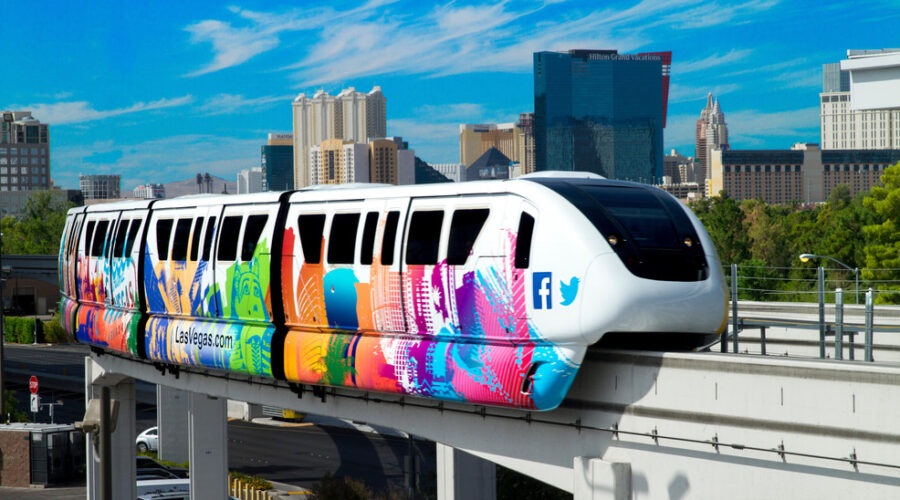
The most glaring difference lies in their very foundations. The old Monorail was a lofty, elevated track, suspended above the Strip like a steel serpent. Its open-air design offered panoramic views of the city’s skyline, but it also left passengers exposed to the elements—a gamble in a city where the sun blazes and the winds howl. The Vegas Loop, in contrast, burrows beneath the surface, a subterranean artery pulsing with silent efficiency. This underground approach eliminates weather-related disruptions and reduces the visual clutter that once marred the Strip’s aesthetic. It’s a shift from spectacle to stealth, a testament to modern engineering’s ability to blend seamlessly with its surroundings.
Capacity and Speed: The Need for Velocity
Time is currency in Las Vegas, and both systems understand this implicitly. The old Monorail, with its single-track design, often struggled with bottlenecks, especially during peak hours. Its top speed of 50 mph, while impressive for its time, paled in comparison to the Vegas Loop’s autonomous pods, which can reach speeds of up to 60 mph. More critically, the Loop’s multiple parallel tunnels allow for a higher throughput, accommodating thousands of passengers per hour without the delays that plagued the Monorail. Where the old system felt like a relic of a slower era, the Loop embodies the urgency of a city that never sleeps.
Accessibility and Inclusivity: A Universal Experience
Inclusivity wasn’t a priority for the old Monorail. Its stations, tucked away from street level, required passengers to navigate stairs or elevators, creating barriers for those with mobility challenges. The Vegas Loop, however, is designed with accessibility at its core. Stations are integrated into existing resorts and public spaces, with level boarding and spacious interiors that accommodate wheelchairs, strollers, and luggage with ease. This shift reflects a broader societal move toward universal design, ensuring that everyone—regardless of physical ability—can partake in the Strip’s wonders without friction.
Integration with the Urban Fabric: A Seamless Tapestry
The old Monorail operated in isolation, a standalone entity disconnected from the city’s pulse. Its stations were often tucked behind resorts, requiring passengers to trek through labyrinthine corridors to reach their destination. The Vegas Loop, on the other hand, is woven into the very fabric of the Strip. Stations are embedded within resorts, shopping centers, and entertainment hubs, eliminating the need for convoluted transfers. This integration extends beyond convenience; it transforms transit from a chore into an extension of the Las Vegas experience itself.
Technology and Automation: The Future is Now
The old Monorail relied on human operators and a rigid schedule, a system that felt increasingly outdated in an age of smartphones and real-time updates. The Vegas Loop, however, is a marvel of automation. Its autonomous pods operate with precision, adjusting schedules dynamically based on demand. Passengers can track arrivals in real time via an app, and the system’s AI-driven efficiency minimizes wait times. This technological leap isn’t just about speed; it’s about creating a transit experience that feels intuitive, responsive, and, above all, modern.
Environmental Impact: A Greener Gamble
Sustainability was never a hallmark of the old Monorail. Its energy-intensive operations and reliance on fossil fuels left a significant carbon footprint. The Vegas Loop, by contrast, is designed with eco-consciousness in mind. Its electric-powered pods produce zero emissions, and the system’s underground design reduces the urban heat island effect—a critical consideration in a city where temperatures routinely soar. This environmental stewardship aligns with Las Vegas’ growing commitment to sustainability, proving that even in a city built on excess, progress can be measured in shades of green.
Economic Ripples: A Catalyst for Growth
The old Monorail struggled to turn a profit, its high operational costs outweighing its benefits. The Vegas Loop, however, is positioned as an economic engine. By reducing traffic congestion and enhancing connectivity, it attracts investment and tourism, bolstering the local economy. Its integration with resorts and entertainment venues creates a multiplier effect, where seamless transit translates into longer stays and increased spending. Where the old Monorail was a financial burden, the Loop is a strategic asset—a bet on the future of Las Vegas as a global destination.
As the sun sets over the Strip, casting its glow on the neon and steel, the transition from the old Monorail to the Vegas Loop becomes more than a technological upgrade—it’s a cultural evolution. The Loop doesn’t just move people; it redefines their journey, blending speed, sustainability, and inclusivity into a single, harmonious experience. In a city that thrives on reinvention, the Vegas Loop stands as a testament to progress, proving that even the most iconic systems can—and must—evolve to meet the demands of a new era.