Laughlin: How the Colorado River’s 17% Snowpack Affects You
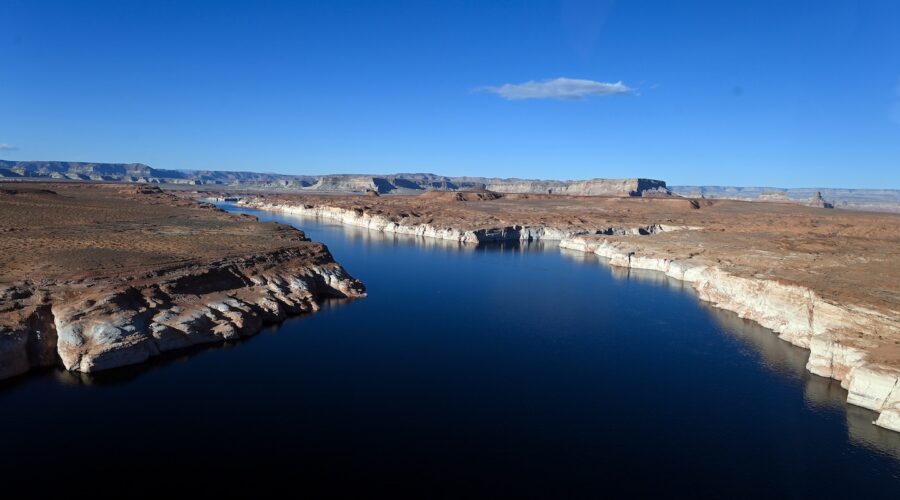
In the arid heart of the American Southwest, where the Colorado River carves its serpentine path through sun-baked canyons and parched valleys, a silent transformation is underway. Laughlin, a sun-soaked oasis on the Nevada-Arizona border, epitomizes the delicate balance between human ambition and ecological fragility. Beneath the glittering neon of its casinos and the steady hum of its riverboats, an unseen drama unfolds—one dictated by the ebb and flow of snowmelt high in the Rocky Mountains. With snowpack levels languishing at a mere 17% of historical averages, the implications ripple far beyond the alpine meadows where winter’s legacy is written in ice and stone.
The Snowpack Paradox: A Mirage of Abundance
Snowpack, that crystalline reservoir suspended in time, is the lifeblood of the Colorado River. It stores winter’s bounty, slowly releasing it as spring thaws breathe life into a thirsty basin. Yet, this year’s meager 17% measurement is not an anomaly—it is a harbinger. The paradox lies in perception: even as Laughlin’s casinos pulse with energy and its streets teem with visitors, the river’s veins run thinner than they have in decades. The snow that once blanketed the Rockies like a protective shroud has dwindled, leaving behind a skeletal landscape where drought is no longer a seasonal visitor but a permanent resident.
Water’s Invisible Hand: How Laughlin’s Pulse Depends on Distant Peaks
The Colorado River’s reach extends far beyond its banks. It fuels agriculture in California’s Imperial Valley, quenches the thirst of Phoenix’s sprawling suburbs, and now, it sustains Laughlin’s economy—a town where the river is both playground and provider. Yet, the 17% snowpack is a stark reminder that water is not an infinite resource. Every gallon diverted to Laughlin’s fountains, every drop used to cool its hotels, is a gallon less for the ecosystems downstream. The river’s diminished flow doesn’t just threaten the town’s prosperity; it reshapes the very geography of power. Who decides which communities get water when the taps run low? The answer may soon force Laughlin to confront a reality it has long ignored: its glittering facade is built on borrowed time.
The Domino Effect: From Snowflakes to Casino Lights
Consider the chain reaction set in motion by a single snowflake’s failure to accumulate. Less snow means less runoff. Less runoff means lower reservoir levels. Lower reservoir levels mean stricter water allocations. And stricter allocations mean Laughlin’s water-dependent industries must adapt—or wither. The town’s reliance on the river is not just practical; it is existential. Golf courses, swimming pools, and even the manicured lawns of its resorts are luxuries that may soon be reclassified as liabilities. The question is no longer whether change is coming, but how Laughlin will navigate the transition. Will it cling to the past, or will it pioneer a new model of resilience?
Adaptation or Extinction: The Town’s Moment of Reckoning
Laughlin stands at a crossroads. The 17% snowpack is not just a statistic; it is a wake-up call. The town’s future hinges on its ability to rethink water use, diversify its economy, and perhaps most critically, redefine its relationship with the river. Innovations in conservation, investments in drought-resistant landscaping, and even shifts in tourism marketing could all play a role in securing its survival. But adaptation requires more than technology—it demands a cultural shift. Can a town built on excess embrace austerity? Can neon-lit extravagance coexist with ecological stewardship? The answers will determine whether Laughlin becomes a cautionary tale or a model of sustainable prosperity.
The Colorado River’s story is one of interconnectedness. What happens in the Rockies echoes in Laughlin’s streets, in the whispers of its slot machines, in the laughter of its visitors. The 17% snowpack is not just a number—it is a mirror. And what it reflects may be far more unsettling than the town’s leaders dare to admit. The time to act is now, before the river’s diminishing pulse becomes an irreversible silence.