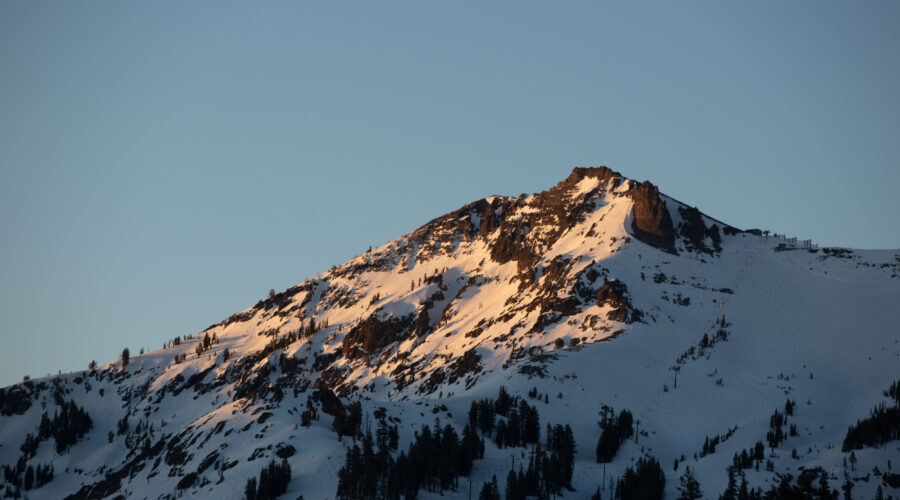
Stateline: Nevada vs. California Water Management After 17% Snowpack
The stark contrast between Nevada and California’s water management strategies has never been more pronounced than in the wake of a 17% snowpack deficit—a harbinger of the arid future both states must confront. As the Sierra Nevada’s dwindling snow reserves cast long shadows over regional resilience, the divergent approaches of these neighboring states reveal a deeper narrative of adaptation, innovation, and inevitable reckoning. What emerges is not merely a tale of scarcity, but a blueprint for reimagining water as the lifeblood of the West, where every drop saved is a step toward survival.
The Paradox of Plenty: How Nevada Embraces Austerity
Nevada’s water management philosophy is a masterclass in calculated restraint. In a state where the desert’s inhospitable embrace has long dictated human settlement, officials have turned necessity into a virtue. The Southern Nevada Water Authority’s aggressive conservation programs—mandating water-efficient appliances, incentivizing xeriscaping, and capping outdoor irrigation—have slashed per capita consumption by nearly 26% since 2002. Yet, the true ingenuity lies in the state’s reliance on the Colorado River’s diminishing reserves, a gamble that grows riskier with each passing drought year. The irony is palpable: Nevada, a state synonymous with excess, now leads in frugality, proving that scarcity can breed ingenuity when met with unyielding resolve.
California’s Hydrological Tug-of-War: Between Innovation and Illusion
California’s water narrative is a labyrinth of competing interests, where progress and paralysis often collide. While the Golden State has pioneered recycled water projects and groundwater sustainability laws, its reliance on the Sacramento-San Joaquin Delta—a fragile ecosystem teetering on collapse—remains a glaring vulnerability. Urban sprawl, agricultural demands, and environmental mandates collide in a Sisyphean struggle to balance supply and demand. The state’s recent pivot toward “flexible” water markets and desalination plants hints at a shift, yet the shadow of historical over-extraction looms large. Can California transcend its own contradictions, or will it continue to chase the mirage of abundance in an era of depletion?
The Snowpack’s Silent Alarm: A Shared Crisis with Divergent Responses
The 17% snowpack deficit is more than a statistic; it is a clarion call echoing across the West. Nevada’s high-desert topography offers a grim preview of California’s potential future, where snowmelt—the lifeblood of both states—dwindles to a trickle. Nevada’s proactive measures, from aquifer recharge projects to strict municipal conservation, contrast sharply with California’s fragmented approach, where piecemeal solutions struggle to outpace systemic decay. The question is no longer whether change is coming, but whether it will arrive in time. As the snowpack’s retreat accelerates, the states’ divergent strategies may well determine which communities endure—and which fade into the annals of history.
Beyond the Pipeline: The Unseen Battles for Water’s Future
The most contentious frontiers in this water war are not the visible pipelines or reservoirs, but the subterranean aquifers and the political will to regulate them. Nevada’s aggressive groundwater management—bolstered by the 2015 Sustainable Groundwater Management Act—serves as a cautionary tale for California, where unchecked agricultural pumping has hollowed out aquifers like Swiss cheese. Meanwhile, tribal water rights, a long-neglected frontier, are emerging as a flashpoint. The Shoshone-Paiute Tribes’ fight for the Walker River’s dwindling flows underscores a harsh truth: water justice is the next great civil rights battleground. The West’s water future will be written not just in boardrooms, but in courtrooms and tribal councils.
The 17% snowpack deficit is not merely a harbinger of drought—it is a reckoning. Nevada and California stand at a crossroads, where the choices made today will echo for generations. One state’s austerity offers a lifeline; the other’s fragmentation risks collapse. The West’s water story is far from over, but the script is being rewritten in real time. The question is no longer whether the desert will claim its due, but whether humanity will rise to meet the challenge before it’s too late.