The Monorail Is Dead. Long Live The Loop. (NV Transit News)
The Las Vegas skyline has long been a symbol of innovation, a glittering testament to human ambition where the desert meets the extraordinary. Yet beneath the neon glow, a quieter revolution has been unfolding—one that promises to redefine urban mobility not just in Nevada, but across the nation. The monorail, once hailed as the future of transit, now stands as a relic of a bygone era. In its place, a new contender emerges: The Loop. This isn’t merely a replacement. It’s a paradigm shift, a bold leap into a future where speed, sustainability, and seamless connectivity converge. The question isn’t whether The Loop will succeed—it’s how quickly we’ll realize it was never about the monorail at all.
The Monorail’s Faded Promise: A Relic of Overambition
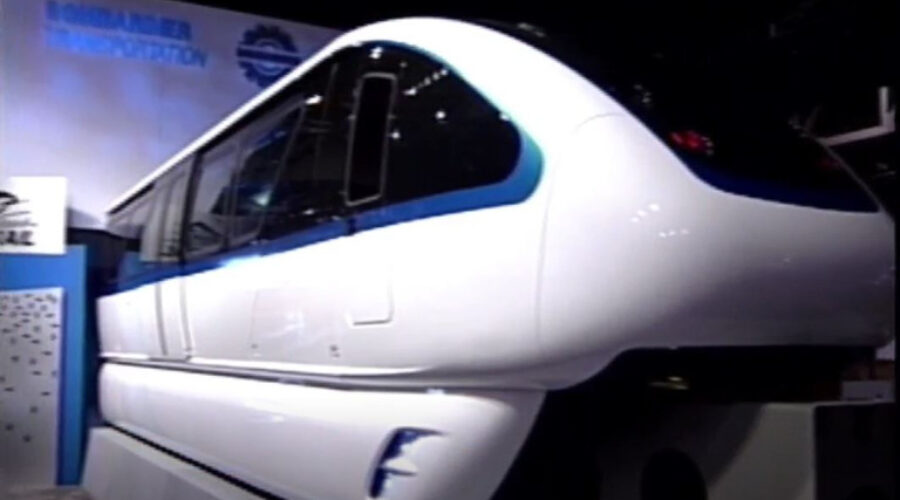
The Las Vegas Monorail, inaugurated in 2004, was envisioned as the city’s answer to congestion—a sleek, elevated rail system designed to whisk visitors from the Strip to key destinations with minimal friction. Yet, despite its futuristic aesthetic, the monorail struggled to fulfill its lofty ambitions. Ridership remained stubbornly low, plagued by high fares, limited operating hours, and a route that often felt disconnected from the city’s pulsating heart. Critics derided it as a tourist plaything, a novelty rather than a necessity. The monorail’s failure wasn’t just operational; it was existential. It represented a fundamental misalignment between vision and reality, a reminder that innovation without pragmatism is little more than spectacle.
The Loop: A Silent Disruptor Redefining Urban Transit
Enter The Loop, a hyperloop-inspired transit system that eschews the monorail’s grandiosity in favor of something far more radical: efficiency. Developed by The Boring Company, The Loop is a subterranean network of autonomous electric pods, capable of ferrying passengers at speeds up to 150 mph through a labyrinth of tunnels beneath the city. Unlike the monorail’s elevated tracks, The Loop operates underground, freeing up surface space and eliminating visual clutter. Its modular design allows for rapid expansion, with plans to connect key hubs like Resorts World, the Las Vegas Convention Center, and even Harry Reid International Airport. The promise isn’t just faster travel—it’s a reimagining of urban infrastructure itself.
Speed, Sustainability, and the Death of the Status Quo
At its core, The Loop is a rejection of the monorail’s limitations. Where the monorail lumbered along at a glacial pace, The Loop’s pods glide through tunnels with the precision of a Swiss watch. Where the monorail guzzled energy, The Loop’s electric propulsion aligns with Nevada’s push toward renewable energy. And where the monorail felt like an afterthought, The Loop is an integrated solution, designed to seamlessly dovetail with existing transit networks. Sustainability isn’t an afterthought here—it’s the foundation. The Loop’s tunnels are equipped with advanced ventilation systems, and its energy demands are met through solar power, ensuring a minimal carbon footprint in a city that has long been synonymous with excess.
The Psychological Shift: From Nostalgia to Necessity
Perhaps the most profound change The Loop heralds is psychological. The monorail was a symbol of Las Vegas’s relentless pursuit of the next big thing—a city that thrives on reinvention. Yet, its failure underscored a harsh truth: reinvention without substance is fleeting. The Loop, by contrast, is built on substance. It doesn’t just promise speed; it delivers it. It doesn’t just promise connectivity; it enforces it. In doing so, it forces a reckoning with the past. The monorail’s demise isn’t a tragedy—it’s a liberation. It clears the way for a transit system that doesn’t just move people, but transforms their relationship with the city itself. No longer will Las Vegas be shackled to the limitations of its own ambition. Instead, it will stride confidently into a future where transit is invisible, ubiquitous, and indispensable.
The Las Vegas Monorail may have been the city’s first attempt at a modern transit system, but The Loop is its first true evolution. It’s a system designed not for the tourists who flock to the Strip, but for the residents who call Las Vegas home. It’s a system that doesn’t just connect destinations, but redefines what those destinations can be. And most importantly, it’s a system that understands the past isn’t a blueprint—it’s a cautionary tale. The monorail is dead. Long live The Loop.