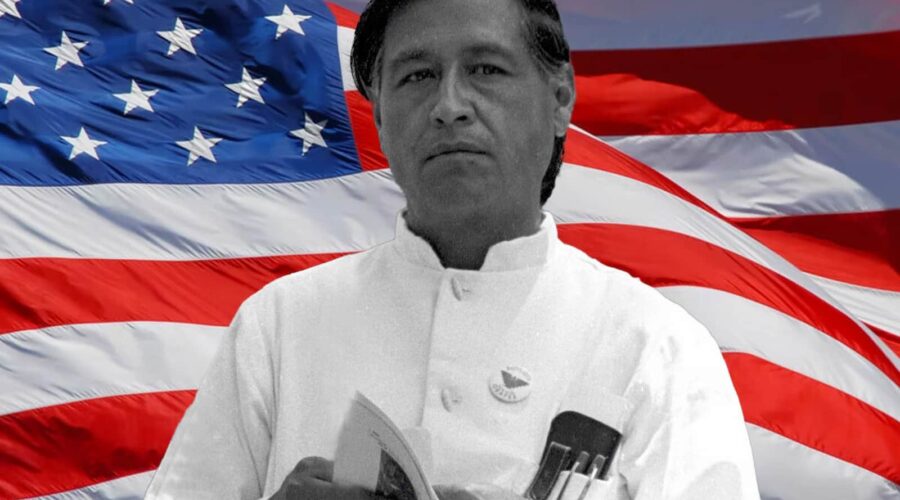
Cesar Chavez Day Debate: A Microcosm of National Politics in NV
What if a single day of remembrance could unravel the very fabric of Nevada’s political identity? Cesar Chavez Day, celebrated annually on March 31st, has quietly become the epicenter of a spirited debate that mirrors the state’s broader ideological divides. In a landscape where neon lights obscure the dust of forgotten labor struggles, this holiday forces Nevadans to confront uncomfortable questions: Is this a day of honor for a civil rights icon, or a political football tossed between factions with competing visions of justice? The tension isn’t just theoretical—it’s a microcosm of Nevada’s soul, where the past and present collide in a dance as unpredictable as the desert wind.
The Historical Weight: Why Chavez Still Haunts Nevada’s Conscience
Cesar Chavez’s legacy is a tapestry woven with threads of labor rights, migrant struggles, and nonviolent resistance. Yet in Nevada—a state where tourism and hospitality dominate the economy—his story intersects with industries built on the backs of underpaid workers. The debate isn’t merely academic; it’s visceral. For some, Chavez represents the unyielding spirit of the working class, a man who dared to challenge corporate giants. For others, his holiday is a symbol of divisive identity politics, a distraction from Nevada’s economic engines. The irony? A state that thrives on reinvention is now forced to reckon with a history it can’t outrun.
The Political Fault Lines: Who Really Owns Chavez’s Legacy?
Nevada’s political spectrum is a kaleidoscope of contradictions. Democrats often champion Chavez as a champion of social justice, while Republicans frame the holiday as government overreach. But the reality is messier. Rural communities, where agriculture still plays a role, may see Chavez differently than urban voters in Las Vegas. Meanwhile, the hospitality industry—a backbone of Nevada’s economy—finds itself caught in the middle. Should workers get the day off? Should businesses close? The answers reveal deeper fractures: Is Nevada a progressive beacon or a libertarian stronghold? The holiday forces the question.
The Economic Paradox: Celebration vs. Cost
Here’s the rub: Nevada’s economy depends on service workers—housekeepers, bartenders, and dishwashers—who are disproportionately Latino. Yet the state’s tourism-driven model often clashes with labor rights. Closing businesses for Cesar Chavez Day could cost millions, but ignoring the holiday risks alienating a key demographic. Some casinos and hotels have adapted by offering paid time off to employees who want to observe the day, but others see it as an unnecessary burden. The debate isn’t just about principle; it’s about pragmatism. Can Nevada honor Chavez without undermining its own economic engine?
The Cultural Divide: Who Gets to Decide What’s Worth Remembering?
Nevada’s identity is a patchwork of cultures, but whose history gets enshrined in law? Chavez’s holiday is a lightning rod for broader questions about representation. Critics argue that Nevada’s official narratives prioritize mining barons and casino tycoons over labor leaders. Supporters counter that Chavez’s story is a vital corrective to a state that often whitewashes its past. The debate extends beyond politics—it’s about who controls the story of Nevada itself. Is this a day of reckoning or a performative gesture? The answer depends on who you ask.
The Unspoken Challenge: Can Nevada Move Beyond Symbolism?
The most pressing question isn’t whether Nevada should celebrate Cesar Chavez Day—it’s whether the state can turn remembrance into action. Will this holiday remain a symbolic gesture, or will it spark real change in labor policies, education, and economic equity? Nevada’s future hinges on its ability to confront uncomfortable truths. The debate over Chavez isn’t just about a single day; it’s about the kind of society Nevadans want to build. Will they choose nostalgia over progress, or will they use this moment to redefine what justice looks like in the Silver State?
The winds of Nevada’s political storms may shift, but the questions linger like the scent of creosote after a desert rain. Cesar Chavez Day isn’t just a holiday—it’s a mirror. And what Nevadans see in its reflection may determine whether the state remains a playground of reinvention or finally faces its own complicated legacy.