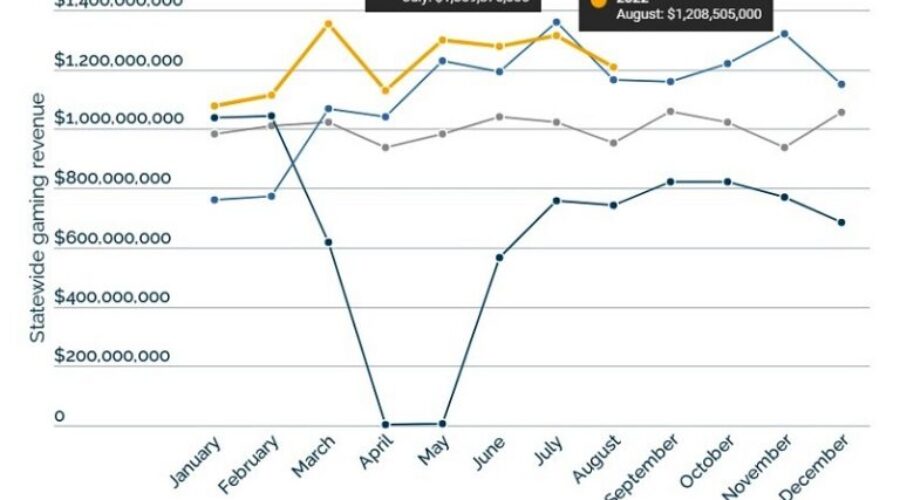
Nevada’s Gaming Revenue Dip: The Asian Market Factor
Nevada’s gaming revenue dip in August 2022 was more than a statistical blip—it was a mirror held up to the industry’s shifting tectonics. The Strip, that glittering artery of neon and possibility, still pulsed with life, but beneath its surface, currents of change were reshaping the landscape. One factor loomed larger than most: the Asian market, a titan whose influence extends far beyond the casino floor. To understand Nevada’s revenue dip, we must first acknowledge that this was not merely a local downturn but a symptom of a global realignment, where economic tides in Macau and Singapore ripple outward, touching even the most insulated of gaming hubs.
The Asian Market’s Dominance: A Double-Edged Sword
The Asian gaming market is a juggernaut, fueled by high rollers whose appetites for risk and luxury know no bounds. Macau, once the undisputed capital of global gambling, has long been the epicenter of this phenomenon. When its borders reopened post-pandemic, the floodgates reopened with it—yet the recovery was uneven. Chinese high rollers, the lifeblood of Macau’s economy, remained cautious, their spending tempered by lingering economic uncertainty and stricter capital controls. This hesitation sent shockwaves through the entire Asian gaming ecosystem, and Nevada, despite its geographic isolation, was not immune.
The Strip’s reliance on international tourism, particularly from Asia, meant that any slowdown in Asian spending had immediate repercussions. While domestic players filled some of the void, their spending could not fully compensate for the loss of high-roller patronage. The result? A revenue dip that exposed the fragility of Nevada’s economic model, where prosperity is inextricably linked to the whims of a distant market.
The Ripple Effect: How Asian Trends Shape Nevada’s Fortunes
The influence of the Asian market extends beyond mere spending patterns. It shapes the very architecture of Nevada’s gaming industry. Casinos on the Strip have long tailored their offerings to appeal to Asian tastes—think VIP suites, baccarat tables, and culinary experiences that cater to palates from Beijing to Bangkok. When Asian high rollers dial back their expenditures, these investments suddenly feel less lucrative, and the revenue streams they were designed to tap begin to dwindle.
Moreover, the Asian market’s preference for integrated resorts—luxury complexes that blend gaming with entertainment, hospitality, and retail—has set a new standard for the global gaming industry. Nevada, once the undisputed leader in casino design, now finds itself in a race to keep pace. The revenue dip in August 2022 was a stark reminder that the state’s aging infrastructure could no longer rely on its past glories to sustain its future.
The Psychological Factor: Confidence and the Asian Gambler
Beyond economics, there is a psychological dimension to this story. The Asian gambler, particularly the high roller, is not merely a source of revenue; they are a creature of habit and perception. The pandemic eroded trust in global travel, and even as restrictions lifted, lingering doubts about safety and stability lingered. The dip in Nevada’s revenue was, in part, a reflection of this hesitancy—a hesitation to commit to the same level of indulgence that once defined the Asian gaming experience.
This psychological shift is not easily quantified, but its impact is undeniable. Casinos that once thrived on the presence of Asian high rollers found themselves navigating a landscape where trust had to be rebuilt, one handshake and one signature at a time. The revenue dip was not just a financial setback; it was a crisis of confidence, a reminder that in the world of high-stakes gambling, perception is as valuable as cash.
The Path Forward: Adaptation in an Era of Flux
Nevada’s gaming industry stands at a crossroads. The dip in revenue was a wake-up call, forcing operators to confront the realities of a post-pandemic world where the Asian market is no longer a guaranteed windfall. The solution lies in diversification—expanding beyond the traditional high-roller model to attract a broader spectrum of international tourists. This means investing in non-gaming amenities, from world-class dining to immersive entertainment, and reimagining the casino experience as something more than just a place to wager.
There is also the question of regional competition. As other gaming destinations in Asia and the Middle East rise, Nevada must sharpen its competitive edge. This could mean forging new partnerships, leveraging technology to enhance the customer experience, or even revisiting the regulatory environment to foster innovation. The revenue dip was a challenge, but it was also an opportunity to redefine what Nevada’s gaming industry can be in the 21st century.
The story of Nevada’s gaming revenue dip is not just about numbers on a balance sheet. It is a narrative of interconnectedness, where the fortunes of a desert city are inextricably linked to the decisions of gamblers half a world away. It is a tale of resilience, adaptation, and the enduring allure of risk. As Nevada looks to the future, it must do so with eyes wide open, recognizing that the tides of the Asian market will continue to shape its destiny in ways both profound and unpredictable.