The Vegas Loop Expansion: Indigenous Land Implications
The Vegas Loop Expansion isn’t merely another infrastructural endeavor—it’s a tectonic shift in how we perceive mobility, land stewardship, and the delicate interplay between progress and heritage. Beneath the gleaming façade of neon and the hum of electric propulsion lies a terrain fraught with historical resonance, where the boundaries between innovation and ancestral legacy blur into a complex tapestry. This isn’t just about faster commutes or sleek autonomous pods; it’s about confronting the unspoken reverberations of development on Indigenous homelands, where every mile of track laid echoes the footsteps of those who walked these lands long before the city’s rise.
The Land Beneath the Loop: A Cartography of Memory
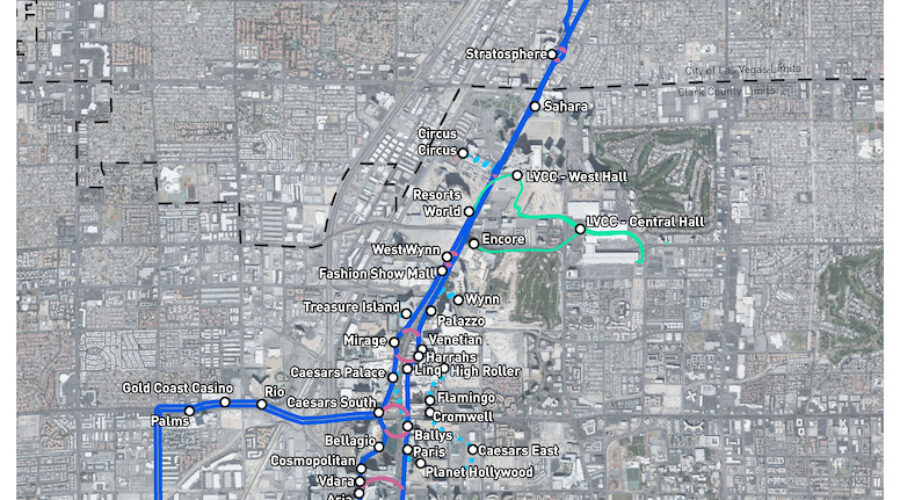
To traverse the Vegas Loop’s conceptual map is to navigate a palimpsest of time, where the modern overlays the ancient. The proposed routes carve through landscapes that hold stories etched into the earth—petroglyphs whispering of celestial alignments, springs once sacred to tribal communities now buried beneath asphalt arteries. The land isn’t inert; it’s a living archive, and its treatment under development mandates more than cursory environmental assessments. Indigenous scholars and activists argue that true sustainability begins with recognizing land as kin, not commodity. The Loop’s expansion must therefore reckon with its footprint not just in square miles, but in the cultural memory it risks erasing.
Autonomy and Ancestry: The Paradox of Progress
At the heart of the Vegas Loop’s allure is its promise of frictionless transit, a seamless fusion of technology and urban life. Yet this autonomy—both in the sense of self-driving vehicles and self-determination—collides with the autonomy of Indigenous nations to steward their ancestral territories. The tension isn’t abstract; it’s embedded in the very language of the project. Terms like “efficiency” and “scalability” often eclipse the nuanced realities of Indigenous spatial sovereignty. How does a system designed for velocity reconcile with the rhythms of lands where time moves in cycles, not clockwork? The answer may lie in co-design, where tribal knowledge informs the Loop’s evolution, transforming it from a monolithic structure into a collaborative artifact.
The Specter of Displacement: Who Benefits from the Loop?
Urban expansion has a notorious habit of displacing the marginalized, and Indigenous communities are no exception. While the Vegas Loop’s primary narrative centers on convenience for tourists and residents, its secondary effects could ripple outward, exacerbating housing pressures or altering sacred sites into waypoints for high-speed transit. The question isn’t whether the Loop will change the land, but who gets to dictate the terms of that change. Indigenous leaders have long advocated for “free, prior, and informed consent”—a principle enshrined in international law but often sidelined in favor of expedience. The Loop’s expansion must therefore be scrutinized not just for its engineering feats, but for its ethical calculus: Does it uplift, or does it appropriate?
Reimagining the Loop: A Canvas for Shared Futures
Yet there’s another path forward, one where the Vegas Loop becomes a catalyst for reconciliation rather than rupture. Imagine autonomous pods gliding past interpretive stations where tribal historians share oral traditions, or where solar-powered infrastructure doubles as renewable energy hubs for nearby reservations. This isn’t utopian fantasy; it’s a blueprint for decolonizing infrastructure. The Loop could transcend its utilitarian origins to become a conduit for cultural exchange, its routes mapped not just by GPS coordinates, but by the stories of those who’ve called this land home for millennia. The challenge lies in shifting the narrative from extraction to reciprocity.
The Vegas Loop Expansion stands at a crossroads—not just of roads, but of values. It invites us to ponder: Can a city built on reinvention also honor the past it’s built upon? The answer will be written not in steel and code, but in the choices we make today. To move forward, we must first listen—to the land, to its original stewards, and to the quiet urgings of a future that refuses to be silenced.