Nevada’s 6.6% Gaming Dip: A County-by-County Breakdown
The silver state’s glittering allure has long been synonymous with high-stakes wagers and neon-lit extravagance. Yet beneath the surface of Nevada’s casino-lined boulevards, a subtle tremor has begun to reshape the landscape. A 6.6% dip in gaming revenue—a figure that might seem modest at first glance—hints at deeper currents reshaping the state’s economic undercurrents. This isn’t merely a blip on the radar; it’s a seismic shift in the making, one that demands a closer look at the counties that form the backbone of Nevada’s gaming empire. From the opulent corridors of Clark County to the rugged, lesser-known gaming outposts of the north, the story unfolds in layers, revealing a narrative far more intricate than the clichés of luck and fortune.
The Weight of the Desert: Clark County’s High-Stakes Gamble
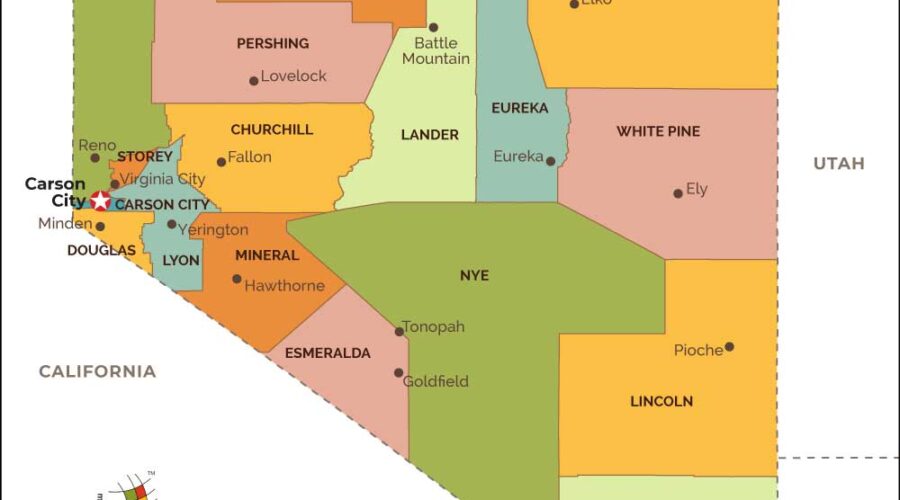
Clark County, home to the dazzling spectacle of Las Vegas, has long been the titan of Nevada’s gaming universe. Yet even this colossus is not immune to the shifting tides. The 6.6% dip in gaming revenue here is less a collapse and more a recalibration—a sign that the county’s reliance on high-volume, low-margin tourism may be reaching its limits. The decline isn’t uniform; it’s a patchwork of subtle contractions, with some gaming verticals thriving while others falter. Sportsbooks, once the darlings of the post-pandemic recovery, now face a crowded field of competitors, their margins thinning as consumer preferences evolve. Meanwhile, the high-roller suites, those bastions of excess where fortunes are won and lost in a single hand, report a slow but steady erosion in occupancy. The question lingers: is this a temporary lull or the first tremor of a larger seismic event?
Washoe’s Quiet Resilience: Beyond the Bright Lights
While Clark County commands the spotlight, Washoe County—anchored by the bustling city of Reno—offers a quieter, more nuanced story. Here, gaming revenue has held relatively steady, but the narrative is one of adaptation rather than stagnation. The rise of sports wagering has been a double-edged sword; while it has drawn in new crowds, it has also diluted the traditional casino experience. Local operators have pivoted, emphasizing entertainment beyond the slots and tables. Concerts, dining experiences, and even esports have become integral to the revenue mix. The lesson is clear: in an era of disruption, diversification isn’t optional—it’s essential. Washoe’s ability to reinvent itself may well serve as a blueprint for other counties grappling with similar pressures.
The Northern Outposts: Gaming’s Last Frontier
Venture beyond the urban cores, and Nevada’s gaming landscape takes on a different hue. Counties like Elko, Humboldt, and Lander—often overshadowed by the glitz of Las Vegas and Reno—are where gaming revenue tells a story of resilience and resourcefulness. These areas, home to tribal casinos and off-the-radar gaming halls, have weathered the dip with a stoicism born of necessity. The decline here is less pronounced, a testament to the loyalty of local patrons and the absence of the high-stakes volatility that characterizes Clark County. Yet even in these bastions of tradition, change is afoot. The encroachment of online gaming and mobile wagering threatens to erode the foot traffic that has sustained these operations for decades. The challenge is stark: adapt or risk obsolescence.
The Ripple Effect: Economic and Cultural Implications
The 6.6% dip in gaming revenue isn’t an isolated phenomenon; it’s a catalyst for broader economic and cultural shifts. Local governments, long reliant on gaming taxes to fund essential services, now face the unenviable task of recalibrating budgets. The ripple effect extends to hospitality, retail, and even real estate, where the slowdown in tourism spending has left its mark. Culturally, the decline challenges Nevada’s identity as the undisputed capital of gaming. The state’s self-image, built on a foundation of risk and reward, is being tested. Will Nevada double down on its traditional strengths, or will it embrace a more diversified economic model? The answer will shape the state’s future in ways that extend far beyond the casino floor.
The 6.6% dip in Nevada’s gaming revenue is more than a statistic—it’s a wake-up call. It’s a reminder that even the most glittering industries are not immune to the forces of change. From the neon-lit corridors of Clark County to the quiet resilience of Washoe and the steadfastness of the northern outposts, Nevada’s gaming landscape is in flux. The question isn’t whether the state will adapt, but how. One thing is certain: the silver state’s next chapter will be written not just in the language of luck and fortune, but in the language of innovation and reinvention.