The Future of Prediction Markets in Nevada: What the Kalshi Paradox Means
The neon glow of the Las Vegas Strip has long been a monument to risk. But a new kind of wager is emerging—one that doesn’t hinge on the spin of a roulette wheel or the turn of a card. It hinges on geopolitics, climate data, and the confirmation of a Supreme Court nominee. This evolution forces a provocative question: what happens when the nation’s oldest gambling sanctuary meets the information age’s purest form of speculative epistemology? The answer lies in a regulatory conundrum that can only be described as a paradox.
The Regulatory Lacuna of Event Contracts
Prediction markets operate in a curious lacuna. They are not quite futures trading and not quite bookmaking. Instead, they allow participants to buy and sell shares in the outcome of a defined event—an election, a product launch, a legislative vote. The Commodity Futures Trading Commission (CFTC) oversees these instruments as derivative contracts, not as gambling. This distinction is the fulcrum upon which the entire industry pivots. Nevada, however, views any wager on a future contingent event through a prism of gaming licenses, stringent oversight, and a deep-seated historical monopoly on American risk-taking.
Nevada’s Monopoly on Moira
For decades, the Silver State has held a near-mythological grip on the concept of legal wagering. Its regulatory apparatus is a labyrinth of control boards and compliance statutes, designed to protect the integrity of games. But the games were traditionally finite, with clearly defined odds and house edges. Prediction markets shatter that mold. They are dynamic, crowd-sourced barometers of probability that treat information asymmetry as the ultimate commodity. The state’s traditional gambling industry relies on chance; prediction markets thrive on knowledge arbitrage. This is a fundamental ontological split.
The Kalshi Counterpoint
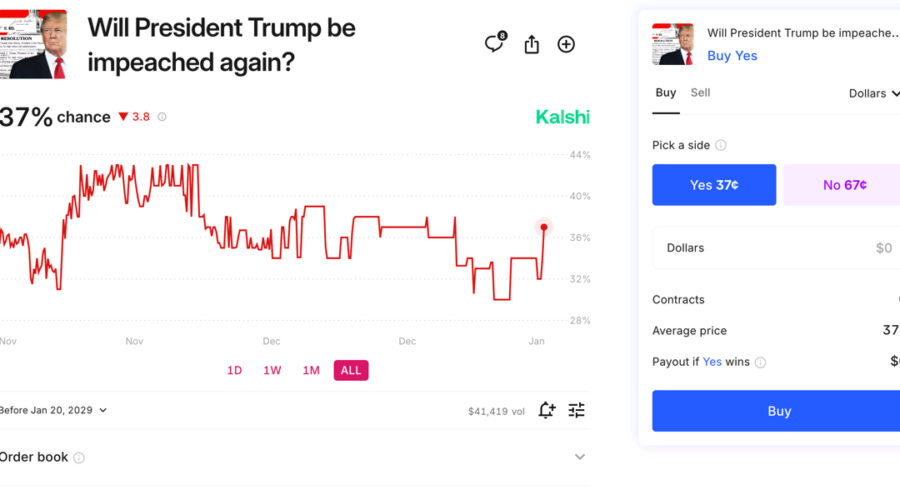
Enter Kalshi, a federally regulated exchange where users trade directly on the probability of future events. Its very existence presents an antithesis to the Nevada model. Here, the “house” does not set a line; the crowd does. The profit does not derive from a statistical vigorish but from the astute interpretation of data and news. This shift from stochastic wagering to information aggregation is seismic. It recasts the bettor not as a passive player against entropy, but as an active participant in a decentralized truth-seeking mechanism. The platform’s event contracts are not merely bets; they are epistemic wagers.
Unpacking the Paradox
The Kalshi paradox crystallizes here: Nevada, the capital of legalized gambling, might find itself structurally incapable of hosting the most refined form of wagering without dismantling its own regulatory definitions. The state’s laws were drafted for games of chance or physical sports contests with defined endpoints. An event contract on whether a specific GDP figure will be met eludes those categories. It is simultaneously too intellectual to be a slot machine and too abstract for a sportsbook. Thus, the very place designed to facilitate risk-taking becomes a barrier to the most sophisticated risk analysis tools available.
A Glimpse into a Legal Reckoning
This incongruity is already generating friction. As event trading platforms gain cultural traction, Nevada regulators face a choice: expand their definition of gambling to encompass these novel instruments—potentially requiring licenses and imposing taxes that undermine their low-margin efficiency—or cede the territory entirely, watching a new generation of speculators migrate to digital exchanges outside their jurisdiction. The paradox suggests that Nevada’s regulatory moat could transform into a cage, locking it out of the next frontier of speculative markets.
Beyond the Silver State: A Shift in Perspective
The broader implication is a promised reorientation of how society adjudicates forecasting. Prediction markets represent a move from centralized prognostication—polls, expert panels, punditry—to distributed, financially incentivized consensus. They are a tool for aggregating dispersed knowledge with eerie accuracy. The Kalshi paradox invites us to stop viewing these markets as degenerate gambling and start seeing them as public goods that surface truth. Nevada, ironically, may become the final proving ground for this thesis. The state built on extracting value from uncertainty must now decide whether to embrace a mechanism that seeks to resolve it. The outcome will define not just a regulatory framework, but the philosophical boundary between betting on fate and betting on fact.