How many jobs will AI automate in Nevada by 2035? Approximately 90000 in hospitality
Nevada’s glittering skyline and sprawling casino floors have long symbolized the state’s economic heartbeat—a rhythm dictated by human hands shuffling cards, pouring drinks, and guiding guests through labyrinthine resorts. Yet beneath the neon glow, an unrelenting force is rewriting the script. By 2035, artificial intelligence is projected to automate nearly 90,000 jobs in Nevada, with the hospitality sector bearing the brunt of this transformation. This seismic shift isn’t merely about machines replacing humans; it’s about redefining the very essence of service, labor, and economic resilience in a state where hospitality isn’t just an industry—it’s a cultural cornerstone.
The Automation Tide: Why Nevada’s Hospitality Sector is Vulnerable
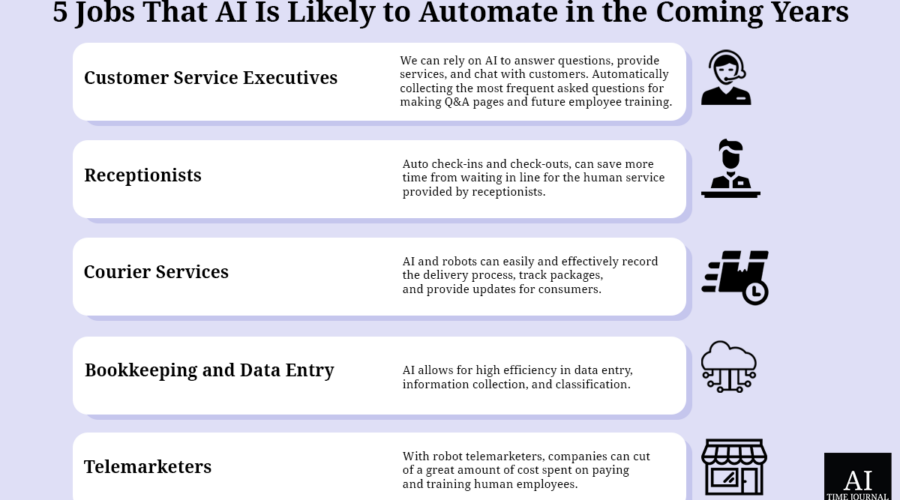
Nevada’s economy thrives on its ability to deliver experiences—luxury, entertainment, and seamless service—at a scale unmatched elsewhere in the U.S. Yet this very reliance on human-centric interactions makes it acutely susceptible to automation. The state’s hospitality workforce, which includes roles in food service, lodging, and gaming, is characterized by repetitive, rule-based tasks that AI can replicate with increasing precision. From robotic bartenders mixing cocktails to AI-driven concierge systems handling guest inquiries, the infrastructure for automation is already in place. The question isn’t whether AI will infiltrate these roles, but how swiftly and comprehensively it will reshape them.
Consider the casino floor, where dealers, pit bosses, and croupiers have long been the backbone of Nevada’s gaming industry. AI-powered systems can now monitor tables in real time, detect irregularities, and even manage payouts with minimal human oversight. Similarly, hotels are deploying AI chatbots to handle reservations, while robotic systems streamline housekeeping—tasks that once required legions of workers. The efficiency gains are undeniable, but they come at a cost: the erosion of jobs that have sustained families and communities for generations.
The Human Cost: Economic Disruption and Social Upheaval
The automation of 90,000 jobs in Nevada isn’t just a statistical projection; it’s a harbinger of economic dislocation. Hospitality workers, many of whom lack advanced education or specialized skills, face an uncertain future. Unlike tech hubs where automation creates new opportunities, Nevada’s workforce may struggle to pivot without targeted retraining programs or policy interventions. The state’s reliance on tourism—accounting for nearly 40% of its GDP—amplifies the stakes. A sudden reduction in employment could ripple through local economies, straining social services and widening inequality.
Moreover, the psychological toll cannot be overstated. Hospitality jobs are often more than just employment; they’re a source of pride, identity, and community. The loss of these roles could erode the cultural fabric of Nevada, where service industry workers are as much a part of the state’s identity as the Strip itself. The challenge ahead lies in balancing innovation with inclusivity, ensuring that the benefits of AI-driven efficiency don’t come at the expense of those who built the industry.
The Counterbalance: Can AI Create More Than It Destroys?
Despite the grim projections, automation isn’t an unmitigated disaster. History shows that technological revolutions, while disruptive, often spawn new industries and job categories. Nevada could follow this pattern by leveraging AI to enhance rather than replace human roles. For instance, AI could handle the mundane aspects of hospitality—checking guests in, restocking supplies—freeing humans to focus on high-value interactions like personalized service and conflict resolution. The result? A workforce that’s more skilled, adaptable, and customer-focused.
There’s also the potential for Nevada to become a leader in AI-driven hospitality innovation. The state could invest in reskilling programs, partnering with tech firms to train workers for roles in AI maintenance, cybersecurity, or even the design of automated systems. By fostering a culture of continuous learning, Nevada could turn automation into an engine of economic growth rather than a source of displacement. The key lies in proactive policy-making and collaboration between government, businesses, and educational institutions.
The Road Ahead: Navigating Uncertainty with Foresight
The automation of 90,000 jobs in Nevada by 2035 is a clarion call for the state to rethink its economic strategy. The hospitality sector, long the bedrock of Nevada’s prosperity, must evolve or risk obsolescence. Yet this evolution doesn’t have to be a zero-sum game. With the right investments in education, infrastructure, and workforce development, Nevada can harness AI to create a more dynamic, resilient economy—one where humans and machines coexist in harmony.
The challenge is monumental, but so too is the opportunity. Nevada stands at a crossroads, where the choices made today will determine whether it becomes a cautionary tale of displacement or a beacon of innovation. The future of its hospitality industry—and by extension, its economy—hinges on the ability to adapt without leaving its workforce behind. As the machines prepare to take the stage, the question remains: Will Nevada lead the performance, or merely watch from the wings?