The 17% Snowpack Emergency: Nevada Residents Should Prepare for Drought
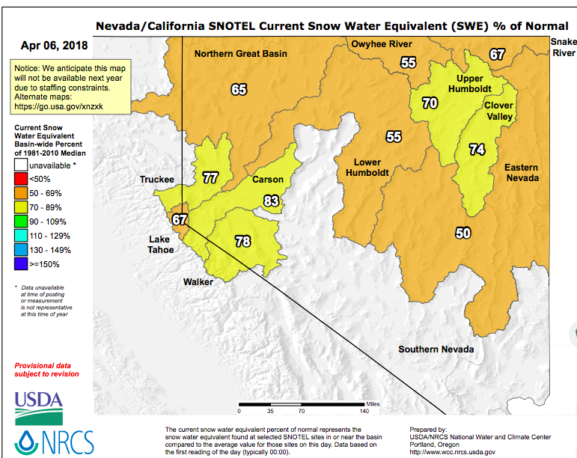
The Sierra Nevada’s snowpack, once a towering water tower for Nevada’s parched lands, now stands at a mere 17% of its historic average—a stark reminder that the state’s lifeblood is evaporating before our eyes. This isn’t just a statistic; it’s a clarion call, a silent alarm echoing through the canyons and across the valleys, where the absence of snow whispers of a future where taps run dry and crops wither. The drought gripping Nevada isn’t a fleeting drought; it’s a hydrological reckoning, a slow-motion crisis that demands immediate attention and long-term resilience.
The Vanishing White Blanket: A Metaphor for Scarcity
Imagine the Sierra Nevada’s snowpack as a colossal savings account, where each winter’s deposit is drawn upon during the arid summer months. For decades, this account was flush with interest, but now, the balance has dwindled to a fraction of its former self. The 17% figure isn’t just a number—it’s a metaphor for a region hemorrhaging its most precious resource. Snowmelt, once a predictable and generous dividend, has become a trickle, forcing farmers to fallow fields and municipalities to ration water with the grim precision of a wartime economy. The white blanket that once draped the mountains in regal silence now lies tattered, a ghost of its former abundance.
The Domino Effect: From Mountains to Cities
The repercussions of this diminished snowpack cascade through Nevada’s ecosystems and economies like a stone skipped across a pond. Agriculture, the backbone of the state’s rural communities, faces existential threats as irrigation canals run low. The alfalfa fields of Fallon, once lush and verdant, now resemble sun-bleached parchment, their crops gasping for moisture. Meanwhile, urban centers like Reno and Las Vegas, though buffered by reservoirs and groundwater, are not immune to the ripple effects. Water restrictions tighten, lawns brown, and golf courses—those oases of green in a sea of beige—become symbols of profligacy. The drought doesn’t discriminate; it’s a great equalizer, reminding us that no community is an island.
The Climate Crucible: A Warning Unfolding
This isn’t an isolated anomaly; it’s a harbinger of a new normal, a climate crucible in which Nevada is being forged. The Sierra Nevada’s snowpack has historically acted as a natural reservoir, storing water in solid form until the warmth of spring released it gradually. But with temperatures climbing and precipitation patterns shifting, that system is unraveling. Scientists warn that the 17% figure could become the new baseline, a chilling forecast that demands adaptive strategies. The state’s reservoirs, once overflowing, now resemble skeletal remains of their former selves, their water levels receding like the tide on a forgotten shore.
Preparation in the Face of Uncertainty
Nevada’s residents must confront this reality with both urgency and ingenuity. Conservation isn’t just a suggestion; it’s a survival tactic. Homeowners can embrace xeriscaping, replacing thirsty lawns with native, drought-resistant flora. Businesses might invest in water-efficient technologies, turning necessity into innovation. Policymakers, meanwhile, must prioritize long-term solutions: groundwater replenishment, wastewater recycling, and perhaps most critically, a reckoning with the state’s growth trajectory. The era of unfettered expansion is over; the future belongs to those who can thrive within the constraints of a drying landscape.
The Sierra Nevada’s snowpack, once a symbol of abundance, now stands as a sentinel of scarcity. Its decline is not just a local concern but a statewide emergency, a call to action that demands collective resolve. Nevada’s residents must heed this warning, not with despair, but with determination. The drought is here. The question is not whether we can endure it, but how we will adapt to it. The time to prepare is now, before the white blanket fades entirely into memory.