The Vegas Loop Is Eating the Monorail: What You Need to Know
The Las Vegas Strip has always been a place where dreams are built on shifting sands—where neon glows against the desert night, and every corner hums with the promise of something new. Yet beneath the dazzle, a quiet revolution is unfolding. The Vegas Loop, that serpentine marvel of autonomous transit, is not merely a ride; it’s a voracious appetite reshaping the city’s veins. It’s devouring the old monorail’s legacy, swallowing its ridership, and redefining how visitors navigate the entertainment capital of the world. To understand this transformation, one must peer beneath the surface glitter and grasp the mechanics of this transit titan—and why it’s leaving the monorail in its dust.
The Monorail’s Fading Echo
Once the monorail was the Strip’s lone aerial sentinel, a futuristic ribbon slicing through the skyline with a mechanical hum. It carried commuters and tourists alike, its sleek trains gliding past casinos like silent spectators to the city’s excess. But progress is a merciless architect. The monorail, despite its engineering elegance, was hamstrung by rigid routes, limited stops, and a business model that struggled to compete with the spontaneity of Las Vegas itself. Its stations felt like isolated outposts, disconnected from the pulsating heart of the Strip. The Loop, by contrast, is a hydra—flexible, omnipresent, and hungry for dominance.
The Loop’s Silent Takeover
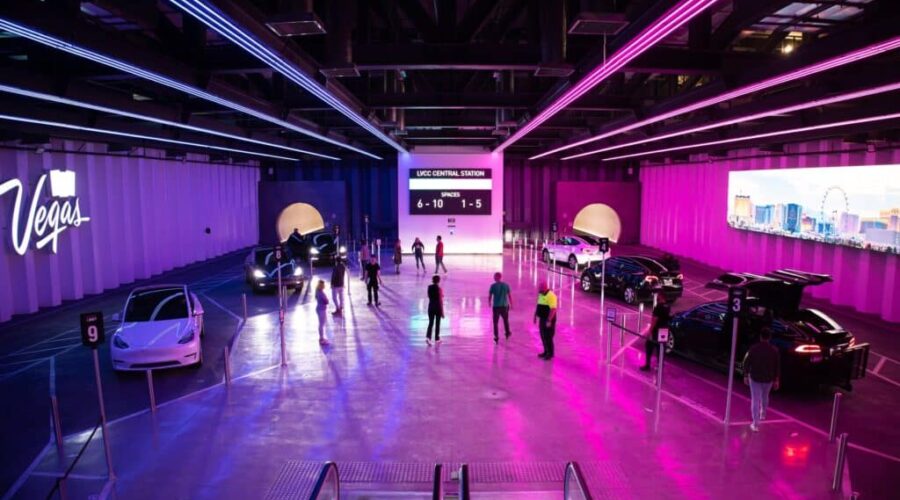
Imagine a transit system that doesn’t just serve the Strip but *inhabits* it—slithering through its arteries, stopping where the crowds gather, and vanishing into the urban fabric when not in use. The Vegas Loop does precisely that. With its fleet of autonomous electric pods, it operates like a living organism, expanding and contracting with demand. No fixed schedule. No rigid tracks. Just a seamless, on-demand flow that adapts in real time. This is not transit as infrastructure; it’s transit as ecosystem. And it’s swallowing the monorail’s market share one rider at a time, not through force, but through sheer adaptability.
The Allure of Effortless Mobility
Convenience is the Loop’s most seductive weapon. Riders summon a pod via app, glide to their destination without transfers, and disembark with the ease of a local. No waiting in line. No deciphering route maps. No wrestling with the monorail’s inflexible stops. The Loop doesn’t just move people—it *liberates* them. It turns the Strip from a maze of concrete and glass into a fluid landscape where distance dissolves into possibility. For a city built on the illusion of instant gratification, this is not just transit; it’s alchemy.
The Monorail’s Last Stand?
Yet the monorail isn’t dead—it’s merely recalibrating. Its legacy as a pioneering force remains, a relic of a time when Las Vegas dared to dream in steel and concrete. Some argue its elevated tracks could yet find new purpose, perhaps as a scenic connector or a nostalgic ride for those who crave the romance of a bygone era. But the Loop’s rise is inexorable. It doesn’t just replace the monorail; it renders it obsolete by redefining what transit can be. The monorail was a marvel. The Loop is a revolution.
What This Means for Visitors
For those stepping onto the Strip, the choice is clear: embrace the Loop’s serpentine efficiency or resign oneself to the monorail’s static embrace. The Loop doesn’t just get you from A to B—it transforms the journey into an experience. It’s the difference between watching the city from a distance and moving through it like a shadow. And as the Loop expands, its tendrils reaching deeper into the urban sprawl, the monorail’s once-dominant silhouette will fade into the horizon—a ghost of transit past.
The Vegas Loop isn’t just eating the monorail. It’s digesting the future. And in a city that thrives on reinvention, that’s a meal worth savoring.