The Vegas Loop’s Environmental Impact vs. Monorail Retention
In a city where neon dreams collide with desert silence, Las Vegas faces a quandary that could redefine its skyline—and its conscience. The Vegas Loop, a subterranean marvel of magnetic levitation and subterranean transit, promises to whisk travelers between resorts in minutes, all while sipping electricity like a hummingbird at a feeder. But whispers in the desert wind suggest a rival may yet outlast it: the monorail, a relic of mid-century futurism, clinging to relevance like a stubborn cactus in a drought. So, which of these iron steeds will leave the lighter footprint on the Mojave’s fragile skin? And more intriguingly—can a city built on excess ever truly reconcile speed with sustainability?
The Vegas Loop’s Silent Revolution: Efficiency in the Shadows
Beneath the Strip’s glittering façade, the Vegas Loop operates like a subterranean ballet—silent, swift, and sipping power. Unlike its elevated cousin, the monorail, which cuts a gaudy silhouette against the sky, the Loop glides through tunnels with the discretion of a desert fox. Its electric propulsion emits no fumes, and its energy demands, though substantial, are met increasingly by renewable sources. Yet, the true marvel lies in its capacity: each pod can ferry up to 16 passengers, reducing the need for individual rideshares or taxis that clog the Strip’s arteries. In an era where carbon footprints are scrutinized like casino chips, the Loop’s efficiency is undeniable—if not outright seductive.
The Monorail’s Enduring Shadow: A Relic with Unexpected Grace
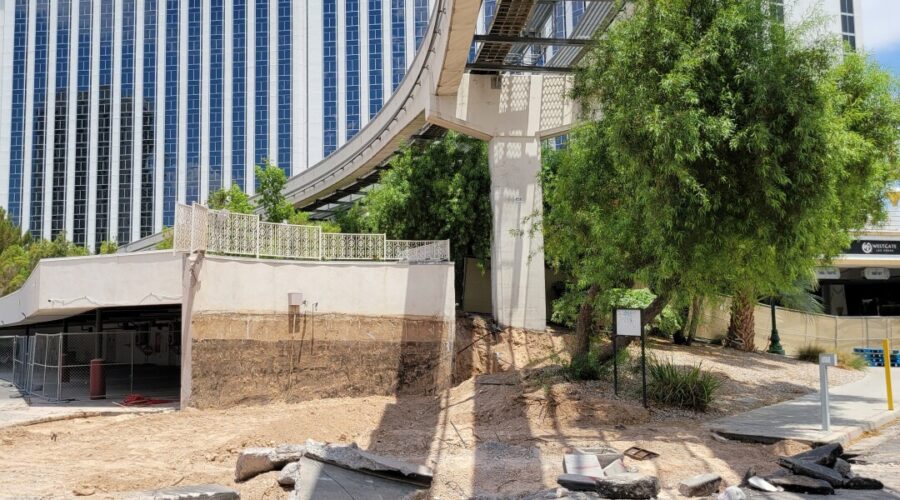
To dismiss the monorail as a quaint anachronism would be to ignore its quiet resilience. Born in the Space Age, this elevated serpent has ferried millions across the Strip since 2004, its concrete pillars standing sentinel over the city’s evolution. While its energy consumption is higher—thanks to air conditioning and steel tracks baking in the sun—its longevity offers a counterpoint to the Loop’s novelty. The monorail’s greatest asset? It was built to last. Unlike the Loop, which demands constant technological upkeep, the monorail’s infrastructure is battle-tested by decades of desert heat and human traffic. Could its very stubbornness be its superpower?
The Environmental Rubik’s Cube: Balancing Speed, Scale, and Scarcity
Yet the question lingers like a desert mirage: which system truly minimizes harm? The Loop’s tunnels, though energy-efficient, require extensive excavation—a process that disturbs the soil and disrupts underground ecosystems. The monorail, meanwhile, casts a literal shadow over the Strip, altering microclimates and blocking sunlight to the streets below. Both systems grapple with the paradox of progress: the more they expand, the more they encroach upon the fragile desert biome. Even their power sources—whether solar farms or grid-dependent grids—are not without consequence. In a region where water is scarcer than a winning hand at a rigged poker table, every watt and every beam must be weighed with surgical precision.
The Human Equation: Who Wins the Hearts—and Wallets—of Las Vegas?
Technology alone cannot dictate the victor. The Vegas Loop, with its sleek pods and sci-fi allure, appeals to the city’s obsession with the next big thing. But the monorail, with its retro-futuristic charm, holds a nostalgic grip on locals and tourists alike. Surveys suggest that while visitors marvel at the Loop’s innovation, they still flock to the monorail for its panoramic views and nostalgic ride. The environmental debate, then, is not just about emissions or energy—it’s about perception. Can a city built on spectacle ever prioritize sustainability over showmanship? Or will the monorail’s unassuming tenacity outlast the Loop’s fleeting hype?
The desert does not forgive waste. It does not reward excess. It only endures. As Las Vegas stands at this crossroads, the choice is stark: embrace the future’s silent efficiency or cling to the past’s unapologetic grandeur. One thing is certain—the answer will not be found in speed alone, but in the delicate calculus of progress and preservation. The city’s soul, after all, is not in its neon or its noise, but in the balance it strikes between them.