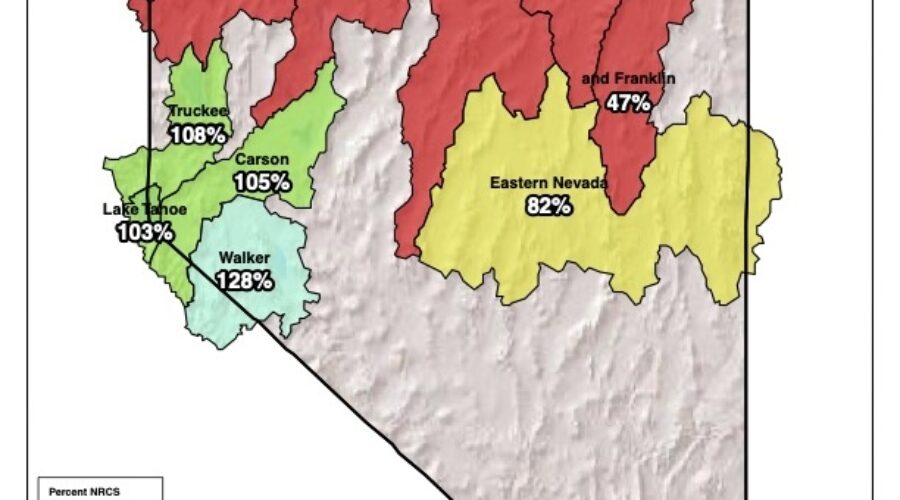
How hot will summer 2026 be in Nevada? Worse due to 17% snowpack
The Nevada summer of 2026 looms on the horizon like a forge overheating in the desert sun, its embers stoked by a snowpack that has dwindled to a mere 17% of its historic norm. This isn’t just a seasonal shift—it’s a climatological reckoning, a harbinger of heat so relentless it could redefine the very rhythm of life across the Silver State. As the Sierra Nevada’s frozen reserves melt away, the state braces for a summer where the air itself seems to shimmer with anticipation, where the land exhales a dry, scorching breath that lingers long after dusk. The question isn’t whether Nevada will swelter, but how fiercely—and what that heat will unravel in its wake.
The Sierra’s Vanishing Blanket: A Thirsty Landscape’s Silent Cry
The Sierra Nevada’s snowpack has long been Nevada’s lifeline, a slow-release reservoir that trickles into rivers and aquifers as the seasons turn. But in 2026, that lifeline has been reduced to a threadbare shroud, its once-thick mantle now a skeletal remnant clinging to the peaks. This isn’t merely a deficit—it’s a collapse of the state’s natural cooling system. Without the snow’s reflective albedo, the earth absorbs more solar radiation, transforming the landscape into a heat sponge. The mountains, stripped of their icy armor, radiate stored warmth back into the atmosphere, creating a feedback loop where the air grows heavier, the days longer, and the nights stubbornly warm. It’s as if the land itself has been flayed, its defenses peeled back to reveal the raw, unrelenting pulse of the desert beneath.
The Thermostat Broken: When the Heat Becomes a Living Thing
Nevada’s summers are notorious for their furnace-like intensity, but 2026 threatens to eclipse even the most brutal historical precedents. Meteorologists warn of a “heat dome” forming over the region, a stagnant high-pressure system that traps scorching air like a lid on a boiling pot. Cities like Las Vegas and Reno, already accustomed to triple-digit afternoons, may find themselves in the grip of a relentless, unblinking sun that refuses to relent. The urban heat island effect will amplify the misery, turning asphalt and concrete into radiators that never cool. Even the high desert, usually a refuge from the worst of the heat, could see temperatures soar beyond 110°F, turning the air into a caustic mist that stings the lungs with every breath. This isn’t just discomfort—it’s a physiological siege, where the body’s ability to regulate its own temperature is pushed to the brink.
Ecosystems on the Edge: The Domino Effect of a Thirsty Land
The consequences of a diminished snowpack extend far beyond human discomfort. Nevada’s ecosystems, already adapted to arid extremes, now face a gauntlet of cascading crises. The Great Basin’s sagebrush steppe, a fragile tapestry of life, could wither under the unrelenting sun, its shrubs reduced to brittle husks. Migratory birds, dependent on high-elevation wetlands fed by melting snow, may find their breeding grounds parched and inhospitable. Even the state’s iconic Joshua trees, those sentinels of the Mojave, could succumb to the heat stress, their ancient roots unable to draw enough moisture from a soil baked dry. The land, stripped of its natural rhythms, becomes a stage for silent tragedies—each species a player in a drama where the script has been rewritten by a climate out of balance.
Adaptation or Capitulation: Nevada’s Gamble with the Future
As the specter of extreme heat looms, Nevada must confront a stark choice: adapt or capitulate. The state’s water managers are already exploring emergency measures, from rationing to aggressive conservation campaigns, but the clock is ticking. Golf courses may wither, lawns turn to dust, and agriculture—Nevada’s lifeblood in some regions—could face catastrophic losses. The tourism industry, too, will feel the pinch, as visitors seek cooler climes and casinos struggle to lure patrons into the sweltering outdoors. Yet, there’s a paradox here: Nevada’s very identity is tied to its extremes. The heat, the dust, the unyielding sun—these are the elements that have shaped its character. The challenge now is to harness that resilience, to innovate in the face of adversity rather than retreat from it. Solar farms could proliferate, turning the sun’s wrath into a source of power. Desalination plants might rise along the Colorado River, wringing freshwater from the briny deep. The state’s future may depend on its ability to transform its greatest threat into its greatest asset.
The Nevada summer of 2026 will not be gentle. It will be a crucible, a trial by fire that tests the mettle of the land and its people. But within that crucible lies the potential for reinvention—a chance to redefine what it means to thrive in a world where the old rules no longer apply. The heat will come, as it always does. The question is whether Nevada will meet it with defiance or despair. The answer will be written in the sweat on its brow and the resilience in its bones.