
Lake Tahoe Snowpack 17%: How to Help With Water Conservation
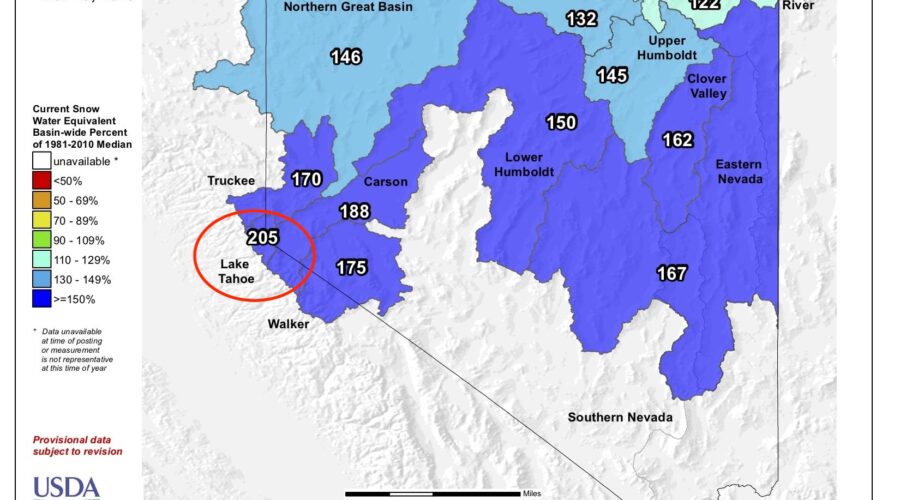
The Lake Tahoe basin, a jewel nestled between California and Nevada, has long been a barometer of the West’s hydrological health. Yet, as the snowpack now stands at just 17% of its historical average, the region faces a paradox: a landscape that once brimmed with winter’s bounty now whispers of scarcity. This isn’t merely a seasonal anomaly—it’s a clarion call for collective action. Water conservation, once a peripheral concern, has become the linchpin of resilience in an era where every drop counts. Understanding the depth of this challenge requires more than surface-level observation; it demands a reckoning with the intricate interplay of climate, infrastructure, and human behavior that shapes our water future.
The Vanishing Snowpack: A Symptom of a Larger Shift
The snowpack’s decline is not an isolated event but a symptom of broader climatic upheaval. Warmer winters, erratic precipitation patterns, and prolonged droughts have eroded the Sierra Nevada’s once-reliable snow reserves. What was once a natural reservoir, slowly releasing water through spring and summer, now melts prematurely, leaving reservoirs parched and ecosystems strained. This transformation disrupts the delicate balance of the Tahoe basin, where snowmelt historically replenished groundwater, fed alpine meadows, and sustained the lake’s legendary clarity. The 17% figure isn’t just a statistic—it’s a harbinger of cascading consequences, from dwindling fisheries to heightened wildfire risks.
Every Drop Counts: Practical Conservation Strategies
In the face of such stark realities, individual and collective efforts must converge to mitigate the crisis. Start with the home: retrofitting faucets with aerators, installing low-flow showerheads, and replacing thirsty lawns with drought-tolerant native plants can slash indoor water use by up to 30%. Outdoors, the mantra is simple—water less, water wisely. Drip irrigation, mulching, and scheduling watering during the coolest parts of the day can prevent evaporation and ensure moisture reaches roots where it’s needed most. For those with pools, covering them reduces evaporation by nearly 50%, a small but meaningful step in a region where every gallon is precious.
Beyond the household, community-level initiatives amplify impact. Participating in local water audits, advocating for tiered pricing structures that penalize excessive use, and supporting policies that incentivize conservation can shift the cultural narrative around water from entitlement to stewardship. Even something as mundane as fixing a leaky toilet—a silent culprit that can waste 200 gallons a day—becomes an act of defiance against wastefulness. These actions, though incremental, weave together to form a tapestry of resilience.
The Invisible Infrastructure: Rethinking Supply and Demand
Conservation isn’t just about reducing usage; it’s about reimagining the systems that govern water. The Tahoe basin’s reliance on snowpack as a primary water source is a relic of a bygone climate regime. Diversifying supply through groundwater recharge, recycled water programs, and even atmospheric water capture technologies could buffer the region against future shocks. On the demand side, industries must confront their water footprints. Agriculture, a major consumer, could adopt precision irrigation and soil moisture sensors to optimize every drop. Tourism, another economic pillar, can pivot toward sustainable practices, from linen reuse programs to water-efficient lodge designs.
Yet, the most profound shift may be psychological. Water conservation often stirs resistance because it’s framed as deprivation rather than opportunity. What if, instead, we viewed it as a return to balance? Indigenous communities in the region have long practiced sustainable water management, their knowledge a testament to living within nature’s limits. By blending ancestral wisdom with modern innovation, Tahoe can chart a path forward that honors both its ecological heritage and its future.
A Call to Action: The Ripple Effect of Collective Effort
The 17% snowpack is not a death knell but a catalyst. It invites us to question the status quo, to challenge the assumption that abundance is infinite. Conservation, in this context, becomes an act of defiance against complacency—a declaration that we refuse to let convenience dictate our survival. The solutions exist; they merely require the will to implement them. Whether through policy changes, technological advancements, or grassroots movements, the time to act is now. The lake’s future, and our own, hinges on the choices we make today.
In the quiet of a Tahoe winter, when the snow should be falling in earnest, the absence of white peaks serves as a stark reminder: water is not a given. It is a shared responsibility, a finite resource, and a legacy we leave for generations to come. The path forward demands more than awareness—it demands action. And in that action, there lies hope.