Can Nevada Survive Another Winter Like 2026’s 17% Snowpack?
The specter of Nevada’s 2026 winter looms large—a season etched in collective memory for its parched landscapes and skeletal snowpack, a mere 17% of median levels. As the state braces for another winter, the question lingers: Can Nevada survive another season of such scarcity? The answer lies not in a single solution but in a mosaic of innovation, resilience, and foresight. This exploration delves into the multifaceted challenges and opportunities that will define Nevada’s ability to endure, adapt, and thrive in the face of climate-induced adversity.
The Hydrological Paradox: When Snowpack Fails the Desert
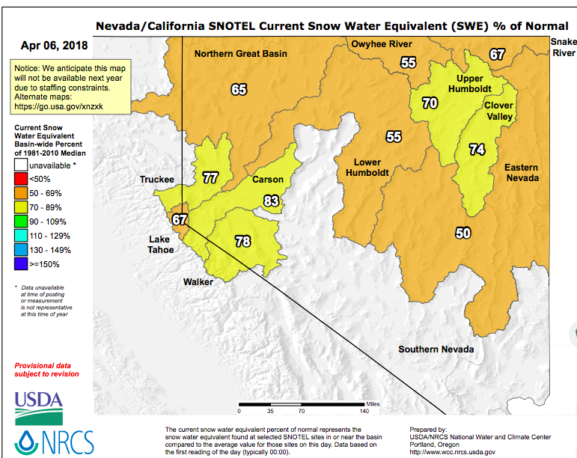
Nevada’s identity is intricately tied to its snowpack, a lifeline that sustains ecosystems, agriculture, and urban life. Yet, the 2026 winter exposed a harsh truth: the snowpack, once a predictable reservoir, has become a volatile variable. With only 17% of median levels, the state’s water reserves dwindled, forcing municipalities to confront the fragility of their infrastructure. The paradox is stark—Nevada, a state synonymous with aridity, now grapples with the consequences of a dwindling cryosphere. The implications extend beyond water scarcity; they threaten the delicate balance of the Great Basin’s biodiversity, where species like the Lahontan cutthroat trout and the sage-grouse face existential threats. The hydrological paradox demands a reevaluation of water management strategies, from cloud seeding to groundwater replenishment, as Nevada seeks to reconcile its past with an uncertain future.
The Urban Oasis: Adapting Cities to a Drier Reality
Cities like Las Vegas and Reno, once bastions of opulence and growth, now confront the sobering reality of a water-stressed future. The 2026 winter served as a wake-up call, exposing the vulnerabilities of urban water systems. Las Vegas, a city that thrives on excess, has already taken bold steps—recycling wastewater, incentivizing xeriscaping, and enforcing strict conservation measures. Yet, the challenge persists: How can Nevada’s urban centers evolve from water-guzzling metropolises to models of sustainability? The answer lies in a blend of policy, technology, and community engagement. From desalination plants to smart irrigation systems, innovation must be paired with a cultural shift—one that embraces conservation as a way of life. The urban oasis of tomorrow will not be built on abundance but on ingenuity and restraint.
The Agricultural Imperative: Feeding a State on Borrowed Water
Agriculture, the backbone of Nevada’s rural economy, is particularly vulnerable to the whims of a shrinking snowpack. The 2026 winter forced farmers to confront the limitations of their irrigation systems, as reservoirs ran dry and crops withered under the relentless sun. The imperative is clear: Nevada must reimagine its agricultural practices to align with a drier climate. This could mean transitioning to drought-resistant crops, adopting precision irrigation techniques, or even exploring vertical farming in controlled environments. The agricultural sector must also grapple with the ethical dilemma of water allocation—balancing the needs of food production with the demands of urban and ecological sustainability. The path forward is fraught with challenges, but it is also paved with opportunity for those willing to innovate.
The Ecological Ripple Effect: Protecting Nevada’s Fragile Ecosystems
Beyond the human realm, Nevada’s ecosystems are bearing the brunt of a diminished snowpack. The Great Basin’s wetlands, once teeming with life, are receding, while forests succumb to the dual pressures of drought and wildfire. The ripple effect is profound—species decline, soil erosion intensifies, and the very fabric of the landscape unravels. Conservation efforts must pivot from reactive measures to proactive strategies, such as habitat restoration and controlled burns to mitigate wildfire risks. Indigenous communities, with their deep ecological knowledge, offer invaluable insights into sustainable land management. The ecological imperative is not just about survival; it is about preserving the biodiversity that defines Nevada’s natural heritage.
The Policy Labyrinth: Navigating the Path to Resilience
At the heart of Nevada’s struggle lies a labyrinth of policy decisions—local, state, and federal—that shape the state’s response to water scarcity. The 2026 winter exposed gaps in coordination, from interstate water agreements to groundwater regulations. The path to resilience requires a holistic approach, one that integrates science, economics, and social equity. Policymakers must prioritize long-term planning over short-term gains, investing in infrastructure that can withstand the pressures of a changing climate. Public-private partnerships can accelerate innovation, while community-led initiatives ensure that solutions are inclusive and equitable. The policy labyrinth is complex, but it is navigable for those willing to embrace collaboration and foresight.
The winter of 2026 was a crucible, testing Nevada’s mettle in the face of climate adversity. Yet, from the ashes of scarcity emerges a state determined to rewrite its narrative. Survival is not a passive endeavor; it is an active pursuit of resilience, innovation, and unity. As Nevada charts its course for the future, the lessons of the past must guide its steps—toward a horizon where scarcity is met with ingenuity, and challenge is transformed into opportunity. The question is no longer whether Nevada can survive another winter like 2026’s, but how it will emerge stronger, wiser, and more prepared for the trials ahead.