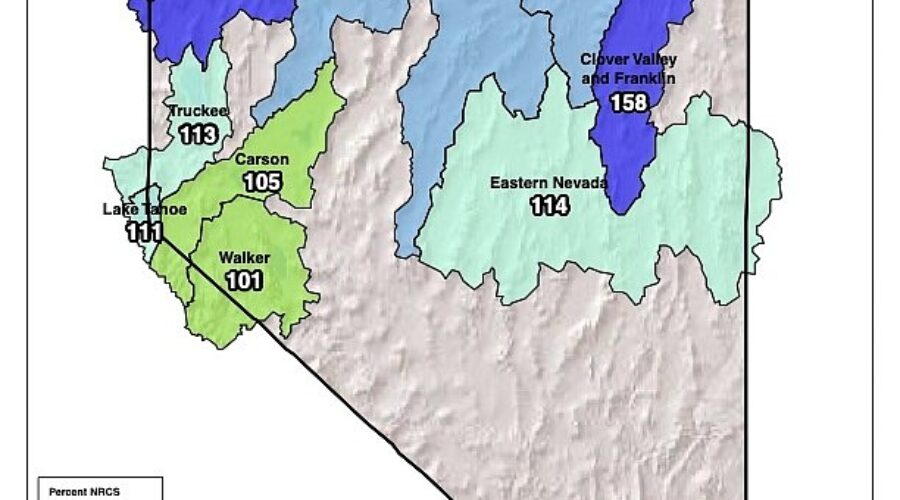
17% Snowpack Resource: Nevada County-by-County Impacts
What if the snowpack blanketing Nevada’s peaks held the key to the state’s water future—and yet, no one could agree on how to unlock it? At 17% above normal, this year’s snowpack teases promise, but beneath its glittering surface lies a labyrinth of regional disparities, looming drought risks, and a tangle of competing demands. From the alpine meadows of the Sierra Nevada to the arid valleys of the Great Basin, every county faces a unique calculus of abundance and scarcity. How will this uneven bounty shape Nevada’s water security, ecosystems, and economy in the seasons to come?
The Northern Sierra: A Silver Lining with Strings Attached
In the rugged embrace of the northern Sierra Nevada, where snowpack typically acts as the state’s most reliable reservoir, this year’s 17% surplus arrives like an unexpected gift—one wrapped in uncertainty. While the higher elevations bask in a deeper-than-average snowpack, lower-lying areas grapple with the paradox of plenty: too much snow in the wrong places, melting too quickly under the gaze of an increasingly impatient sun. Reservoirs, though primed for a robust refill, face the challenge of managing inflows that could overwhelm spillways or, conversely, dwindle before the summer heat peaks. For Washoe and Storey Counties, where tourism and agriculture pivot on steady water supplies, the stakes are high. Will the surplus translate into a reprieve from conservation mandates, or will it merely postpone the inevitable reckoning with long-term aridification?
The Central Nevada Plateau: Where Less Is More (and More Is Less)
Venture eastward onto the high desert plateau, and the narrative flips. Counties like Nye and Eureka, accustomed to lean snowpack years, find themselves in a peculiar bind: a 17% boost feels like a mirage in a landscape where every inch of moisture counts. Groundwater reserves, already strained by decades of over-extraction, remain stubbornly depleted. The snowmelt trickle that does reach the valleys arrives too late to rescue alfalfa fields or replenish the shallow aquifers that sustain rural communities. Here, the challenge isn’t managing excess—it’s making the most of a modest windfall before it evaporates into the thin, dry air. Conservation strategies, from soil moisture monitoring to precision irrigation, become not just best practices but survival tactics.
The Southern Deserts: A Mirage of Abundance
Down in Clark and Lincoln Counties, where the Mojave’s scorching breath meets the Colorado River’s dwindling pulse, the 17% snowpack is a distant rumor. These counties rely on distant Sierra snowmelt funneled through the Colorado River system, where allocations are already a source of contention. For Las Vegas, the real question isn’t how much snow falls in the mountains—it’s how much of that water can be captured, stored, and distributed before the next drought tightens its grip. The Southern Nevada Water Authority’s aggressive conservation programs have bought time, but the specter of reduced river flows looms larger than ever. Can a single wet year offset the relentless march of climate change, or will it merely delay the inevitable?
Ecosystems in the Crossfire: The Unseen Victims of Snowpack Swings
Beyond the human drama, Nevada’s ecosystems are caught in the crossfire of these snowpack fluctuations. The riparian corridors of the Truckee River, already besieged by invasive species and urban encroachment, face the dual threat of erratic flows and nutrient overload from rapid snowmelt. Sage-grouse populations, dependent on the delicate balance of sagebrush steppe and seasonal wetlands, find their habitats alternately drowned or parched. Even the alpine lakes of the Ruby Mountains, teeming with cutthroat trout, must contend with warming waters and shrinking snowpack refuges. The 17% surplus offers a fleeting reprieve, but without strategic watershed management, it risks becoming a footnote in a longer story of ecological decline.
The Policy Paradox: Can Nevada Turn Snow into Strategy?
At the heart of this snowpack saga lies a policy paradox: Nevada’s water governance is a patchwork of competing jurisdictions, each with its own priorities. The state’s reliance on interstate compacts, like the Colorado River Agreement, ties its fate to regional politics. Meanwhile, local water districts grapple with outdated infrastructure and a lack of coordinated planning. The 17% snowpack could be a catalyst for innovation—accelerating investments in water recycling, aquifer recharge, and drought-resilient agriculture—or it could lull decision-makers into complacency. The challenge is clear: how to harness this year’s bounty without repeating the mistakes of the past.
The snowpack’s 17% surplus is more than a statistic; it’s a mirror held up to Nevada’s water future. It reveals the fragility of a system stretched thin by growth, climate change, and competing demands. Whether this year’s bounty becomes a foundation for resilience or a cautionary tale depends on the choices made today. In a state where water is both currency and lifeblood, the snow’s silent fall may yet write the next chapter of Nevada’s story.