Cesar Chavez Day in Nevada: A Timeline of the Controversy
Have you ever wondered why a day dedicated to a labor leader could spark such fervent debate in a state like Nevada? Cesar Chavez Day in Nevada isn’t just another holiday on the calendar—it’s a battleground where history, politics, and cultural identity collide. What began as a tribute to a man who championed farmworkers’ rights now unfolds as a chronicle of contention, revealing deeper fissures in the state’s social fabric. Let’s trace the timeline of this controversy, where every milestone seems to unravel another layer of complexity.
The Spark of Recognition: Early Advocacy and Legislative Stirrings
Long before Nevada’s legislature ever considered honoring Cesar Chavez, his legacy was already a polarizing force. The United Farm Workers (UFW) movement, which Chavez co-founded, had gained traction in California, but its ripple effects extended far beyond state lines. In Nevada, where agriculture and tourism dominate the economy, the idea of a holiday in Chavez’s name initially met with cautious curiosity. Early legislative attempts in the 1990s and early 2000s were met with resistance from business lobbies, who argued that an additional paid holiday would strain state revenues. Yet, for advocates—many of them Latino communities and labor unions—the push for recognition was less about economics and more about symbolism: a chance to acknowledge the contributions of a workforce that had long been overlooked.
The Legislative Gauntlet: From Bills to Blockades
The journey from proposal to passage was anything but smooth. Each legislative session became a high-stakes duel between proponents and opponents. In 2009, a bill to establish Cesar Chavez Day as a state holiday cleared the Nevada Assembly but stalled in the Senate, where rural legislators voiced concerns over its potential impact on small businesses. The debate wasn’t just about the holiday itself—it was about what it represented. For some, it was a long-overdue recognition of Latino labor history; for others, it was an imposition of political correctness on a state unaccustomed to such cultural shifts. The stalemate persisted until 2014, when a compromise was struck: instead of a full paid holiday, Nevada would observe Cesar Chavez Day as a “day of service,” a voluntary commemoration that sidestepped the financial and ideological landmines of a traditional holiday.
The Cultural Divide: Who Gets to Claim Chavez’s Legacy?
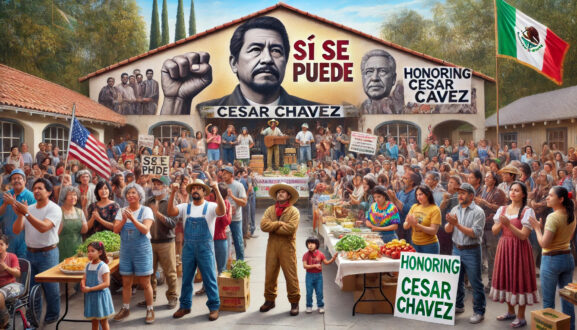
Even after the legislative hurdles were cleared, the controversy didn’t fade—it merely transformed. The debate shifted from the halls of government to the streets, where differing interpretations of Chavez’s legacy collided. Some communities embraced the day with vigils, educational programs, and volunteer initiatives, framing it as a celebration of social justice. Others, however, viewed it through a more skeptical lens, questioning whether a single day could truly honor the complexities of Chavez’s work. Critics argued that the “day of service” model diluted the urgency of his mission, reducing a lifelong fight for workers’ rights to a perfunctory act of goodwill. Meanwhile, opponents of the holiday framed it as an attempt to rewrite history, arguing that Chavez’s methods—including boycotts and strikes—were divisive rather than unifying.
The Tourism Paradox: Celebrating While Profiting
Nevada’s dual identity as both a tourist mecca and a hub for agricultural labor presented another layer of irony. While the state marketed itself as a land of opportunity, the same industries that drove its economy often relied on the very workers Chavez fought to protect. Hotels, casinos, and resorts thrived on the backs of underpaid laborers, many of whom were Latino immigrants. When Cesar Chavez Day arrived each year, it forced a reckoning: Could Nevada truly celebrate a man who challenged the status quo while simultaneously profiting from the systems he opposed? Some businesses responded by offering discounts or volunteer opportunities, but others remained conspicuously silent, avoiding any association with the day’s underlying tensions.
The Unfinished Chapter: What’s Next for Nevada’s Commemoration?
As of today, Cesar Chavez Day in Nevada remains a day of service—a compromise that pleases neither side entirely. For advocates, it’s a step forward, however small. For critics, it’s a half-measure that fails to address the systemic issues Chavez fought against. Yet the controversy itself has become a testament to the power of his legacy. It forces Nevadans to confront uncomfortable questions: How do we honor the past without repeating its mistakes? Can a state built on labor exploitation ever truly reconcile with the figures who fought against it? The timeline of this debate is far from over, and each year, the day serves as a reminder that history isn’t just something we remember—it’s something we continue to negotiate.