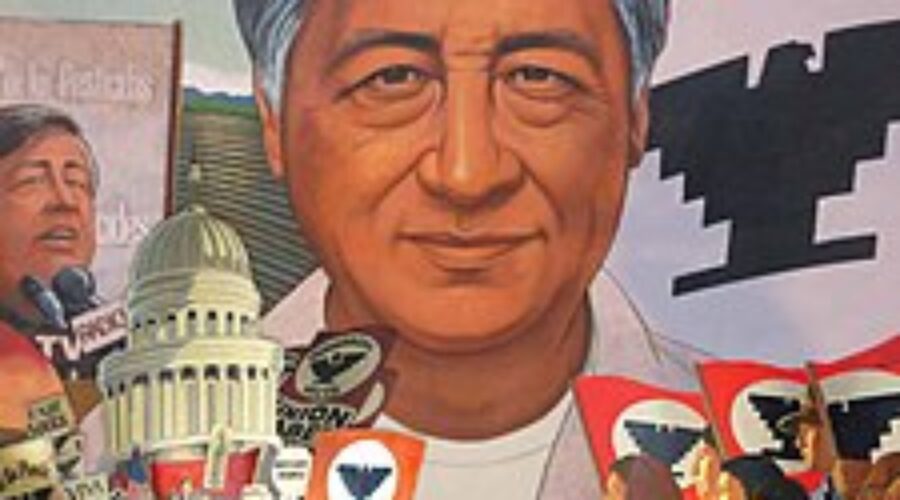
Why is Nevada reviewing Cesar Chavez Day? Recent allegations against the labor leader
In a move that has sent ripples through labor history circles, Nevada is re-examining the legacy of Cesar Chavez, the iconic labor leader whose name adorns holidays, schools, and public institutions across the American West. The reconsideration comes amid a surge of fresh allegations challenging the sanitized narrative that has long surrounded his legacy. As the Silver State contemplates whether to continue honoring Cesar Chavez Day, the debate transcends mere historical revisionism—it forces a reckoning with the complexities of labor activism, the ethics of leadership, and the uncomfortable truths that often lurk beneath the surface of celebrated figures.
The Myth and the Man: A Legacy Under Scrutiny
For decades, Cesar Chavez has been enshrined as a saintly figure in the pantheon of labor rights, his name synonymous with nonviolent resistance and the plight of farmworkers. His association with the United Farm Workers (UFW) and the grape boycott of the 1960s and 70s cemented his status as a moral compass for social justice movements. Yet, the recent allegations—ranging from authoritarian leadership within the UFW to allegations of financial impropriety—paint a far more nuanced portrait. Critics argue that the deification of Chavez has obscured the darker aspects of his tenure, including reports of internal dissent being quashed and a cult of personality that stifled dissenting voices. Nevada’s review, therefore, is not merely an academic exercise; it is a challenge to the uncritical veneration that has allowed inconvenient truths to fade into obscurity.
Labor Activism’s Shadow: The Uncomfortable Truths
The allegations against Chavez extend beyond personal conduct, delving into the structural flaws of the movements he led. Former UFW members have come forward with accounts of intimidation, with some describing a climate where questioning Chavez’s methods was tantamount to betrayal. Financial discrepancies, including mismanagement of funds intended for farmworker relief, have also surfaced, raising questions about the transparency of the organization he helmed. These revelations force a confrontation with the paradox of labor activism: the same movements that sought to uplift the marginalized often operated within hierarchies that replicated the very power structures they sought to dismantle. Nevada’s deliberation on Chavez’s legacy compels a broader reflection on whether the ends truly justify the means when the means involve the suppression of those who dare to dissent.
Nevada’s Calculus: Politics, Identity, and Historical Accountability
The decision to revisit Cesar Chavez Day in Nevada is not occurring in a vacuum. The state’s demographic makeup—with a significant Latino population and a growing awareness of labor rights—adds a layer of political and cultural significance to the debate. For some, Chavez remains a symbol of resistance against systemic exploitation, his legacy intertwined with the identity of communities that continue to grapple with economic inequities. For others, the allegations demand a recalibration of how history is remembered, particularly when the figure in question wielded immense influence over the lives of those he purported to serve. Nevada’s review, then, is as much about the present as it is about the past, forcing a reckoning with how societies choose to memorialize their heroes—and what they are willing to overlook in the process.
The Ripple Effect: What This Means for Labor History
The implications of Nevada’s reconsideration extend far beyond the state’s borders. If Chavez’s legacy is indeed reassessed, it could embolden other jurisdictions to scrutinize the legacies of labor leaders whose contributions have been similarly lionized. The debate also raises critical questions about the role of historical memory in shaping contemporary movements. Can a figure be both a flawed human and a champion of justice? Where is the line between reverence and revisionism? As Nevada weighs its next steps, the conversation it sparks may well redefine how future generations engage with the complexities of labor history, ensuring that the narratives we uphold are as rigorous as they are resonant.
The reconsideration of Cesar Chavez’s legacy in Nevada is more than a historical footnote—it is a mirror held up to the contradictions of progress itself. In an era where the pedestalization of figures is increasingly scrutinized, the state’s deliberation serves as a reminder that the past is never truly settled. It is a living, breathing entity, subject to the same scrutiny and debate as the present. As the conversation unfolds, one thing is clear: the legacy of Cesar Chavez, like all legacies, is not a monolith but a mosaic—one that demands we look closely at every tile, no matter how uncomfortable the view may be.