Climate Change and Nevada’s 17% Snowpack: A Direct Link?
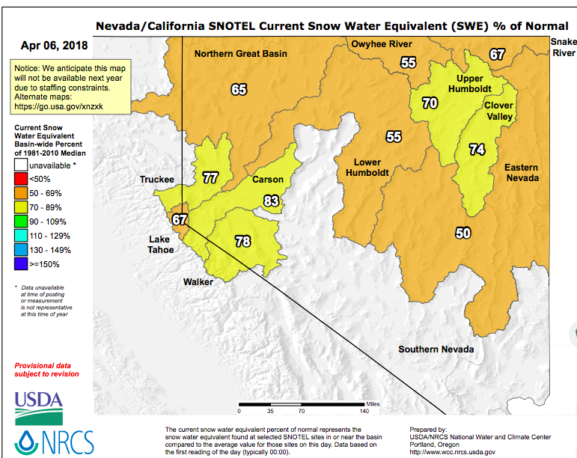
In the arid expanse of the American West, where the sun’s relentless gaze parches the earth, Nevada’s snowpack has dwindled to a mere 17% of its historical average. This stark figure isn’t just a statistic—it’s a harbinger of a deeper ecological unraveling, one that whispers of climate change’s insidious grip on the region’s fragile water systems. The juxtaposition of California’s record-breaking snowpack, swollen by a deluge of atmospheric rivers, against Nevada’s parched landscape underscores a paradox that demands closer scrutiny. Is this disparity a fleeting anomaly or a symptom of a larger, more ominous trend?
The Vanishing White Mantle: A Symptom of Systemic Disruption
The Sierra Nevada’s snowpack, often hailed as the West’s natural reservoir, has long been a barometer of climatic stability. Yet Nevada’s current snowpack—hovering at a dismal 17%—reveals a troubling asymmetry. While California’s mountains bask in an overabundance of snow, Nevada’s high country remains barren, a silent testament to the capricious nature of weather patterns. This divergence isn’t merely a matter of geography; it’s a reflection of how climate change is fracturing the delicate balance of atmospheric dynamics. The jet stream, once a predictable conveyor of moisture, now meanders erratically, leaving some regions drenched while others wither under the weight of drought.
Scientists attribute this shift to the intensification of the North Pacific High, a semi-permanent high-pressure system that has grown more dominant in recent decades. This atmospheric bulwark deflects storm tracks away from Nevada, steering them instead toward the Pacific Northwest or California. The result? A snowpack deficit that isn’t just a seasonal aberration but a structural realignment of the region’s hydrological cycle. The implications are dire: less snow means less meltwater, which in turn means less water for Nevada’s reservoirs, aquifers, and ecosystems.
The Albedo Effect: When Snowpack Becomes a Vanishing Act
Beyond the immediate scarcity of water, Nevada’s diminished snowpack triggers a cascade of ecological consequences, chief among them the albedo effect. Snow, with its pristine white surface, reflects up to 90% of incoming solar radiation back into the atmosphere. When snowpack recedes, the darker, heat-absorbing ground is exposed, accelerating the warming of the soil and adjacent air masses. This feedback loop—where less snow begets more heat, which in turn begets less snow—exacerbates the very conditions that suppress snow accumulation.
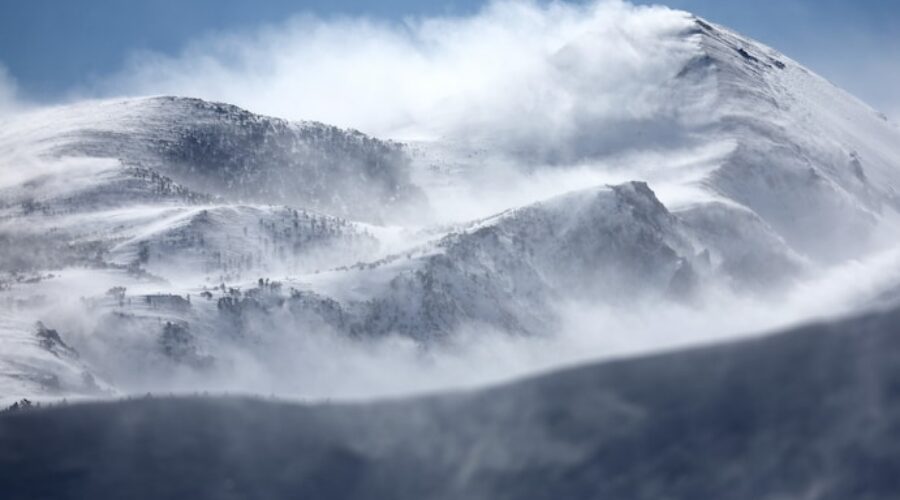
The albedo effect isn’t just a theoretical concern; it’s a visible transformation of the landscape. In Nevada’s high desert, patches of bare ground now punctuate what was once a seamless white blanket, a stark visual metaphor for the state’s climatic unraveling. This shift doesn’t just alter local temperatures—it disrupts the phenology of flora and fauna, from the timing of wildflower blooms to the migratory patterns of birds and mammals. The ecosystem, finely tuned to the rhythm of snowmelt, is being thrown into discord.
Human Fingerprints on a Drying Landscape
The narrative of Nevada’s snowpack isn’t solely one of natural variability; it’s also a story of human influence. The burning of fossil fuels has loaded the atmosphere with greenhouse gases, trapping heat and altering the thermodynamic gradients that govern weather systems. The Arctic, warming at twice the rate of the global average, is weakening the polar vortex and destabilizing the jet stream. This, in turn, has made atmospheric rivers—those torrential conveyor belts of moisture—more erratic in their behavior. Nevada, positioned on the leeward side of the Sierra Nevada, finds itself on the losing end of this climatic seesaw.
Urbanization and groundwater extraction further compound the problem. As cities like Las Vegas expand, their voracious demand for water strains already depleted aquifers. The Colorado River, a lifeline for Nevada, is in the throes of a megadrought, its flows diminished by overuse and climate change. The snowpack, once a reliable buffer against drought, is now an unreliable ally, its dwindling reserves a stark reminder of the limits of human ingenuity in the face of planetary upheaval.
The Ripple Effect: Beyond the Mountains and Into the Future
The consequences of Nevada’s shrinking snowpack extend far beyond its borders. Agriculture, which relies on snowmelt-fed irrigation, faces existential threats. Hydroelectric power generation, dependent on consistent water flows, grapples with reduced output. Even tourism, a cornerstone of Nevada’s economy, is affected as ski resorts struggle to maintain viable seasons. The state’s ecological identity—rooted in its high-desert ecosystems—is at risk of being rewritten by the same forces that are reshaping the planet.
Yet, within this crisis lies an opportunity. The same atmospheric rivers that drench California could, if harnessed with foresight, be redirected or augmented to replenish Nevada’s snowpack. Innovations in cloud seeding, water recycling, and drought-resistant agriculture offer glimmers of hope. But these solutions require more than technological prowess; they demand a fundamental rethinking of humanity’s relationship with water, land, and the climate.
The story of Nevada’s 17% snowpack is not just a tale of loss; it’s a call to action. It reminds us that the threads of the natural world are intricately woven, and pulling one can unravel the entire tapestry. The question is no longer whether climate change is altering the West—it’s whether we will act with the urgency and foresight that such a transformation demands. The snowpack, after all, is more than a reservoir; it’s a mirror, reflecting the choices we make today for the world of tomorrow.