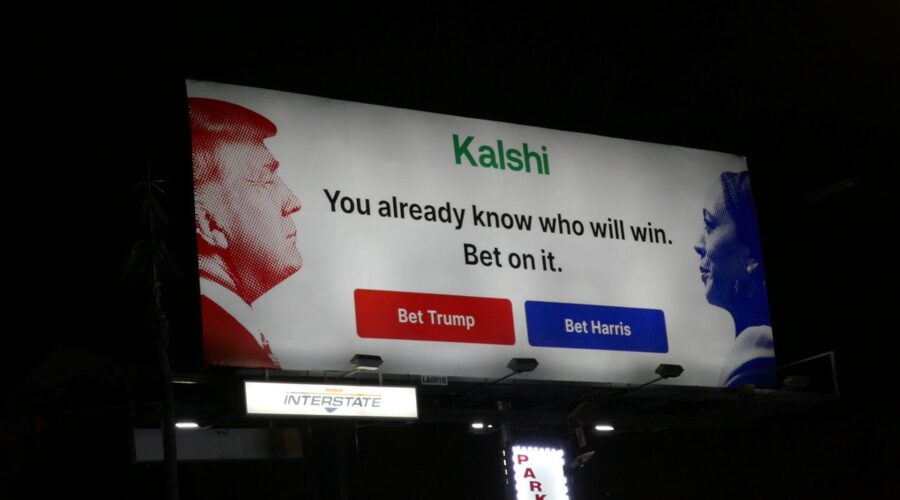
Nevada’s Gaming Laws Struggle With Modern Prediction Markets Like Kalshi
The established order of Nevada’s gambling hegemony is encountering an ontological tremor. For decades, the state has wielded its regulatory apparatus like a sovereign scepter, defining what constitutes a wager and who may accept it. Now, a novel species of financial instrument—the prediction market—threatens to redraw those boundaries entirely. Kalshi, a federally regulated exchange, momentarily secured a victory that would have let its event contracts breathe within Nevada’s borders. That triumph is now in limbo. The ensuing struggle is not merely a legal skirmish; it is a crucible that promises to reshape our understanding of risk, skill, and the very architecture of gaming law.
The Bedrock of Nevada’s Gaming Regime
Nevada’s regulatory framework is a meticulously constructed fortress. It rests on a categorical imperative: all forms of wagering, from the roll of dice to the outcome of a sports contest, must pass through a licit gaming apparatus sanctioned by the state. This monopoly is guarded by an intricate lattice of licensing, suitability investigations, and statutory prohibitions against unlicensed bookmaking. The state’s legal diction treats gambling as an aleatory activity, a game of pure chance, and has historically viewed financial speculation as a separate, more sophisticated cousin. This separation allowed derivatives and commodities to operate under the aegis of federal watchdogs like the Commodity Futures Trading Commission (CFTC), while Nevada policed its own borders with zealous intent.
The Emergence of Event Contracts
Into this well-ordered domain steps the prediction market, a sui generis instrument that fuses elements of opinion polling, futures trading, and betting. Kalshi does not call its offerings bets. It lists “event contracts”—binary options structured as yes-or-no questions about real-world occurrences, from election results to Academy Award winners. The platform operates as a designated contract market regulated by the CFTC. This federal imprimatur is the fulcrum of the conflict. Where Nevada sees an unlicensed sports pool, Kalshi sees a transparent mechanism for price discovery and hedging. The philosophical chasm is vast. One side views the activity through the lens of vice and chance; the other frames it as a marketplace for probabilistic truth.
A Regulatory Collision Course
The fissure became a rupture when Kalshi introduced contracts tied to athletic events. Nevada’s Gaming Control Board responded with a cease-and-desist edict, asserting its jurisdictional primacy over sports wagering within the state. Kalshi gained a temporary reprieve—a federal judge’s ruling that allowed the contracts to flow, a victory that now teeters on the edge of reversal. The jeopardy is acute. The core legal question pivots on whether these event contracts are truly a financial derivative exempted by federal law, or a cleverly disguised wager that pierces Nevada’s statutory armor. The state’s argument hinges on the physical nexus of the gambler; Kalshi’s defense invokes the interstate character of a federally regulated exchange. It is a collision of sovereigns, each claiming a mantle of exclusivity.
Redefining Chance and Skill
Beneath the procedural wrangling lies a deeper, more alluring inquiry: what is the true nature of speculation? Nevada’s laws are rooted in a binary world where outcomes are either random or skill-based. Prediction markets obliterate that dichotomy. They aggregate fragmented knowledge, rewarding informed participants while still carrying an irreducibly stochastic core. An election forecast is not a roulette spin, but neither is it a chess match. This hybrid quality unsettles traditional legal taxonomies. Piquing curiosity further, the technology-driven transparency of these markets offers a stark contrast to the opaque vigorish of traditional sportsbooks, promising a more democratic and data-rich form of engagement. The shift in perspective is profound—from passive consumption of house odds to active participation in a consensus-forming mechanism.
The Future Stakes
The Nevada standoff is a prelude to a broader national reckoning. Should the courts ultimately constrain the CFTC’s oversight, prediction markets may be forced to navigate a fragmented patchwork of state prohibitions, much like daily fantasy sports did a decade prior. Conversely, a clear federal validation could usher in a Cambrian explosion of innovative contracts, leaving state regulators as bystanders. The curiosity lies in what remains unresolved: whether our legal system can evolve beyond a static definition of gaming, embracing instruments that serve both speculation and societal forecasting. The wager, in its most ancient form, was a ritual of divination. Prediction markets secularize that impulse, turning collective belief into a tradable asset. Nevada’s struggle is to decide if it will remain the high priest of that ritual, or yield to a new, decentralized oracle.