Las Vegas Monorail History: Why Integrating With The Loop Makes Sense
For decades, the Las Vegas Monorail has been more than just a transit system—it’s been a symbol of the city’s relentless ambition, a steel-and-concrete testament to the idea that even the most transient of places can carve out a permanent mark on the landscape. But as the Strip evolves, so too must the arteries that feed it. Enter The Loop, a hyperloop-inspired transit concept poised to redefine mobility in Las Vegas. The marriage of these two systems isn’t just a merger of technologies; it’s a paradigm shift, one that promises to untangle the city’s congestion, slash travel times, and reimagine what urban transit can be in the 21st century. This isn’t merely an upgrade—it’s a revolution in motion.
The Monorail’s Legacy: A Pillar of Progress in a City of Reinvention
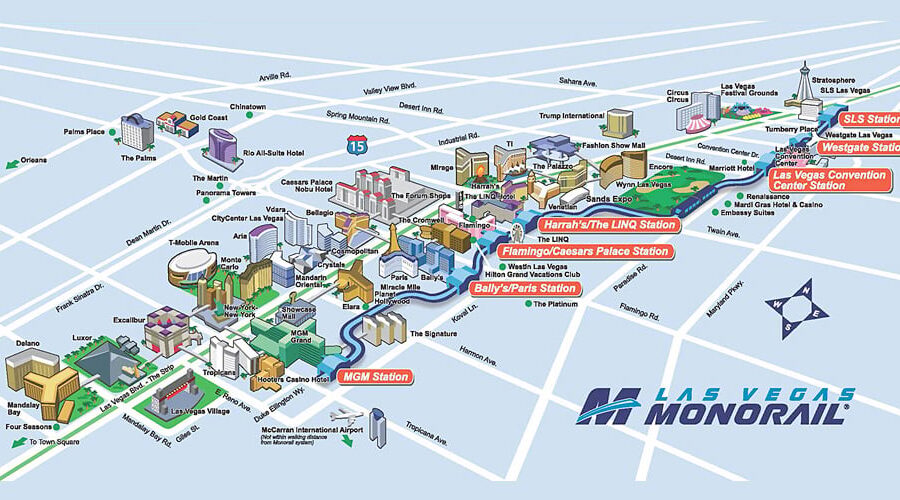
The Las Vegas Monorail debuted in 2004, a $650 million gamble that transformed the way visitors and locals alike navigated the Strip’s sprawling expanse. Unlike conventional transit, it soared above the chaos, offering a frictionless ride between key destinations like MGM Grand, Caesars Palace, and the Las Vegas Convention Center. Its sleek, futuristic design mirrored the city’s ethos: bold, brash, and unapologetically ambitious. Yet, despite its innovation, the Monorail remained a niche solution, hemmed in by its own limitations—fixed routes, high operational costs, and a rigid infrastructure ill-suited for the city’s explosive growth. The Monorail was a marvel, but like all pioneers, it was merely the first draft of a grander vision.
The Loop’s Arrival: A Disruptive Force in Urban Transit
Fast-forward to today, and the landscape is shifting. The Loop, a brainchild of Elon Musk’s The Boring Company, isn’t just another transit project—it’s a seismic disruption. With its underground tunnels, autonomous electric pods, and near-supersonic speeds, The Loop doesn’t just connect points; it obliterates distance. Imagine gliding from the airport to the Strip in under 20 minutes, or zipping between resorts without ever touching the surface. The Loop’s promise isn’t incremental improvement; it’s a complete reconfiguration of time and space. And when paired with the Monorail, the synergy becomes undeniable. The Monorail’s aerial dominance complements The Loop’s subterranean efficiency, creating a multi-layered transit network that finally matches the city’s relentless pace.
Why Integration is the Only Logical Evolution
Las Vegas thrives on spectacle, but its transit system has long been a disjointed affair. The Monorail, while efficient, can’t reach every corner of the city. The Loop, with its modular design, can—but it needs the Monorail’s reach to maximize its impact. Integration isn’t just about convenience; it’s about survival. The Strip’s traffic congestion costs the local economy millions annually. Tourists waste hours in gridlock. Residents endure the daily grind of inefficient routes. By merging these systems, Las Vegas doesn’t just streamline transit—it redefines urban living. The Monorail’s elevated corridors could serve as high-speed connectors to Loop hubs, while The Loop’s pods could ferry passengers to Monorail stations, creating a seamless web of mobility. The result? A city where distance is no longer a barrier, and time is no longer wasted.
Beyond Transit: The Ripple Effects of a Unified System
The benefits extend far beyond faster commutes. A unified transit network would slash carbon emissions, reduce the need for ride-sharing and rental cars, and free up real estate currently gobbled up by parking lots. It would also unlock new economic opportunities, from mixed-use developments around transit hubs to a surge in local tourism as visitors discover the ease of getting around. Even the city’s identity could shift—no longer just a destination for excess, but a model of sustainable, forward-thinking urban planning. The Monorail and The Loop together wouldn’t just move people; they’d move the city into a new era of possibility.
The Las Vegas Monorail was once a marvel. The Loop is the future. Together, they could redefine what it means to navigate a city that never sleeps. The question isn’t whether this integration will happen—it’s how soon we’ll look back and wonder how we ever lived without it.