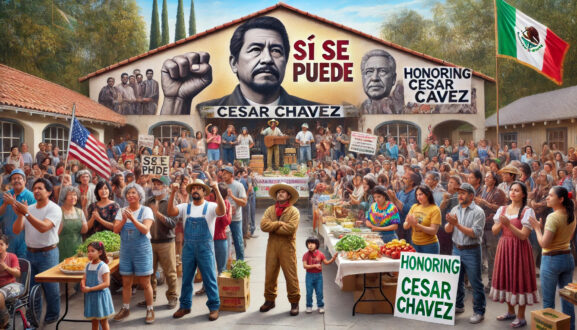
March 31 Holiday in Nevada: Cesar Chavez Day Controversy Explained
Have you ever paused mid-scroll to wonder why a simple holiday can spark such fiery debates? March 31 in Nevada isn’t just another date on the calendar—it’s a day that stirs both reverence and resistance, all centered around one name: Cesar Chavez. But why does honoring a labor leader and civil rights icon feel like stepping onto a political tightrope? Let’s unravel the layers of this controversy, where history, identity, and policy collide in a state known for its glittering lights and desert silence.
The Roots of Reverence: Who Was Cesar Chavez?
Before the protests and the political posturing, there was a man whose life story reads like a testament to resilience. Cesar Chavez, born in 1927, wasn’t just a labor leader—he was a symbol of hope for migrant farmworkers across the American Southwest. Co-founding the United Farm Workers union in 1962, he waged a relentless battle against exploitative labor practices, championing fair wages, safer working conditions, and dignity for those who toiled under the scorching sun. His methods—nonviolent protests, hunger strikes, and boycotts—echoed the moral clarity of figures like Gandhi and Martin Luther King Jr. By the time of his death in 1993, Chavez had etched his name into the annals of American activism, leaving behind a legacy that transcends borders and generations.
Nevada’s Embrace: Why March 31?
Nevada’s decision to designate March 31 as Cesar Chavez Day wasn’t merely symbolic—it was a deliberate nod to the state’s own labor history. The date marks Chavez’s birthday, a choice that aligns Nevada with a handful of other states, including California, where his influence was most profound. For a state that thrives on tourism and service industries—sectors often reliant on immigrant labor—this holiday serves as a quiet acknowledgment of the workforce that powers its economy. Yet, Nevada’s embrace of the holiday is far from uniform. While some counties and cities observe it as a paid holiday, others treat it as a mere ceremonial footnote, exposing the fissures in how the state grapples with its own identity.
The Controversy Unveiled: Why the Pushback?
If honoring Chavez seems like a no-brainer, why does the holiday provoke such vehement opposition? The controversy isn’t just about the man—it’s about what he represents. Critics argue that the holiday is an attempt to rewrite history, framing Chavez as a saintly figure while glossing over the complexities of his legacy. Some conservative groups view the holiday as an imposition of progressive values, a symbol of government overreach into cultural narratives. Others question the economic rationale, pointing out that Nevada’s economy, particularly in Las Vegas, relies heavily on immigrant labor—yet the holiday’s observance remains inconsistent. Then there are the political undertones: in a state where immigration policy is a perennial flashpoint, Cesar Chavez Day becomes a proxy for broader debates about inclusion, labor rights, and national identity.
The Ripple Effect: How the Holiday Reshapes Communities
The impact of Cesar Chavez Day extends far beyond the state capitol. In Nevada’s agricultural regions, where Chavez’s work was most visible, the holiday serves as a rallying cry for farmworker communities. Schools and local organizations host educational events, ensuring that younger generations understand the struggles and triumphs of those who came before them. Yet, in urban centers like Las Vegas, the holiday’s observance is often overshadowed by the city’s relentless pace. This disparity highlights a tension: while some communities cling to the holiday as a source of pride, others see it as a hollow gesture, devoid of real change. The question lingers: can a single day of recognition truly bridge the gap between past injustices and present realities?
Looking Ahead: The Future of the Holiday
As Nevada continues to evolve, so too does the conversation around Cesar Chavez Day. Advocates push for broader observance, arguing that a paid holiday would be a tangible step toward honoring Chavez’s legacy. Opponents, meanwhile, double down on their resistance, framing the holiday as a political tool rather than a celebration of history. The challenge ahead is clear: how can Nevada reconcile its diverse perspectives to create a holiday that resonates with all its residents? The answer may lie not in the date itself, but in the conversations it sparks—about labor, identity, and the kind of society we aspire to build.
March 31 in Nevada is more than a holiday—it’s a mirror. It reflects the state’s contradictions, its aspirations, and its unresolved debates. Whether it unites or divides may depend on who you ask, but one thing is certain: the story of Cesar Chavez is far from over.