Nevada Snowpack 2026: Visualizing 17% in Charts and Graphs
Have you ever wondered what happens when the Sierra Nevada’s snowpack, that glittering crown of winter, shrinks to a mere 17% of its historic glory? Nevada, a state where the mountains wear their snow like a badge of resilience, now faces a winter so lean it feels like the sky forgot to open its taps. Beneath the stark beauty of the Basin and Range, where peaks stand sentinel over arid valleys, the snowpack isn’t just a statistic—it’s a lifeline. It feeds rivers, fills reservoirs, and whispers promises of spring runoff to farmers and cities alike. But in 2026, that lifeline dangles perilously thin. Let’s dive into the numbers, the narratives, and the nuanced realities behind Nevada’s snowpack, visualized not just in charts and graphs, but in the silent stories of a changing climate.
The Great Melt: A 17% Snowpack in Context
Imagine a bathtub filled to the brim—now drain 83% of the water. That’s the scale of Nevada’s snowpack deficit in 2026. The statewide average, once a robust 100%, now languishes at 17%, a figure that sends shockwaves through water managers and outdoor enthusiasts alike. This isn’t just a dip; it’s a plunge into uncharted territory. Historically, Nevada’s snowpack peaks in early April, a frozen reservoir that slowly melts through summer. But 2026’s peak arrived early, weak, and fleeting—like a guest who leaves before dessert is served. The culprit? A trifecta of warmer temperatures, scant precipitation, and a high-pressure ridge stubbornly parked over the West Coast, deflecting storms like a bouncer at an exclusive club.
Visualizing the Void: Charts That Tell a Story
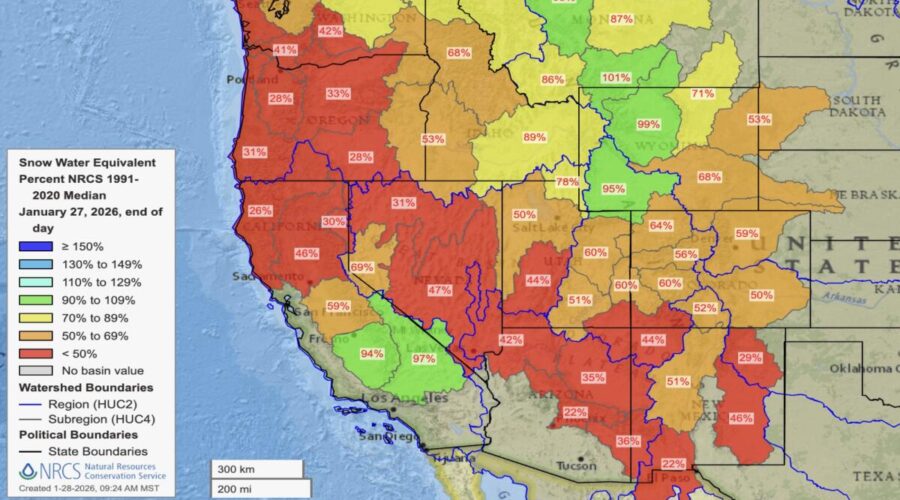
Charts and graphs aren’t just cold data—they’re storytellers. Take a bar graph of Nevada’s snowpack from 2020 to 2026, and you’ll see a jagged descent, a cliff dive in 2026. The bars, once towering and proud, now resemble the stubble of a forgotten lawn. A heatmap of snow water equivalent (SWE) across the state reveals pockets of resilience—high-altitude zones in the Ruby Mountains or Spring Mountains—but even these strongholds are besieged by the creeping warmth. Meanwhile, line graphs tracking temperature anomalies show a relentless upward trend, with 2026 standing out like a sore thumb. The visuals don’t just quantify loss; they dramatize it, turning abstract numbers into a visceral understanding of what’s at stake.
The Ripple Effect: From Peaks to Valleys
The consequences of a 17% snowpack aren’t confined to the mountains. They trickle down—sometimes literally—into every facet of Nevada’s water-dependent life. In Reno, the Truckee River, already a shadow of its former self, now flows at a trickle by late summer, forcing water restrictions and parched lawns. Las Vegas, though buffered by Lake Mead’s dwindling reserves, watches its Colorado River allocations with bated breath. Farmers in Fallon, who once relied on snowmelt for irrigation, now pivot to groundwater, accelerating the depletion of ancient aquifers. Even the state’s famed ski resorts, like Palisades Tahoe, face shortened seasons and artificial snowmaking on overdrive, a costly band-aid on a gaping wound. The snowpack isn’t just ice and snow—it’s the backbone of Nevada’s water security, and when it frays, the entire ecosystem feels the strain.
A Glimmer of Hope: Adaptation in the Face of Scarcity
Yet, even in the face of such stark numbers, Nevada isn’t surrendering to the void. The state is a pioneer in water conservation, with programs like the Southern Nevada Water Authority’s aggressive conservation efforts cutting per-capita water use by nearly 25% since 2002. Desalination plants, though energy-intensive, are being explored in coastal regions. Reclaimed water systems are expanding, turning wastewater into a resource. And in the mountains, forest management practices are evolving to reduce wildfire risks, which further deplete snowpack by darkening the landscape and accelerating melt. These aren’t just stopgaps; they’re adaptive strategies, born from necessity and ingenuity. The question isn’t whether Nevada can survive this winter—it’s whether the state can rewrite its future in the face of an increasingly unpredictable climate.
The snowpack of 2026 is a cautionary tale, a snapshot of a world where the old rules no longer apply. It’s a challenge wrapped in a paradox: the thinner the snow, the heavier the burden on those who depend on it. But it’s also a call to action, a reminder that resilience isn’t just about enduring the storm—it’s about learning to dance in the rain. As Nevada stares down this stark winter, the rest of the world watches, waiting to see if the Silver State can turn adversity into innovation, scarcity into sustainability, and loss into legacy.