Nevada’s Anti-Prediction Market Stance Contradicted by Televised Sports Ads
It is an image seared into the collective consciousness of any sports viewer: a split-second flash of odds, a ticker crawling with point spreads, and a charismatic voice urging a wager on the next drive. This ceaseless stream of televised sportsbook advertisements has made speculation a seamless, almost ambient, part of the fan experience. Yet this ubiquitous reality stands in stark, paradoxical contrast to Nevada’s enduring legislative hostility toward prediction markets—platforms where contracts are traded on the outcome of future events. The contradiction is not merely a quirk of regulatory architecture; it hints at a profound cultural fascination with the very act of forecasting, and an unspoken comfort with the artifice of controlled chance.
The Dichotomy in Plain Sight
A casual observer might be forgiven for profound confusion. The state that built its identity around legalized gambling, that allows 24-hour sportsbooks to operate with algorithmic precision, simultaneously erects an iron wall around event contracts that function with near-identical logic. Placing a moneyline bet on a football team and purchasing a prediction market share on an election outcome both involve risking capital on a binary proposition. The operational distinction—one is a bet against the house, the other a trade against a peer—is lost on most. This selective moralism reveals a deeper, almost tribal boundary. Conventional sports wagering is framed as a leisure activity, a harmless thrill. Prediction markets, by contrast, are perceived as a cognitive contaminant, a form of insidious knowledge aggregation that dares to quantify the uncertain future with unsettling accuracy.
The Ubiquitous Televised Gambit
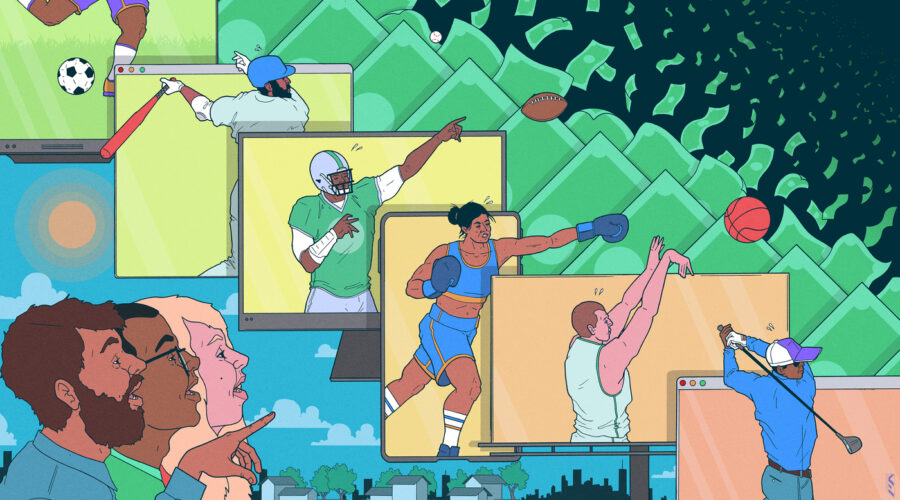
Turn on any major sporting event and the onslaught is immediate. A-listers and retired legends beam from the screen, normalizing the ritual of risking a paycheck on a parlay. The advertisements are masterworks of behavioral conditioning. They dissolve friction. They promise community, edge, and most insidiously, a democratic access to what was once a back-alley enterprise. The visual language is one of empowerment. The deeper message is that speculation is not merely acceptable; it is an essential component of modern fandom. This televised theater of risk-taking has transformed the living room into a virtual casino floor, all while the guardians of public morality in the same jurisdiction treat the intellectual cousin of this activity as a pernicious threat to civic virtue.
Regulatory Schizophrenia
The official rationale for banning prediction markets often invokes the specter of commodified gambling on elections and the corrosion of democratic integrity. Yet the relentless broadcast of sports betting ads, which target the same neuroeconomic vulnerabilities, receives a green light. This is a case of regulatory dissociation. One form of speculation is sanctified by its deep integration into the culture of athletic competition; the other is vilified as a speculative malignancy. The inconsistency suggests that the fear is not about the act of gambling itself, but about what prediction markets reveal: that crowds can be better forecasters than pundits, that information can be weaponized, and that the pretense of uncertainty can be priced. It is a fear of the signal, not the noise.
The Mirage of Control
Televised sports ads cultivate an illusion. They suggest that with the right bonus bet or the right “expert” insight, the chaotic ballet of the field can be mastered. Prediction markets strip away that comfortable delusion. They aggregate dispersed knowledge into a relentless, single number—a probability that shifts with cold indifference to human hope. Nevada’s stance protects the entertainment value of the gamble while suppressing the epistemological power of the market. This is the secret pact: the state will allow the seductive ritual of the bet, the adrenaline of the wager, but it recoils from the instrument that might scientifically dignify speculation. The ads sell a dream of personal acumen. The markets offer a mirror of collective intelligence. One is a profitable fantasy; the other a potentially disruptive truth.
The Allure of Augury
Why does this fascination persist? There is something deeply human in the desire to foretell—to cast bones, read entrails, or now, analyze market signals. Televised sports ads tap into this ancient compulsion but redirect it into a sanctioned, consumable product. The prediction market, however, represents a secular, distributed oracle. Its fascination lies in its naked efficiency, its capacity to make the future feel legible. Nevada’s prohibition is, in essence, a defense of the older, more mystical form of augury. It protects the romance of the hunch from the rigor of the signal. The contradiction endures because the public, mesmerized by the flashing odds on their screens, is content to embrace the ritual without questioning the arbitrary lines drawn by those who profit from its containment.
The Unspoken Covenant
Ultimately, the juxtaposition of Nevada’s anti-prediction market laws and the saturation of sports betting advertisements is not a failure of logic but a revelation of priorities. It is a covenant between the state and an industry that thrives on keeping speculation a leisure pursuit, never a tool of democratic or epistemic transparency. The televised ads are the liturgy of this agreement, conditioning millions to accept a form of wagering that is fun, loud, and intellectually vacuous. The deeper fascination lies in the forbidden fruit of the prediction market: the notion that one might truly know the odds, not just play them. Until that allure is openly confronted, the contradiction will remain, glowing on millions of screens as a testament to our complicated love affair with the futures we dare to invent.